
Letters in Mathematical Physics (2021) 111:61
https://doi.org/10.1007/s11005-021-01406-0
Miquel dynamics, Clifford lattices and the Dimer model
Niklas C. Affolter1
Received: 18 January 2019 / Revised: 16 March 2021 / Accepted: 21 April 2021
© The Author(s) 2021
Abstract
Miquel dynamics was introduced by Ramassamy as a discrete time evolution of square
grid circle patterns on the torus. In each time step every second circle in the pattern is
replaced with a new one by employing Miquel’s six circle theorem. Inspired by this
dynamics we consider the local Miquel move, which changes the combinatorics and
geometry of a circle pattern. We prove that the circle centers under Miquel dynamics
are Clifford lattices, an integrable system considered by Konopelchenko and Schief.
Clifford lattices have the combinatorics of an octahedral lattice, and every octahedron
contains six intersection points of Clifford’s four circle configuration. The Clifford
movereplacesoneofthesecircleintersectionpointswiththeoppositeone.Weestablish
anewconnectionbetweencircle patterns and the dimer model:Ifthedistancesbetween
circle centers are interpreted as edge weights, the Miquel move preserves probabilities
in the sense of urban renewal.
Keywords Miquel dynamics ·Circle patterns ·Clifford lattices ·Dimer model ·
Urban renewal
1 Introduction
Miquel dynamics was first introduced by Ramassamy following an idea of Kenyon,
see [11] and references therein. In each time step, this discrete dynamical system
replaceseverysecondcircleofasquaregridcirclepattern.Ifthecirclepatternisdoubly
periodic, it is conjectured that these dynamics feature a form of discrete integrability
and that they are related to dimer statistics or dimer integrable systems [4]. First
progress toward integrability has been made by Glutsyuk and Ramassamy in [5]for
the case of the doubly periodic 2 ×2grid.
In Theorem 3.1 we show that the collection of circle centers under Miquel dynam-
ics form a special case of Clifford lattices, a discrete integrable system studied by
BNiklas C. Affolter
1TU Berlin, Institute of Mathematics, Strasse des 17. Juni 136, 10623 Berlin, Germany
0123456789().: V,-vol 123

61 Page 2 of 23 N. C. Affolter
Konopelchenko and Schief [8]. We introduce the geometric star-ratio function, and
the centers of circle patterns are exactly the Clifford lattices with real star-ratios. If the
star-ratios are real and positive, we say a circle pattern is Kasteleyn. To a Kasteleyn
circle pattern we associate a dimer model with edge weights equal to the distances of
circle centers. We show in Theorem 3.4 that the Miquel move induces urban renewal
on the associated dimer model. This proves that under Miquel dynamics the star-ratios
transform exactly as the face weight coordinates of the discrete cluster integrable sys-
tem as introduced by Goncharov and Kenyon [4]. We want to stress that all our proofs
are of a local nature. This has the advantage that the theory is not restricted to Z2
combinatorics.
Very recently a preprint by Kenyon et al. [7] has appeared that also shows how to
realize circle patterns with given star-ratios.
The structure of the paper is as follows: In Sect. 2we revisit the definition of
dimer statistics and introduce notation for the graphs, circle patterns and the star-
ratios considered throughout this paper. We also define both the local Miquel and the
local Clifford move. After stating the two main Theorems 3.1 and 3.4 in Sect. 3we
introduce in Sect. 4the Möbius geometric mutation map which underlies both the
Clifford and the Miquel move. We also calculate the transformation formulas for star-
ratios under the Möbius mutation map. In Sect. 5we study the Clifford configuration,
giving a geometric construction of the Möbius mutation map and relating it to work
of Konopelchenko and Schief [8]. Additionally, we derive several useful lemmas by
investigating the relation between the Clifford configuration, integrable cross ratio
systems and integrable circle patterns as defined by Bobenko, Mercat and Suris [2].
Finally, we assemble the pieces in Sect. 6to relate star-ratios with the Miquel move
thereby proving the two main theorems. Even though we prove everything locally, it
is interesting how this translates to the setting of lattice dynamics, which we briefly
outline in Sect. 7.
2 Preliminaries
2.1 Dimer statistics
Given a graph G=(V,E)we call a function ω:E→R+an edge weight function,
where R+is the set of strictly positive reals. Equivalently, we write ω∈RE
+and call
ωthe edge weights.Asimple graph is a graph without loops or multi-edges.
Definition 2.1 Aperfect matching of a simple graph G=(V,E)is a subset M⊂E
of the edge set such that each vertex of the graph is incident to exactly one edge in M.
We denote the set of perfect matchings of a graph by M(G).Theweight ω(M)of a
perfect matching Mwith respect to edge weights ωis:
ω(M)=
e∈M
ω(e)(2.1)
123

Miquel dynamics, Clifford lattices and the Dimer model Page 3 of 23 61
The dimer partition function ZGis defined as:
ZG:RE
+→R+,ω→
M∈M(G)
ω(M)(2.2)
The probability Pω(M)of a perfect matching is proportional to its weight with the
partition function as normalization constant:
Pω(M)=ω(M)
ZG(ω) (2.3)
2.2 Bipartite surface graphs G
We start by defining the class Gof bipartite surface graphs for which we prove our
lemmas and theorems.
Definition 2.2 A graph G=(V,E)embedded in an oriented and closed surface is in
the class of bipartite surface graphs Gif:
•The complement of Gis a collection Fof disjoint open disks, and (V,E,F)is a
locally finite CW-decomposition of the surface.
•Gisbipartite,thatisthesetofvertices Visthedisjointunionofthetwoindependent
sets V+and V−.
•Every vertex in Vhas degree at least 3 and every face has degree at least 2.
In order to simplify notation we assume that we can identify an edge e∈Ewith
its two incident vertices vand vand therefore write e=(v, v). Similarly for dual
edges e∗∈E∗we write e∗=(f,f)where fand fare the two faces incident to
e. We usually consider edges at some distinct face f0, and the cyclic order of edges
around f0will usually clear up any confusion.
We also use a standard orientation of the edges of both Gand the dual G∗. An edge
e=(v−,v+)is always incident to a vertex v+∈V+and a vertex v−∈V−, and
we orient that edge as pointing from v−to v+. Each dual edge e∗is oriented such
that it crosses the oriented primal edge efrom the left to the right. As a consequence,
the dual edges are oriented counter clockwise around vertices in V+and clockwise
around vertices in V−. For an example of the standard orientation see Fig. 1.
Definition 2.3 Let G∈Gand let f∈Fbe a quadrilateral with the four neighbors
f1,f2,f3,f4. Then we define the edge neighborhood N fof fas the set of edges
that are not incident with any other face except f1,f2,f3,f4or f. The dual edge
neighborhood N∗
fis the set of edges dual to edges in Nf.
Definition 2.4 Given G∈Gand a quadrilateral f∈Fwe denote by mut fG∈G
the graph resulting from the 4-mutation at f . It differs from Gby a local change of
combinatorics centered at f. We will write ˜
G=mut fGand ˜
G=(˜
V,˜
E,˜
F).The
face set is invariant under mutation ˜
F=F, and therefore, it is easiest to describe the
123
61 Page 4 of 23 N. C. Affolter
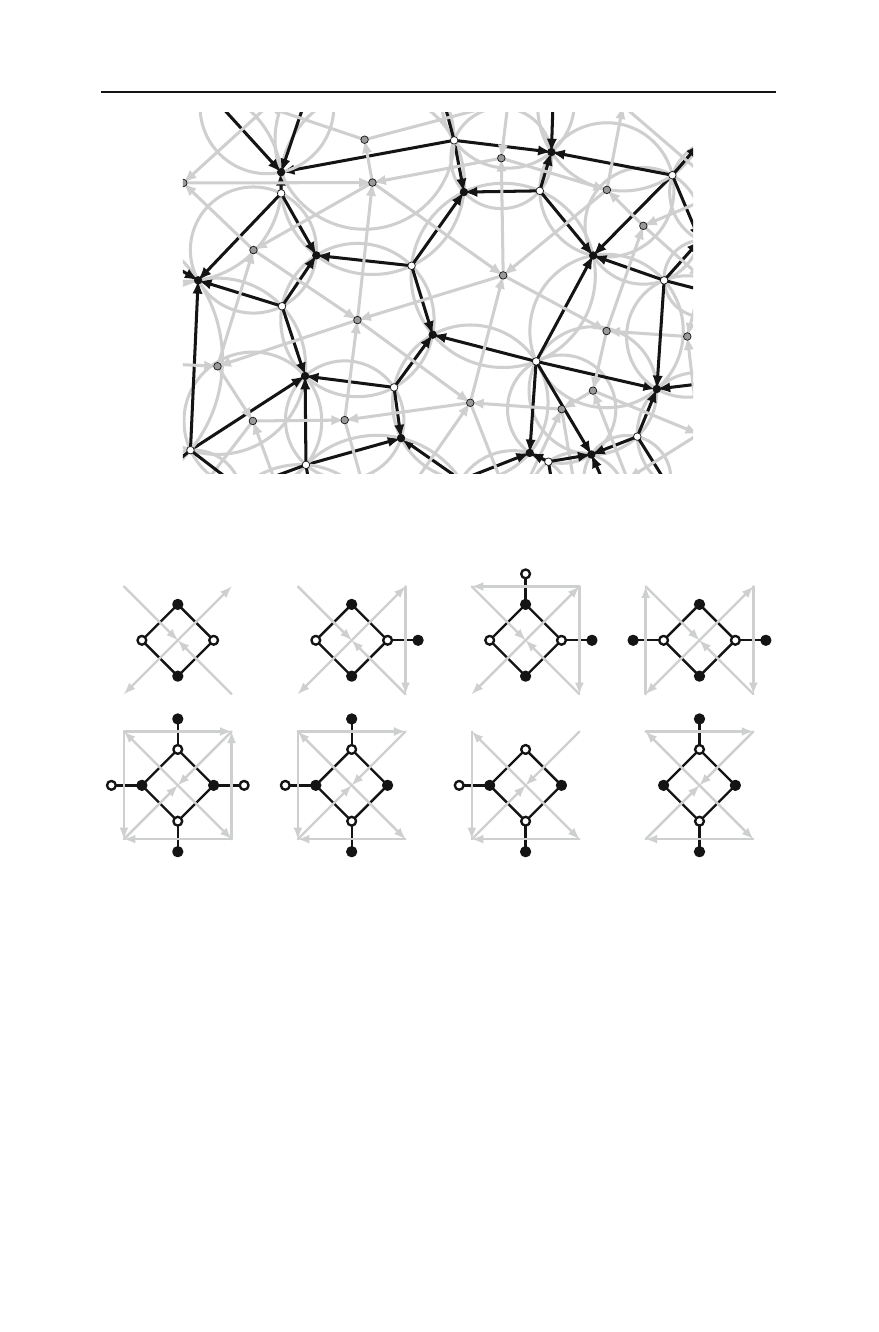
Fig. 1 An excerpt of a circle pattern z∈ˆ
CG
◦,G∈G. The vertices in V+(V−) are colored black (white),
and the circle centers which correspond to faces of Gare colored gray. Edges of Gare drawn with black
arrows and edges of G∗with gray arrows
Fig. 2 The local configurations at a face fwith four neighbors. The black edges are the edges in Nf
of the primal graph G∈G. The gray arrows are the edges of the dual graph G∗. In each column the
bottom configuration is the mutation of the upper one and vice versa. Under mutation the set of faces of
Gis preserved, while the set of vertices changes. The boundary vertices of the above configurations are
identified before and after mutation
change in combinatorics with respect to the dual of G:
˜
E∗=E∗{(f1,f2), ( f3,f2), ( f3,f4), ( f4,f1)}(2.4)
where denotes the symmetric difference operator. The mutation is an involution:
G=mut f˜
G.
Figure 2shows the possible local configurations and their relation by mutation. The
term mutation is borrowed from the theory of cluster algebras, where the 4-mutation
123

Miquel dynamics, Clifford lattices and the Dimer model Page 5 of 23 61
corresponds to the mutation at a degree four vertex. Indeed, both dimer statistics and
Miquel dynamics may be formulated in the language of cluster algebras. We refrain
from doing so because we do not need to use any results from the theory of cluster
algebras in this paper.
2.3 Urban renewal
Because mutation at a quadrilateral fonly affects the edges in Nf, the complementary
sets Nc
fand ˜
Nc
fcan be identified. Therefore, we are able to compare a matching
M0∈M(G)withamatching MfromM(G)orM(˜
G)bycomparingtheirrestrictions
to Nc
f.IfM0and Magree on Nc
f, we write M0∼fM.
Definition 2.5 Fix a quadrilateral f∈Fand consider two edge weight functions
ω∈RE
+and ˜ω∈R˜
E
+on the edge sets of Gand ˜
G=mut fG, respectively. We say
they are related by urban renewal at f if the following two conditions are satisfied:
(i) For all e∈Nc
f:ω(e)=˜ω(e)
(ii) For any fixed matching M0∈M(G):
M∈M(G)
M∼fM0
Pω(M)=
M∈M(˜
G)
M∼fM0
P˜ω(M)(2.5)
Urban renewal was originally defined explicitly for the edge weights of G[10]. Our
definition does not uniquely define the edge weights, only the face weights, which is
sufficient for our purposes.
Definition 2.6 Fora graph G∈Gwedefinethe face weight function τas an alternating
ratio of the edge weights as follows:
τ:RE
+→RF
+, (τ(ω))( f)=
e∈E
e∗=(f,f)
ω(e)
e∈E
e∗=(f,f)
(ω(e))−1(2.6)
The first product is over the edges whose duals point into fand the second product is
over edges whose duals point away from f, where we use the orientation of the dual
edges described in Definition 2.2.
The next lemma relating urban renewal and face weights is well known [4,10].
Lemma 2.7 Let G ∈Gand f ∈F be a quadrilateral. Consider two edge weight
functions ω∈RE
+and ˜ω∈R˜
E
+thatagreeonalle ∈Nc
f. Adopt the following
abbreviations: τf=(τ(ω))( f)and ˜τf=(τ( ˜ω))( f). Then ωand ˜ωare related by
urban renewal at f if and only if the face weights τbefore and the face weights ˜τ
after mutation are related as follows:
123
Loading more pages...