Rational design of tandem catalysts using a core–
shell structure approach†
Esteban Gioria,
ab
Liseth Duarte-Correa,
c
Najmeh Bashiri,
ae
Walid Hetaba,
cd
Reinhard Schomaecker
e
and Arne Thomas *
a
A facile and rational approach to synthesize bimetallic heterogeneous
tandem catalysts is presented. Using core–shell structures, it is
possible to create spatially controlled ensembles of different nano-
particles and investigate coupled chemocatalytic reactions. The CO
2
hydrogenation to methane and light olefins was tested, achieving
a tandem process successfully.
Supported metal catalysts are widely employed for diverse
chemical reactions. Different techniques are used for their
preparation, such as incipient wetness impregnation and
subsequent reduction of a metallic precursor on pre-formed
supports, but also co-precipitation, sol–gel processes, and
many others.
1–3
However, the conventional techniques for the
preparation of supported metal catalysts have several limita-
tions, especially regarding the control of particle size and
particle distribution on the support, which makes it difficult to
relate the catalytic activity and selectivity to a well-dened active
site.
4,5
In this respect, the deposition of pre-formed mono-
disperse metal nanoparticles has some advantages,
6,7
especially
regarding the control on their particle size.
8–11
Many important chemical processes involve more than one
reaction and therefore two or more different catalytic centers
are required to obtain the desired product. In this context,
tandem catalysts have gained a lot of attention in recent
years.
12–16
These multifunctional catalysts are able to carry out
two or more consecutive chemical transformations that cannot
be achieved using a single catalyst. Such one-pot tandem reac-
tions are of major interest in sustainable chemistry, as they can
reduce the number of complicated and energy-consuming
separation and purication steps and the amount of side- or
waste products. Coupling of several chemical reactions in one
single system furthermore enables a more efficient heat and
mass transfer control, thus in principle can be carried out with
lower costs.
17,18
However, performing consecutive reactions in ‘one pot’
greatly reduces the degrees of freedom for the catalysts and the
catalysed reactions. To achieve acceptable catalytic turnovers,
both catalysts must be present during the entire reaction
sequence without interference by any reactant, intermediate, or
product. Furthermore, unfavourable interactions between the
two catalysts caused by mutual corrosion, inhibition, or
competition for the substrates must be avoided. Finally, both
catalysts must show comparable or adjusted activity under the
same reaction conditions, i.e., temperature, pressure, solvent,
or gas composition. Due to these delicate prerequisites, the
number of successful examples for ‘one-pot’multiple catalytic
reactions is still limited. So far, most of the reported ‘one-pot’
reactions involve molecular catalysts, while the above-
mentioned obstacles might be easier alleviated using solid
systems. Therefore the development of heterogeneous tandem
materials is of great interest.
19,20
As mentioned before, homogeneity in particle size is an
important parameter to control catalytic reactions. However, in
a solid tandem catalyst, it can be assumed that also the distance
between the different active sites is a key factor. This is not
considered in conventional multicomponent catalysts, in which
different metallic nanoparticles are immobilized on specic
support without further spatial control. Indeed, there are only
a few works that report techniques to control the particle
distance at the nanometric scale.
21–24
Beaumont et al. demon-
strated the hydrogen spillover and surface diffusion
phenomena onto silica using the kinetics of CO
2
methanation
on size selected platinum and cobalt nanoparticles.
25
The pre-
a
Technische Universit¨
at Berlin, Fakult¨
at II, Institut f¨
ur Chemie: Funktionsmaterialen,
Sekretariat BA2, Hardenbergstraße 40, 10623 Berlin, Germany. E-mail: e.gioria@
tu-berlin.de; arne.thomas@tu-berlin.de
b
Institute of Research on Catalysis and Petrochemistry, INCAPE, UNL-CONICET,
Santiago del Estero 2829, 3000 Santa Fe, Argentina. E-mail: egioria@q.unl.edu.ar
c
Fritz Haber Institute of the Max Planck Society, Department of Inorganic Chemistry,
Faradayweg 4-6, 14195 Berlin, Germany
d
Max Planck Institute for Chemical Energy Conversion, Department of Heterogeneous
Reactions, Stistraße 34-36, 45470 M¨
ulheim an der Ruhr, Germany
e
Technische Universit¨
at Berlin, Fakult¨
at II, Institut f¨
ur Chemie, Sekretariat TC 8 Straße
des 17. Juni 124, 10623 Berlin, Germany
†Electronic supplementary information (ESI) available. See DOI:
10.1039/d1na00310k
Cite this: Nanoscale Adv.,2021,3,3454
Received 26th April 2021
Accepted 4th May 2021
DOI: 10.1039/d1na00310k
rsc.li/nanoscale-advances
3454 |Nanoscale Adv.,2021,3,3454–3459 © 2021 The Author(s). Published by the Royal Society of Chemistry
Nanoscale
Advances
COMMUNICATION
Open Access Article. Published on 25 May 2021. Downloaded on 9/14/2022 1:54:35 PM.
This article is licensed under a
Creative Commons Attribution-NonCommercial 3.0 Unported Licence.
View Article Online
View Journal
| View Issue

formed nanoparticles were loaded on silica by co-impregnation
and compared to mechanical mixtures of Co/SiO
2
and Pt/SiO
2
.
They found that by increasing the spatial separation between
cobalt and platinum entities, the apparent activation energy
dropped drastically. This is certainly a facile synthesis strategy;
however, the nanoparticle distance cannot be nely controlled
since they are randomly distributed at the mesoscale on the co-
impregnated catalyst and at the microscale in the mechanical
mixture.
Reducing the structural complexity of multicomponent
catalysts might allow better control of the synergistic effects
between two chemo-catalytically active sites and thus gain
a deeper understanding of reaction mechanisms. In this work,
we report a simple, robust and scalable approach using core-
NP–shell-NP structures to tune the distance between platinum
nanoparticles (PtNP) and cobalt nanoparticles (CoNP). Both
actives centers are spaced by a silica mesoporous shell and form
an orthogonal tandem catalyst.
26
The shell allows the access of
the reactants to the rst active center located on the core, and
the diffusion of the intermediary molecules to the second one at
the outer shell. This methodology can be applied to the design
of several multi-metallic materials, suitable for the study of
diverse chemical reactions.
As one important reaction, the hydrogenation of carbon
dioxide employing green hydrogen is a potential path for the
sustainable production of methane and further added-value
products like light olens and alcohols.
27,28
Therefore, in this
work we report the design, synthesis and catalytic performance
of a tandem catalyst for the CO
2
hydrogenation to form
methane and light olens.
For many core–shell type catalysts reported in the literature,
monometallic nanoparticles as core are surrounded with
a metal oxide or silica shell.
29–33
Thus, core–shell structures with
two or more types of active metals are still limited. Recently, Xie
et al. reported a tandem catalyst based on a 35 nm ceria core
with platinum nanoparticles, covered by a 25 nm silica shell and
cobalt nanoparticles on top.
34
However, the entire core–shell
structures have still diameters of just a few nanometres and
therefore the issues regarding handling, separation and
upscaling remain.
35
To circumvent these problems, here we decided not to use
the rst metal nanoparticle catalyst as the core, but uniform,
monodisperse silica particles of signicantly larger size (200
nm) prepared by a St¨
ober process. Using these silica particles as
both support and core of the core–shell catalyst allowed that
they can easily be separated aer the synthesis and that the
core–shell catalysts can be prepared on large scales. Thus, the
dense silica core was decorated with platinum nanoparticles,
followed by the synthesis of a uniform mesoporous silica shell.
Then, pre-formed cobalt nanoparticles were deposited on top.
The mesoporous silica shell not only acts as a physical spacer
between both active centers but also as a protective layer against
platinum nanoparticle agglomeration, while its mesoporosity
ensures sufficient diffusion of the molecules between both
sites.
36
Finally, the catalysts were tested for the carbon dioxide
reduction to methane or light hydrocarbons.
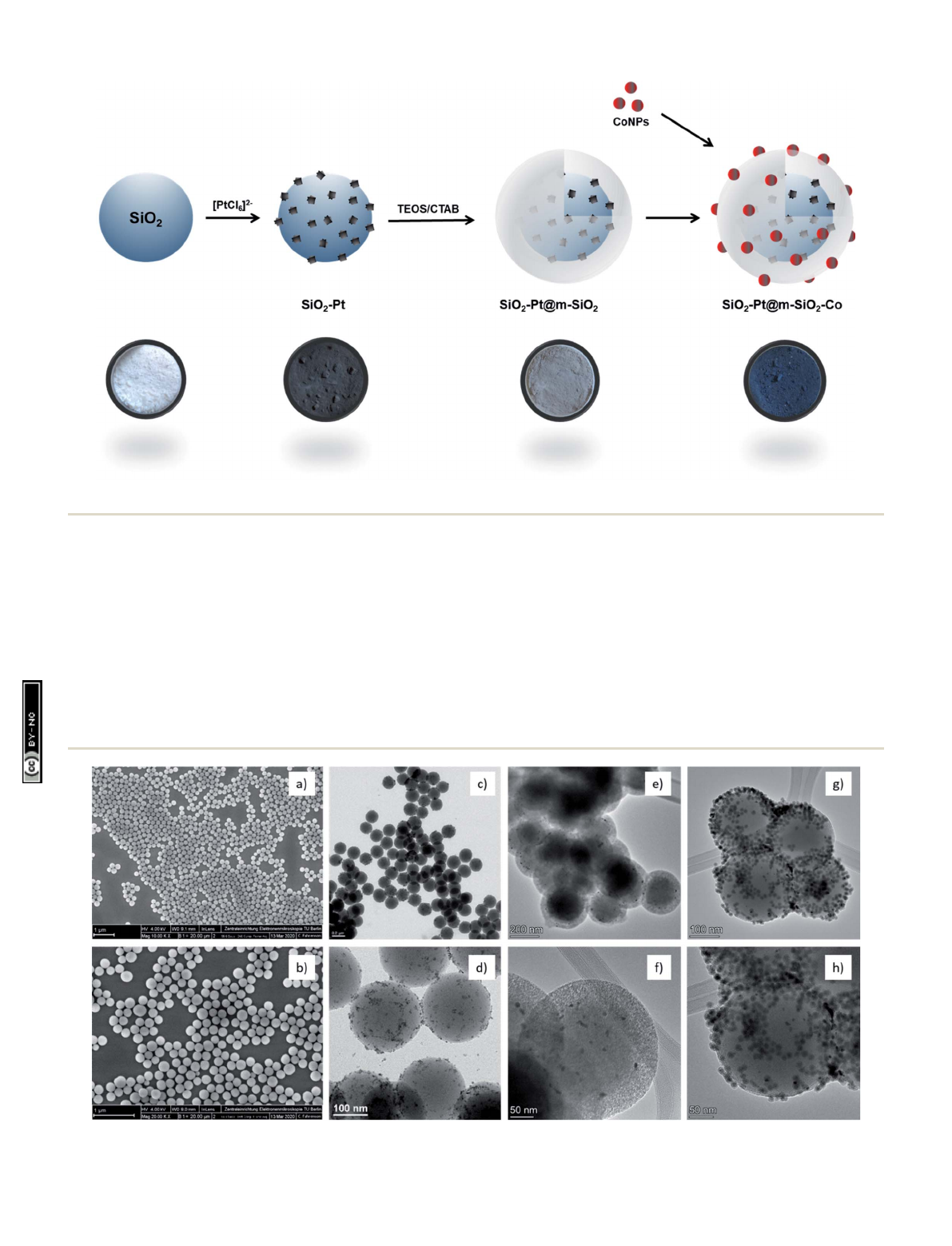
Fig. 1 indicates the different steps for the synthesis of the
core–shell catalyst. Silica spheres of 200 nm were obtained
following a modied St¨
ober method, from tetraethyl orthosili-
cate (TEOS) as silica precursor. The nanospheres were charac-
terized by scanning electron microscopy (SEM) (Fig. 2a and S1†)
and nitrogen adsorption, indicating a low surface area of 20 m
2
g
1
(Fig. S2†). The relatively large particle size was chosen to
gain a reproducible synthesis, monodisperse particle size
distribution, and most importantly to facilitate isolation and
purication of the material.
In the following step, the surface of the silica nanospheres
was graed with amino groups employing (3-aminopropyl)
triethoxysilane (APTES) and ethanol as solvent. The particle size
distribution was not modied (Fig. 2b and S3†) and the graing
effectiveness was corroborated by X-ray photoelectron spec-
troscopy (XPS) (Fig. S4†).
The functionalization of the surface allows the in situ
formation of platinum nanoparticles employing the strong
electrostatic adsorption method, as it can be seen in the sche-
matic representation in Fig. S5.†Under acidic conditions, the
platinum complex [PtCl
6
]
2
is strongly attracted to the positively
charged amino groups. As a next step, the metallic complex was
in situ reduced at room temperature employing ethanol as
solvent and NaBH
4
as a reducing agent. In these conditions,
small and monodispersed PtNP of 3.9 1.1 nm were formed.
The platinum nanoparticles deposition was corroborated by
transmission electron microscopy (TEM) (Fig. 2c and d) and X-
ray diffraction (XRD) (Fig. S6†).
For the platinum nanoparticle deposition, both conventional
magnetic stirring and ultrasound techniques were compared.
Also, water and ethanol were employed as solvents. However,
ethanol and conventional magnetic stirring were selected due to
the simplicity and quality of the nal SiO
2
–Pt spheres. In
contrast to the use of ethanol as solvent, water tends to form
larger and agglomerated Pt nanoparticles (Fig. S7†), showing
that the nanoparticles' growth rate strongly depends on the
polarity and dielectric constant of the solvent molecule.
37
Notably, the use of a 200 nm silica support allows easy recovery
of the catalyst using mild centrifugation conditions (Fig. S8†).
The SiO
2
–Pt structure was further encapsulated with a mes-
oporous silica shell obtained by a sol–gel process. The nano-
spheres were dispersed in a mixture containing ethanol,
deionized water, and cetyltrimethylammonium bromide (CTAB)
as a so-templating agent for the mesoporous channels. Aer
calcination treatment for 2 h at 350 C in air, a uniform silica
shell with a mean thickness of ca. 50 nm was obtained. The
calcination temperature was selected considering the ther-
mogravimetric analysis of the organic template in air (Fig. S9a
and b†). Furthermore, the platinum nanoparticles did not show
any changes aer the silica shell is formed, conrmed by TEM
and scanning-TEM energy dispersive X-ray spectroscopy (EDS)
measurements (Fig. 2e, f and S10†). Also, there is no evidence of
migration or leaching of the PtNP into the channels of the
mesoporous structure. Nitrogen adsorption studies reveal that
the surface area increases from 20 m
2
g
1
to 503 m
2
g
1
with
a monomodal pore size distribution of 2.3 nm, indicating the
mesoporous nature of the shell structure (Fig. S11†).
© 2021 The Author(s). Published by the Royal Society of Chemistry Nanoscale Adv.,2021,3,3454–3459 | 3455
Communication Nanoscale Advances
Open Access Article. Published on 25 May 2021. Downloaded on 9/14/2022 1:54:35 PM.
This article is licensed under a
Creative Commons Attribution-NonCommercial 3.0 Unported Licence.
View Article Online
Finally, cobalt nanoparticles were pre-formed in order to
obtain monodisperse active centers. In the Fischer–Tropsch
reaction, it is reported that the particle size plays an important
role in the catalytic performance. In general terms, CO conver-
sion decreases for cobalt nanoparticles below 10 nm.
38–40
Therefore, 15 nm CoNP were adopted as an appropriate value.
Regarding the CoNP synthesis, it is well-known that it is not
possible to obtain stable colloids of monodispersed cobalt
nanoparticles using water as the solvent, as oxidation and
agglomeration is promoted. Therefore, CoNP were formed in
a hydrophobic medium employing a thermal decomposition
route.
41
The metallic precursor, dicobalt octacarbonyl Co
2
(CO)
8
was dissolved in o-dichlorobenzene and quickly injected in
a hot solution of oleic acid in o-dichlorobenzene. Using this
approach, the metallic complex is thermally decomposed to
form metallic CoNP. Oleic acid acts as a capping agent,
controlling the growth kinetics of the metallic nanoparticles.
Fig. 1 Steps applied for the synthesis of the core–shell catalyst and their respective digital photographs.
Fig. 2 SEM and TEM micrographs of the different structures: (a) SiO
2
, (b) SiO
2
–NH
2
, (c and d) SiO
2
–Pt, (e and f) SiO
2
–Pt@m-SiO
2
, (g and h) SiO
2
–
Pt@m-SiO
2
–Co.
3456 |Nanoscale Adv.,2021,3,3454–3459 © 2021 The Author(s). Published by the Royal Society of Chemistry
Nanoscale Advances Communication
Open Access Article. Published on 25 May 2021. Downloaded on 9/14/2022 1:54:35 PM.
This article is licensed under a
Creative Commons Attribution-NonCommercial 3.0 Unported Licence.
View Article Online
Aer recovering and dispersion in hexane, monodisperse cobalt
nanoparticles of 15.5 3.3 nm were obtained (Fig. S12†).
In a nal step, both SiO
2
–Pt@m-SiO
2
and the CoNP were
suspended in hexane, mixed and dried at room temperature. A
nal calcination step was applied to remove all the organic
compounds. Nitrogen adsorption studies of the nal structure
reveal a surface area of 167 m
2
g
1
, with a monomodal pore size
of 2.4 nm (Fig. S13†).
The SiO
2
–Pt@m-SiO
2
–Co catalyst have a metal loading of
0.23% Pt and 12% Co, determined by inductively coupled
plasma atomic emission spectroscopy (ICP-AES). Besides, the
cobalt nanoparticles were successfully dispersed on the surface
of the shell, corroborated by TEM and SEM (Fig. 2g, h and S14†).
Following this protocol, it is possible to obtain a specic
arrangement of metal nanoparticles spaced by a mesoporous
silica shell at a nanometric scale, as it is veried by STEM-EDS
studies (Fig. 3).
Regarding the catalytic activity, the reduction of CO
2
employing hydrogen was carried out in a xed bed reactor at
350 C with a N
2
:CO
2
:H
2
molar ratio of 1 : 1 : 3. The space
velocity was xed in 15 000 mL g
1
h
1
and a total pressure of 6
bar.
It is frequently reported that when carbon dioxide hydroge-
nation takes place on platinum supported nanoparticles,
carbon monoxide is produced as the main product following
the reverse water–gas shireaction.
25,42–45
However, when
carbon dioxide is hydrogenated over supported cobalt nano-
particles, methane is forming as the main product following the
Sabatier reaction.
46–50
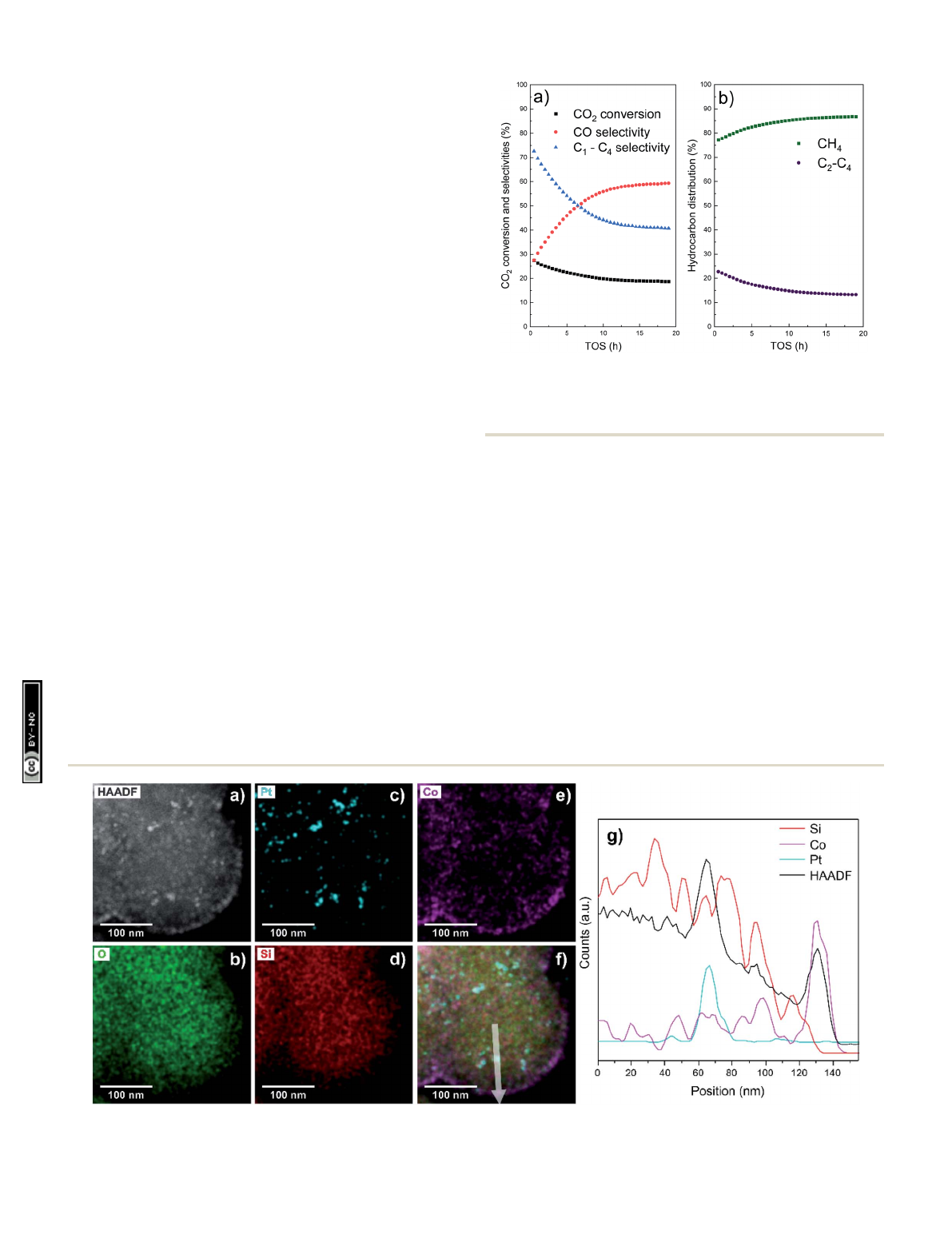
The conversion and selectivity products of our tandem
catalyst can be seen in Fig. 4. Not only methane is formed but
also light olens (C
2
–C
4
) as products. Carbon dioxide reaches
a conversion of 19% with 60% selectivity to carbon monoxide
and 40% to hydrocarbons. The formed hydrocarbons are
distributed in 86% of methane and 14% of C
2
–C
4
olens.
It is assumed that in a rst step, carbon dioxide reacts with
hydrogen on platinum nanoparticles at the core through the
reverse water–gas shireaction, forming carbon monoxide as
the main product. In a second step, CO diffuses through the
mesoporous shell structure until it contacts the cobalt nano-
particles on the outer shell. The carbon monoxide should be
here converted to methane and light olens (C
2
–C
4
) through the
Fischer–Tropsch process.
51–53
Therefore, the CO
2
conversion
and product distribution indicate that a tandem process
involving both active sites was achieved.
Changes in the core–shell catalyst aer 20 h of time on
stream were studied by STEM-EDS (Fig. S15†). There is no clear
evidence of platinum nanoparticles agglomeration, probably
due to the mesoporous silica shell that acts as a protective layer
Fig. 3 STEM image and EDS analysis of the core-Pt–shell-Co structures. (a) High-Angle Annular Dark-Field (HAADF)-STEM image and corre-
sponding elemental maps of (b) O, (c) Pt, (d) Si, (e) Co, (f) mixed coloured mapping of HAADF, Si, O, Pt and Co, and (g) line-scan profile of Si, Co, Pt
and HAADF signals.
Fig. 4 Catalytic performance of SiO
2
–Pt@m-SiO
2
–Co catalyst in the
CO
2
hydrogenation. P¼6 bar, T¼350 C, CO
2
:H
2
ratio of 1 : 3,
GHSV ¼15 000 mL g
1
h
1
. (a) CO
2
conversion and product selec-
tivity; (b) hydrocarbon distribution.
© 2021 The Author(s). Published by the Royal Society of Chemistry Nanoscale Adv.,2021,3,3454–3459 | 3457
Communication Nanoscale Advances
Open Access Article. Published on 25 May 2021. Downloaded on 9/14/2022 1:54:35 PM.
This article is licensed under a
Creative Commons Attribution-NonCommercial 3.0 Unported Licence.
View Article Online

against sintering.
33,54,55
However, the high temperature and
prolonged TOS leads to a partial migration and coalescence of
the outer cobalt nanoparticles.
The catalytic performance in terms of selectivity agrees with
the observed structural changes. Within the rst 12 h of TOS,
selectivity of CO increases and selectivity of hydrocarbons
decreases (Fig. 4a). Regarding hydrocarbons, selectivity of CH
4
increases and selectivity of C
2
–C
4
decreases (Fig. 4b). The
selectivity to C
2
–C
4
olens is related to the CO conversion
through the Fischer–Tropsch reaction on the outer cobalt sites.
Due to their coalescence and agglomeration, the metal active
surface area and thus olen yield decrease until a constant
value is reached. A similar trend was observed on supported,
size-controlled Co and Fe-based catalysts, where selectivity loss
of olens was related to an increase in the particle size as
well.
56–58
Selectivity of CO through the reverse water–gas shi
reaction increases until it reaches a constant value, promoted by
stable platinum sites protected by the mesoporous silica shell.
Xie et al. reported an analogous reaction pathway under
similar reaction conditions corroborating the consecutive CO
2
to CO formation followed by methane and C
2
–C
4
.
34
However,
our synthesis can yield 550 mg of catalyst per batch and is
notably nine-time superior in terms of production of value-
added olens, which is of great importance because of the
high price of nobel metals (139 mol C
2
–C
4
per mol Pt per h in
this work, vs. 15 mol C
2
–C
4
per mol Pt per h for the reported
CeO
2
–Pt@m-SiO
2
–Co).
Dispersion and size of the metal in Pt/SiO
2
are crucial factors
for the reverse water–gas shireaction, determining the avail-
ability of surface metal atoms i.e. the number of active sites at
the Pt–silica interface.
42,59
Thus, the promising performance of
our core–shell catalyst can be related to an efficient dispersion
of the platinum nanoparticles on the silica surface. CO chemi-
sorption measurements were performed yielding platinum
surface areas of 1.38 m
2
g
1
and 1.09 m
2
g
1
for SiO
2
–Pt and
SiO
2
–Pt@m-SiO
2
, respectively. Hence, the accessibility to plat-
inum sites was slightly affected during the preparation of the
shell structure.
Furthermore, the spatial arrangement of the active centers
can play an important role. More studies are being carried out to
elucidate the inuence of the distance between metallic nano-
particles in the performance of coupled catalytic reactions at
a nanometric scale.
Conclusions
A facile and scalable route for the preparation of multifunc-
tional catalysts is developed, allowing to control the distance
between two different metal nanoparticles in one material. This
is exemplied by the preparation of Pt and CoNP spatially
separated by a mesoporous silica layer. The catalyst has been
tested on the environmental and commercial relevant CO
2
hydrogenation reaction, indicating that a successful tandem
process is achieved. This protocol can be easily extended to
other metallic nanoparticle combinations as active centers for
diverse chemocatalytic reactions. Furthermore, our study
represents a useful approach to the precise tuning of the
distance between different active sites. This is of great impor-
tance to gain a deeper understanding of coupled catalytic
reactions.
Conflicts of interest
There are no conicts to declare.
Acknowledgements
E. G. thanks to the Deutsch-Argentinisches Hochschulzentrum
(CUAA-DAHZ) and the German Academic Exchange Service
(DAAD). L. D.-C. and W. H. thank Prof. Dr R. Schl¨
ogl for his
support. Funding by the Deutsche Forschungsgemeinscha
(DFG, German Research Foundation) under Germany's Excel-
lence Strategy –EXC 2008 –390540038 –UniSysCat is
acknowledged.
References
1 J. A. Schwarz, C. Contescu and A. Contescu, Chem. Rev., 1995,
95, 477–510.
2 F. Pinna, Catal. Today, 1998, 41, 129–137.
3M. Rai, A. Brunsen, M. C. Fuertes, O. Azzaroni and
G. J. A. A. Soler-Illia, ACS Appl. Mater. Interfaces, 2013, 5,
8833–8840.
4 B. A. T. Mehrabadi, S. Eskandari, U. Khan, R. D. White and
J. R. Regalbuto, in Advances in Catalysis, Elsevier Inc., 1st
edn, 2017, vol. 61, pp. 1–35.
5 S. Eskandari, G. Tate, N. R. Leaphart and J. R. Regalbuto, ACS
Catal., 2018, 8, 10383–10391.
6 E. Gioria, F. Marchesini, A. Soldati, A. Giorello, J. Hueso and
L. Gutierrez, Appl. Sci., 2019, 9, 4075.
7 N. Miguel-Sancho, G. Martinez, V. Sebastian, A. Malumbres,
I. Florea, R. Arenal, M. C. Ortega-Liebana, J. L. Hueso and
J. Santamaria, ACS Appl. Mater. Interfaces, 2017, 9, 41529–
41536.
8 M. Rahaman, A. Dutta and P. Broekmann, ChemSusChem,
2017, 10, 1733–1741.
9 J. Liu, Y. Zheng and S. Hou, RSC Adv., 2017, 7, 37823–37829.
10 L. Bai, S. Zhang, Q. Chen and C. Gao, ACS Appl. Mater.
Interfaces, 2017, 9, 9710–9717.
11 H. Mistry, R. Reske, P. Strasser and B. Roldan Cuenya, Catal.
Today, 2017, 288,30–36.
12 Z. Ma and M. D. Porosoff,ACS Catal., 2019, 9, 2639–2656.
13 W. Leng, R. Ge, B. Dong, C. Wang and Y. Gao, RSC Adv., 2016,
6, 37403–37406.
14 F. Z. Jin, C. Q. Chen, Q. Zhao, J. L. Kan, Y. Zhou and
G. J. Chen, Catal. Commun., 2018, 111,84–89.
15 Y. Hu, J. Zhang, H. Huo, Z. Wang, X. Xu, Y. Yang, K. Lin and
R. Fan, Catal. Sci. Technol., 2020, 10, 315–322.
16 M. Li, C. Pischetola, F. C´
ardenas-Lizana and M. A. Keane,
Appl. Catal., A, 2020, 590, 117368.
17 S. Sithambaram, R. Kumar, Y. C. Son and S. L. Suib, J. Catal.,
2008, 253, 269–277.
3458 |Nanoscale Adv.,2021,3,3454–3459 © 2021 The Author(s). Published by the Royal Society of Chemistry
Nanoscale Advances Communication
Open Access Article. Published on 25 May 2021. Downloaded on 9/14/2022 1:54:35 PM.
This article is licensed under a
Creative Commons Attribution-NonCommercial 3.0 Unported Licence.
View Article Online
Loading more pages...