
3rd PLATE Conference
September 18 – 20, 2019
Berlin, Germany
Nils F. Nissen
Melanie Jaeger-Erben (eds.)
Universitätsverlag der TU Berlin
Winzer, Janis; Wagner, Eduard; Benecke, Stephan; Nissen, Nils F.; Lang,
Klaus-Dieter: Challenges in obsolescence management and system
engineering using the example of the German supplier industry . In:
Nissen, Nils F.; Jaeger-Erben, Melanie (Eds.): PLATE – Product Lifetimes
And The Environment : Proceedings, 3rd PLATE CONFERENCE, BERLIN,
GERMANY, 18 – 20 September 2019. Berlin: Universitätsverlag der TU
Berlin, 2021. pp. 863 – 866. ISBN 978-3-7983-3125-9 (online). https://doi.
org/10.14279/depositonce-9253.
This article – except for quotes, fi gures and where otherwise noted – is
licensed under a CC BY 4.0 License (Creative Commons Attribution 4.0).
https://creativecommons.org/licenses/by/4.0/.
863
3rd PLATE 2019 Conference
Berlin, Germany, 18-20 September 2019
Challenges in Obsolescence Management and System Engineering
Using the Example of the German Supplier Industry
Winzer, Janis(a); Wagner, Eduard(b); Benecke, Stephan(a); Nissen, Nils F.(a); Lang, Klaus-
Dieter(a,b)
a) Fraunhofer Institute for Reliabilty and Microintegration IZM, Berlin, Germany
b) Technische Universität Berlin, Berlin, Germany
Keywords: Obsolescence; Product Lifetime; Electronic Components; Components Obsolescence
Group; EcoReliability; EcoDesign.
Abstract: Obsolescence, in the sense of short lifetime of predominantly electronic products, is
increasingly becoming a problem for industrial processes and ultimately for the community. The number
of cases in which professional customers want to buy products, which are no longer available for
purchase is steadily increasing. In the industrial setting this situation leads to strategies, which are
necessary but actually undesired, in order to be able to maintain the business activities. Basically, more
money and time has to be spent on countering obsolescence. In order to better meet these challenges,
enabling people to exchange ideas with like-minded colleagues, who are in the same situation, and to
jointly develop strategies for solution processes, an interest group driven primarily by the electronics
industry has been founded under the name Component Obsolescence Group Germany (COG-D).
The purpose of this paper is to describe the current state of affairs regarding Obsolescence
Management (hereinafter referred as OM). OM in the sense of dealing with obsolete or discontinued
components is not completely new, but the problem has increased significantly in recent years, which
makes it interesting to take a closer look at the reasons in order to derive solutions. The findings are
based on a survey taken among the members of the COG-D.
Purpose
The aim of the paper and its underlying survey
was to find out about the challenges the
German industry are confronted with regarding
the discontinuation of especially electronic
components and ensuring maintenance and
repair.
These issues on a national market can be seen
as a representative of the international industry.
Survey Design and Approach
The surveyed group consisted of members of
the COG-D. An online questionnaire was sent to
the members of the industry group, which was
prepared by the BMBF Young Researcher
Group “OHA” (Obsoleszenz als Herausforderung
für Nachhaltigkeit = obsolescence as a
challenge for sustainability) and partners, in
which they were able to provide detailed
information on the current situation, with regard
to the discontinuation of components.
Additionally, they were able to describe their
experiences from the past, outlining their
method of resolution and providing outlooks
and trends regarding the discontinuation of
components. 63 people anonymously took part
in the member survey, which was conducted
between 27th of September 2018 and 30th of
October 2018 and was exclusively addressed
to the members of the COG-D. The participants
took part as representatives of companies that
are members of the COG.
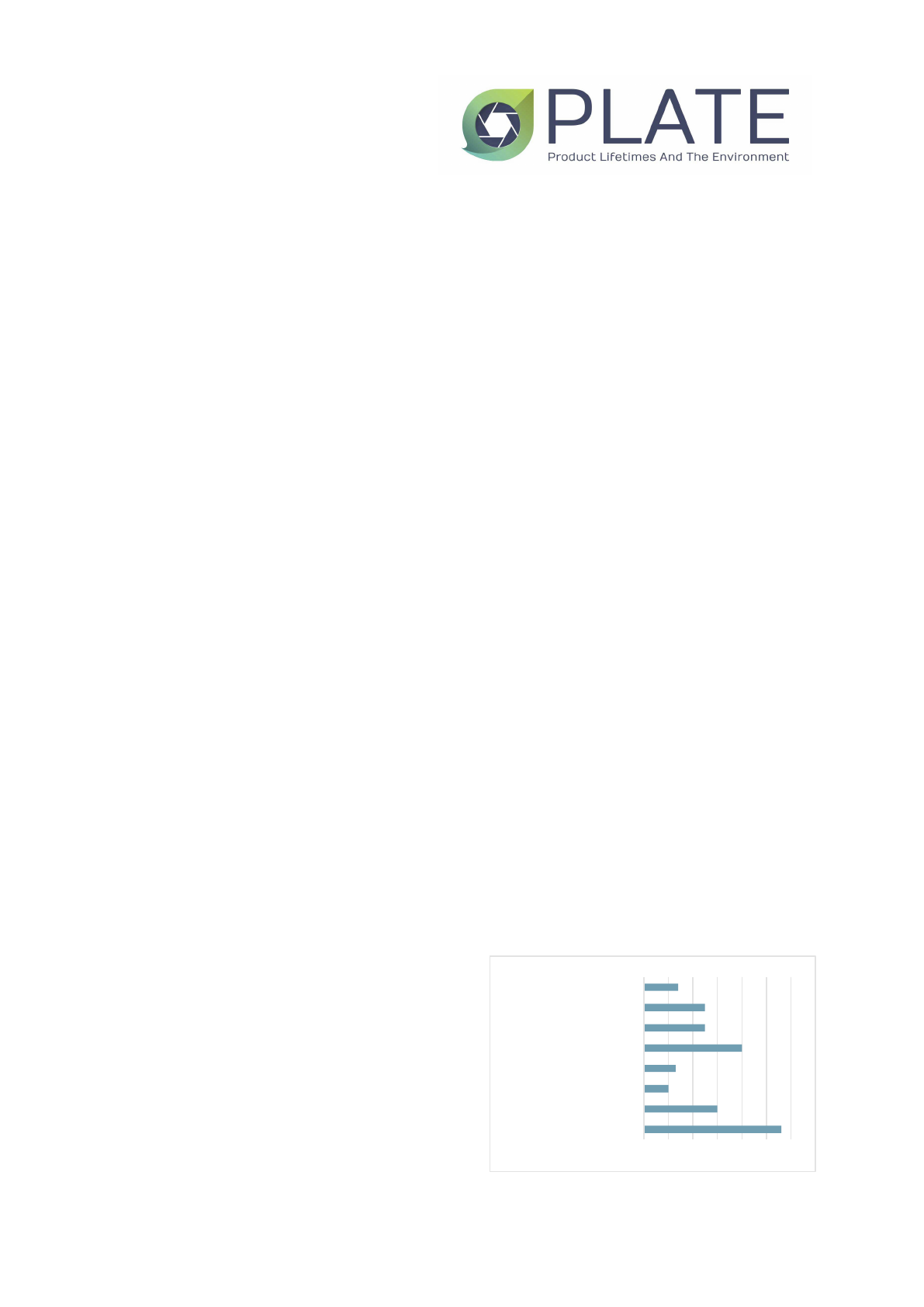
The sectors represented in the survey group of
the COG are shown in the following graph,
with multiple responses being possible since
many member companies operate across
several industries.
Figure 1. Industry sector affiliations of the COG.
56%
30%
10%
13%
40%
25%
25%
14%
0% 10% 20% 30% 40% 50% 60%
industrial electronics
automotive electronics
consumer electronics
household appliances
rail vehicle electronics
aircraft electronics
military electronics
others
Sector/ Affiliation
864
3rd PLATE Conference Berlin, Germany, 18-20 September 2019
Winzer J., Wagner E., Benecke S., Nissen N., Lang K.-D.
Challenges in obsolescence management and system engineering using the
example of the German supplier industry
Challenges of obsolescence
management in companies
84% of the respondents stated that they were
actively managing obsolescence in their
company. Those 84% of respondents were
asked a number of questions about OM that
they were free to answer.
The first question dealt with how OM is
practiced in the different companies. The three
most frequent answers were that they carry
out OM reactively (20), proactively (18) or
strategically (11).
Proactive means, to be active in OM with
foresight and planning in mind, as opposed to
reactive, which is more tangible and follow-up.
Reactive in this context means, that if e.g. a
discontinuation occurs, the final covering of the
discontinued components will be bought up as
last-time-buy (LTB) and then usually stashed
in long-term storage. Proactive OM is primarily
concerned with the early detection of delivery
bottlenecks and non-availabilities. That way,
the assurance of ongoing production as well
as service and maintenance can be
guaranteed more safely to ultimately minimize
or at least improve reactive measures.
To the question which problems in OM were
encountered practically the answers varied
strongly, although lack of understanding OM in
the company (14) was the most common one.
Lack of understanding OM means, for
example, the meaningfulness and importance
of the task field. In the context of business
processes, OM is rather seen as a necessity,
dealing mostly with solving problems. This
inevitably means that the employees of OM
constantly have to inform management about
new issues which increases their risk of being
perceived negatively.
The second most frequently cited aspect was
the lack of communication or short-term
communication of discontinuations (13) which
also vary strongly with each company and are
therefore very individual.
In addition, the problem of shortage of know-
how or lack of successor series creates
complications in the practice of OM, according
to the respondents.
The third and last question on the topic of OM
in companies was on the changing perception
of obsolescence in the past 10 years.
On the one hand, it was often answered that
the obsolescence of products has increased
whereas at the same time long-term
availability of components has decreased. On
the other hand, there has been a rise in
attention to the topic of obsolescence linked
with a more professional approach. Some
respondents describe they only established
the topic of OM in their companies in recent
years.
However, this also reflects the fact that some
sectors were affected earlier and more
severely by obsolescence and they therefore
had to act earlier, while other sectors have
only had to deal with the problem more
intensively in recent years.
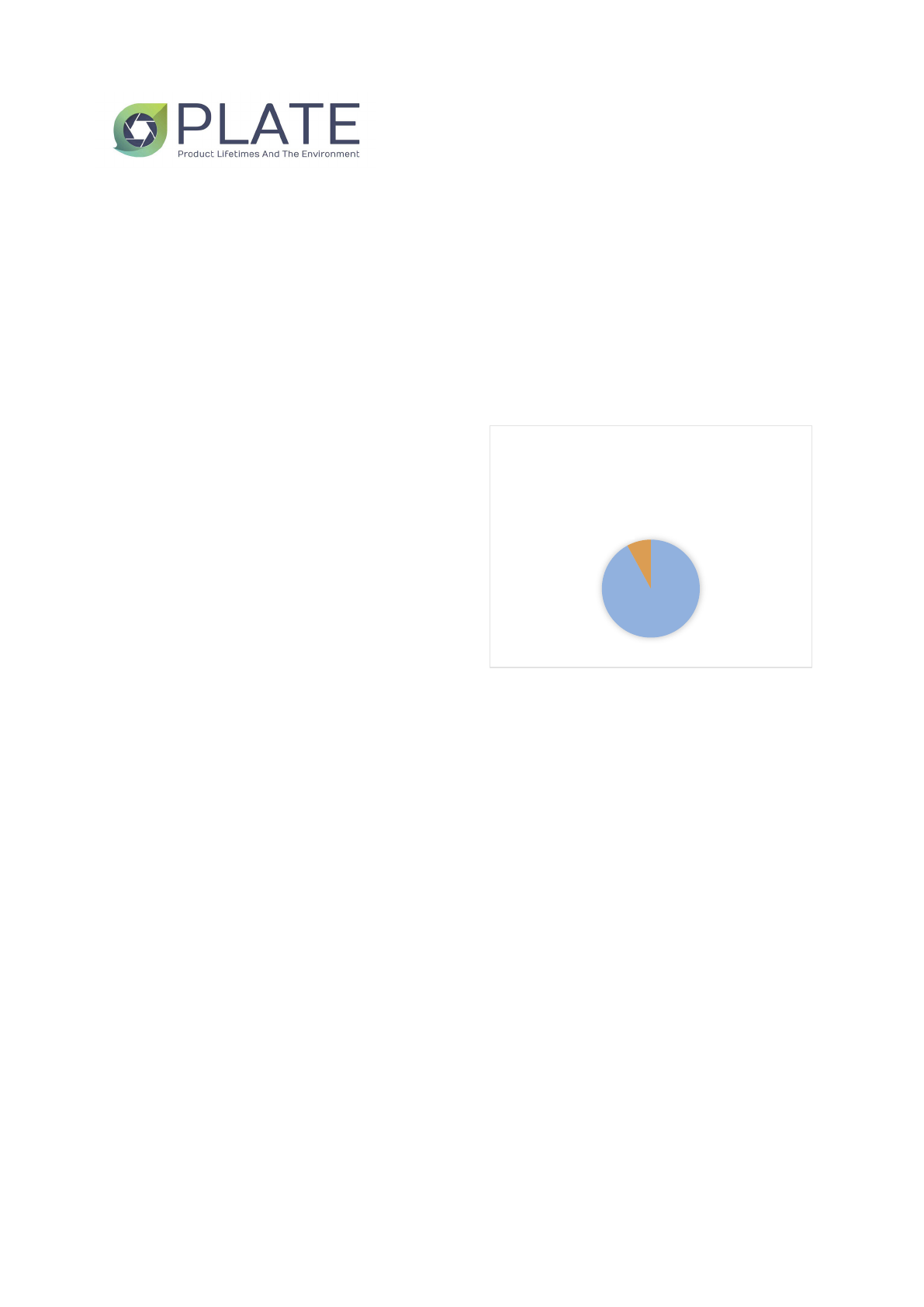
Of the 63 respondents, 58 said they were
affected by component discontinuation
(Figure 2).
Figure 2. Affected by component
discontinuations.
In the further course of the survey, these 58
respondents were asked in which areas they
thought there would be an increase in
discontinuations. Since it was possible to
respond freely here, the spectrum of the
respective answers is broad. They range from
the smallest electronic components to
mechanical items, plastics, adhesives and
silicones. It should be emphasised that
according to the answers of the respondents
that semiconductor components (e.g.
memories) and passive components
(capacitors in particular), are affected more
often. In this context, however, it was also
described that many discontinuations occurred
as a result of fusions or merger of suppliers.
When asked what consequences this has for
the company, it was often mentioned that one
is forced to look for alternative components,
which very often have to be re-qualified. The
process of re-qualification is seen as negative,
because it is associated with additional time
and costs. If no result can be achieved in the
process of component substitution, the
assembly must be redesigned. In the answers,
it was repeatedly expressed that re-designs
are avoided as much as possible because they
Yes
58
No 5
ARE YOU AFFECTED BY
COMPONENT
DISCONTINUATIONS?

865
3rd PLATE Conference Berlin, Germany, 18-20 September 2019
Winzer J., Wagner E., Benecke S., Nissen N., Lang K.-D.
Challenges in obsolescence management and system engineering using the
example of the German supplier industry
involve large capacities of personnel and are
time- and cost-intensive. A second possible
solution is seen in the LTB and the subsequent
long-term storage. LTB means that if a
supplier no longer wants to produce a product,
he gives his customers a Product Change
Notification (PCN), which states until when the
product will still be produced. A LTB is
therefore the last possibility for a company to
get newly produced components. Different
answers were given regarding the measures
taken to prevent discontinuations, which
strongly depend on the affected components
or assemblies. Often partnerships and so-
called "Second Sources" are seen as a
preventive measure to secure the component
supply on a long-term basis. Partnerships in
this context are agreements with suppliers,
their involvement in product development, as
well as their contractual commitment to supply
over several years. Others try to work
preventively with component databases,
market observation, a sustainable component
selection or professional OM.
In the survey, the participants also stated that
they were seriously interested in the long-term
storage of electronic components or
assemblies. In the strategic mix of possibilities,
many see long-term storage at least as a
temporary solution, well knowing that the
number of parts ultimately required can never
be predicted exactly. Either the quantity stored
is too large or too small. Additionally the high
costs are a negative aspect according to the
interviewees.
Furthermore, long-term storage is feared to
cause damage which would make processing
at the desired time in the future impossible.
Mentioned here in particular were soldering
problems caused by poor absorption of solder
at the contact pins.
In addition to long-term storage and
purchasing from distributors, brokers also play
a major role. The difference between brokers
and component distributors will be briefly
explained in the following.
While independent distributors and brokers
both pursue the same goal (or have the same
essential function) - namely to support buyers
and sellers in their search - the similarities end
there.
The value a broker offers is to procure
electronic parts on demand. However, they
tend to lack other services such as a
comprehensive quality review process,
discrepancy checks and visibility of existing
market conditions. However, the range of
services offered by an independent distributor
of electronic components goes far beyond a
mere goods transaction.
When asked where they purchase components
after discontinuation from, only twelve of the
participants answered that they buy
components from brokers while at the same
time it is often emphasized that they mainly
access brokers known in the COG. The
dependence on urgency was also mentioned
repeatedly as an important factor.
It is striking to note that there was no clear
answer to the question which obsolete
components were bought. Half would purchase
everything that is available rather than paying
attention to the urgency. The remaining
answers cover active and passive components,
as well as semiconductors and many more.
The advantages of buying obsolete
components from brokers are rather described
as a necessity. Answers often stating that
availability could be guaranteed or that there
would be no downtime in production. The topic
of avoiding re-designs was stated as an
upside, although one of the recipients replied
that this problem is only being postponed, not
solved completely.
Disadvantages arising from buying from
brokers, etc., are mainly costs, e.g. in the form
of purchase or paying for storage, as well as
the commitment of time that comes with the
examination of the construction units. A non-
transparent supply chain was criticized and two
of the participants noted that the consumption
of the obsolete products by clients was
uncertain. Plagiarism was mentioned
repeatedly as an issue, next to the reliability
and guarantee of the purchased components.
Levels of Obsolescence
Management (OM)
In addition to the specific questions which
problems of OM currently exist at the market,
the participants were also asked what
constitutes a good OM at all. The strategic
approach can be roughly divided into reactive,
proactive and strategic obsolescence
management.
Reactive obsolescence management
The reactive OM is characterised by the fact
that an action is executed after an End-of-Life
(EoL) message has been received (Bartels et
al. 2012: 157 ff.). The following process could
also be described as "troubleshooting", in which
an attempt is made to salvage everything that

866
3rd PLATE Conference Berlin, Germany, 18-20 September 2019
Winzer J., Wagner E., Benecke S., Nissen N., Lang K.-D.
Challenges in obsolescence management and system engineering using the
example of the German supplier industry
can be saved, which makes that type of
management very high risk. The reactive OM
uses fewer measures as proactive OM. In the
best case scenario this can include: Last time
buy, long-term storage of components and
assemblies, after-market supply and redesign
of entire products or at least assemblies.
Proactive obsolescence management
The proactive OM is characterised by the fact
that action is being taken before an EoL
message arrives. The staff is thus warned
early on and can adjust to unavailability. The
proactive OM uses the following measures:
People responsible for the OM have been
appointed and are given time for the task,
active risk assessment of the components,
lifecycle analyses of item lists already in the
development phase, positive partnership and
contract design with suppliers,
automatic/electronic monitoring of key
components and regular coordination with
customers. In addition, the measures from the
reactive OM mentioned above are included.
Strategic obsolescence management
The strategic OM is characterised by the fact
that all actions take place at an early stage.
This means that regular forecast and cost
analyses are made over the entire product life
cycle, already starting in the development
phase. Along with the methods from the
reactive and proactive OM, strategic OM uses
the following measures. A second or third
source strategy, active inventory management
(at least of the company's own inventories, or
better yet of the suppliers' inventories),
development of a sustainable and modular
design and early development of an alternative
design.
Conclusions
The results of the COG-D survey show very
clearly that there is a steady increase in
obsolescence in the form of discontinuation of
components. The electronics industry is
strongly affected across many sectors.
Unavailability of components or subsystems
impacts even ongoing production, but more
severely the maintenance, repair and overhaul
operations. The area of mechanical parts is of
less concern but follows similar patterns.
In the area of electronic components, active
components are particularly affected. However,
the survey also shows that passive components
such as ceramic multi-layer capacitors can also
become obsolete. The example of ceramic
multilayer capacitors shows, among other
things, that company acquisitions and the
streamlining of the product range quickly lead
to bottlenecks in availability that can last for
many months (Winzer 2017: 9).
In the case of active components in particular,
it is evident that the market is increasingly
dominated by a few large producers.
The concentration has to do with the fact that
the investments for new generations of high-
performance semiconductors are becoming
ever larger and only big corporations can raise
the immense financial resources. As a result,
smaller manufacturers, which fabricate niche
products, are disappearing from the market.
There will be no simple solution to the
problems of obsolescence management.
In order to prepare oneself as well as possible,
a strategy with several options is needed. It is
crucial for companies to move from reactive
obsolescence management to strategic
obsolescence management. The experience of
companies that have taken this path shows
that production is more predictable, redesigns
are fewer and the supply of spare parts can be
guaranteed without interruption.
References
Bartels, B. et al. (2012): Strategies to the Prediction,
Mitigation and Management of Product
Obsolescence. Hoboken (New Jersey): Wiley
Winzer, Janis (2017): Die Lebensdauer von
Produkten ist planbar. Berlin: Ökologisches
Wirtschaften
Loading more pages...