Database: Recordings of a
Loudspeaker Orchestra with
Multi-Channel Microphone Arrays
for the Evaluation of Spatial Audio
Methods
—
David Ackermann, Julian Domann, Fabian Brinkmann,
Johannes M. Arend, Stefan Weinzierl
Audio Communication Group, TU Berlin
Einsteinufer 17c, 10587 Berlin, Germany
david.ackermann@tu-berlin.de
stefan.weinzierl@tu-berlin.de
December 13, 2022
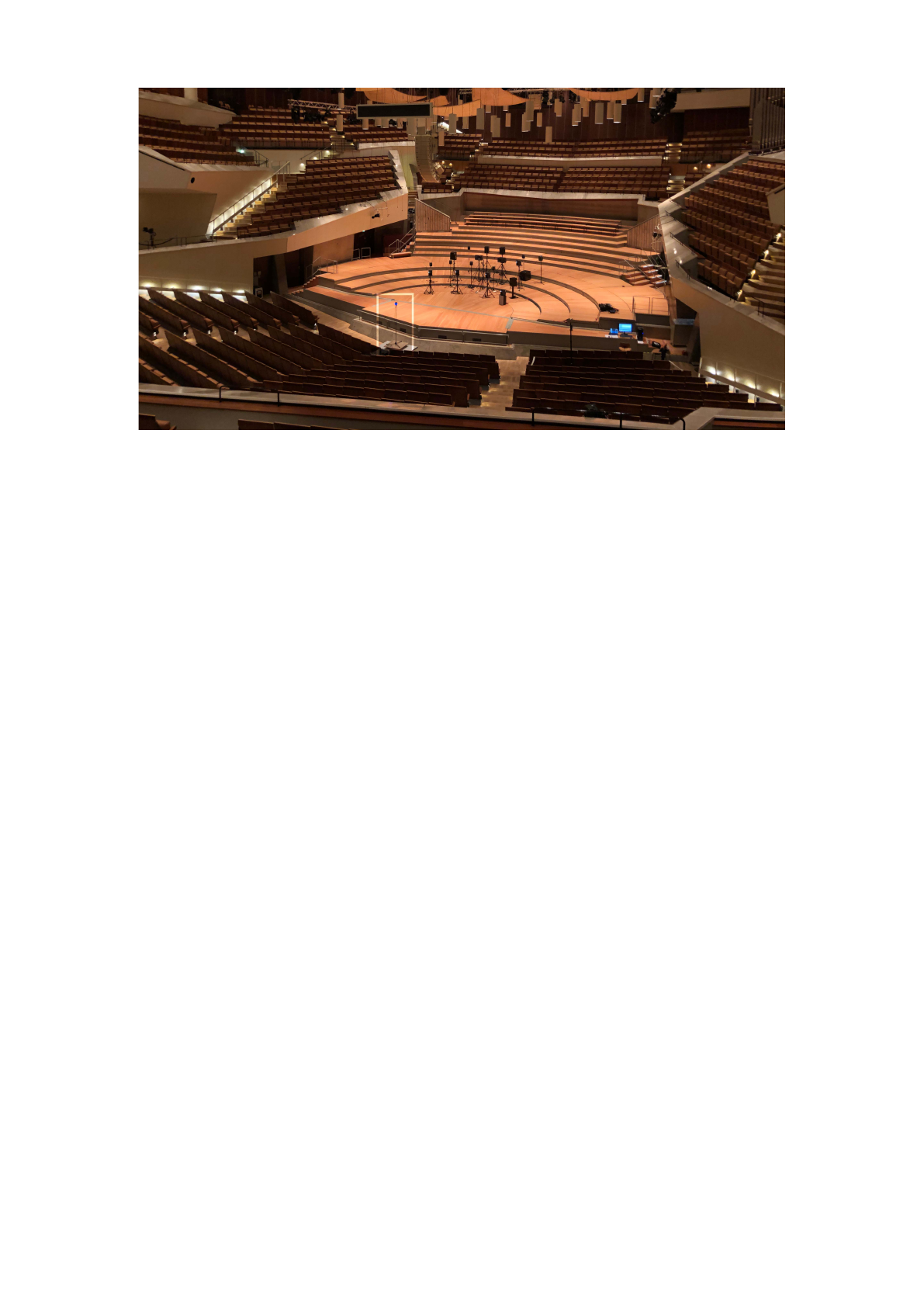
Figure 1: Set-up of the 18-channel loudspeaker orchestra on the stage in the large hall
of the Berliner Philharmonie, with the slightly elevated listener position in the
first row of the audience area (highlighted by the bright rectangle).
General Information
This document describes the recordings of a loudspeaker orchestra with multi-channel
microphone arrays for the evaluation of spatial audio methods. The database is provided
under a Creative Commons BY-SA licence, giving you the freedom to redistribute and
edit it for non-commercial purposes. For more information visit creativecommons.org/
licenses/by-sa/4.0.
The documentation is focused on the structure and content of the database. More
information on the acquisition, processing and validation can be found in the accompa-
nying publication in the Journal of the Audio Engineering Society (JAES). If you use
this database, please cite:
D. Ackermann, J. Domann, F. Brinkmann, J. M. Arend, M. Schneider, C. P¨orschmann,
and S. Weinzierl (2023): ”Recordings of a loudspeaker orchestra with multi-channel mi-
crophone arrays for the evaluation of spatial audio methods” Journal of the Audio En-
gineering Society, DOI: doi.org/10.17743/jaes.2022.0059
D. Ackermann, J. Domann, F. Brinkmann, J. M. Arend, and S. Weinzierl (2022):
”Recordings of a Loudspeaker Orchestra with Multi-Channel Microphone Arrays for the
Evaluation of Spatial Audio Methods”, 2022, DOI: dx.doi.org/10.14279/depositonce-
15774

Database description
Database
0 Documentation.pdf
1 Recordings BOL.zip
1 Recordings BPH.zip
2 IR BOL.zip
2 IR BPH.zip
3 AdditionalData.zip
Figure 2: Data structure of the database.
The presented data set includes the record-
ings of an 18-channel loudspeaker orchestra
in two different rooms. As source material,
an arrangement for 18 individual orchestral
instruments of the sixth movement of the
suite Children’s Corner, L. 113, by Claude
Debussy, recorded in an anechoic chamber,
was used. The loudspeaker orchestra was
recorded with 8 different multichannel mi-
crophones placed at exactly the same pos-
tion using a laser device. The database in-
cludes an omnidirectional measurement mi-
crophone, head-and-torso simulators (HATS), equatorial microphone arrays, as well as
first-order ambisonics (FOA) and higher-order ambisonics (HOA) microphones (cf. Ta-
ble 2). In addition, impulse responses were measured for each sound source and micro-
phone. In the case of the FABIAN head-and-torso simulator (Listener1), BRIRs for head
rotations to the left and right were measured in the range of ±45◦and with a resolution
of 1◦. Furthermore, 3D room models, an excerpt of the used anechoic audio recordings
and pictures of the measurement setup are provided.
The general data structure is outlined in Figure 2. The database consists of 4 compo-
nents: (0) this documentation, (1) recordings of the loudspeaker orchestra as SOFA files,
(2) IRs of the loudspeaker orchestra as SOFA files and (3) additional data of the rooms.
For each room and microphone, the database contains two files: One for the impulse
responses (IRs) and one for the loudspeaker orchestra recording. Note that during the
loudspeaker orchestra recording, all emitters played the anechoic audio simultaneously.
All data were measured with a sampling frequency of fS= 48 kHz.
Terminology
From now on, the microphones are referred to as Listeners, and each capsule of a mi-
crophone is considered a Receiver. The loudspeaker orchestra is termed the Source with
each loudspeaker being an Emitter. This follows the naming convention of the SOFA
standard, and meta data such as the position of an emitter or orientation of a listener
are stored in correspondingly named fields in the corresponding SOFA files. For an in-
troduction of the SOFA format, the reader is referred to Majdak et al. [1]. The standard
is published as AES69-2022 [2].
2

1 Recordings
The recordings are available for each room and listener combination in separate SOFA
files within the SingleRoomSRIR convention. The SOFA files are stored in the archives
’1 Recordings BPH.zip’ (BPH - Berliner Philharmonie) and ’1 Recordings BOL.zip’
(BOL - Berlin Open Lab). The archives contain the files:
1_BOL_Listener1_recordings.sofa
...
1_BPH_Listener9_recordings.sofa
They can be loaded for example using the Matlab/Octave API [3]:
obj = SOFAload(’1_BOL_Listener1_recordings.sofa’);
or with the sofar Python package [4]:
sofa = sofar.read_sofa(’1_BOL_Listener1_recordings.sofa’)
After loading, the time data of the recording can be accessed with the field directory
obj.Data.IR or sofa.Data IR. The field has the dimension MxRxN, where M (measure-
ment) is always 1, R (receiver) corresponds to the number of capsules of the associated
microphone array and N indicates the length of the recording in samples. Since the ane-
choic audio signals were played back at the same time from the 18 loudspeakers, the 18
emitters are considered as one source in this convention. However, the relative position
of the emitters to the source position, which was defined as the center of the loudspeaker
orchestra, can be retrieved from the related metadata EmitterPosition.
2 IR
The IRs are stored for each room and listener combination separately in dedicated SOFA
files within the SingleRoomMIMOSRIR convention. The SOFA files are stored in the
archives ’1 IR BPH.zip’ (BPH - Berliner Philharmonie) and ’1 IR BOL.zip’ (BOL -
Berlin Open Lab). The archives contain the files:
2_BOL_Listener1_RIR.sofa
...
2_BPH_Listener9_RIR.sofa
They can be loaded for example using the Matlab/Octave API [3]:
obj = SOFAload(’2_BOL_Listener1_RIR.sofa’);
or with the sofar Python package [4]:
sofa = sofar.read_sofa(’2_BOL_Listener1_RIR.sofa’)
The IRs are stored in the field obj.Data.IR and sofa.Data IR with the dimension
MxRxNxE, where M is 1 in most cases, except for the listener L1 (FABIAN), where M
denotes the head-above-torso orientation between -45◦to 45◦in 1◦steps, which corre-
sponds to M=91 measurements. Furthermore, the dimension R (receiver) corresponds
to the number of capsules of the microphone array or dummy head, N to the length
of the RIRs, and E (emitter) to the number of loudspeakers, which is always 18. The
musical instruments assigned to the emitters can be determined from the metadata of
the file. Furthermore, the metadata contain additional information about the room and
the measurement conditions.
3
3 AdditionalData
3 AdditionalData
3 BOL
BOL Stimuli
BOL E01.wav
...
BOL Pictures
BOL.skp
3 BPH
BPH Stimuli
BPH E01.wav
...
BPH Pictures
BPH.skp
3 OtherData
LoudspeakerReferencePoints
DirectivityIndex
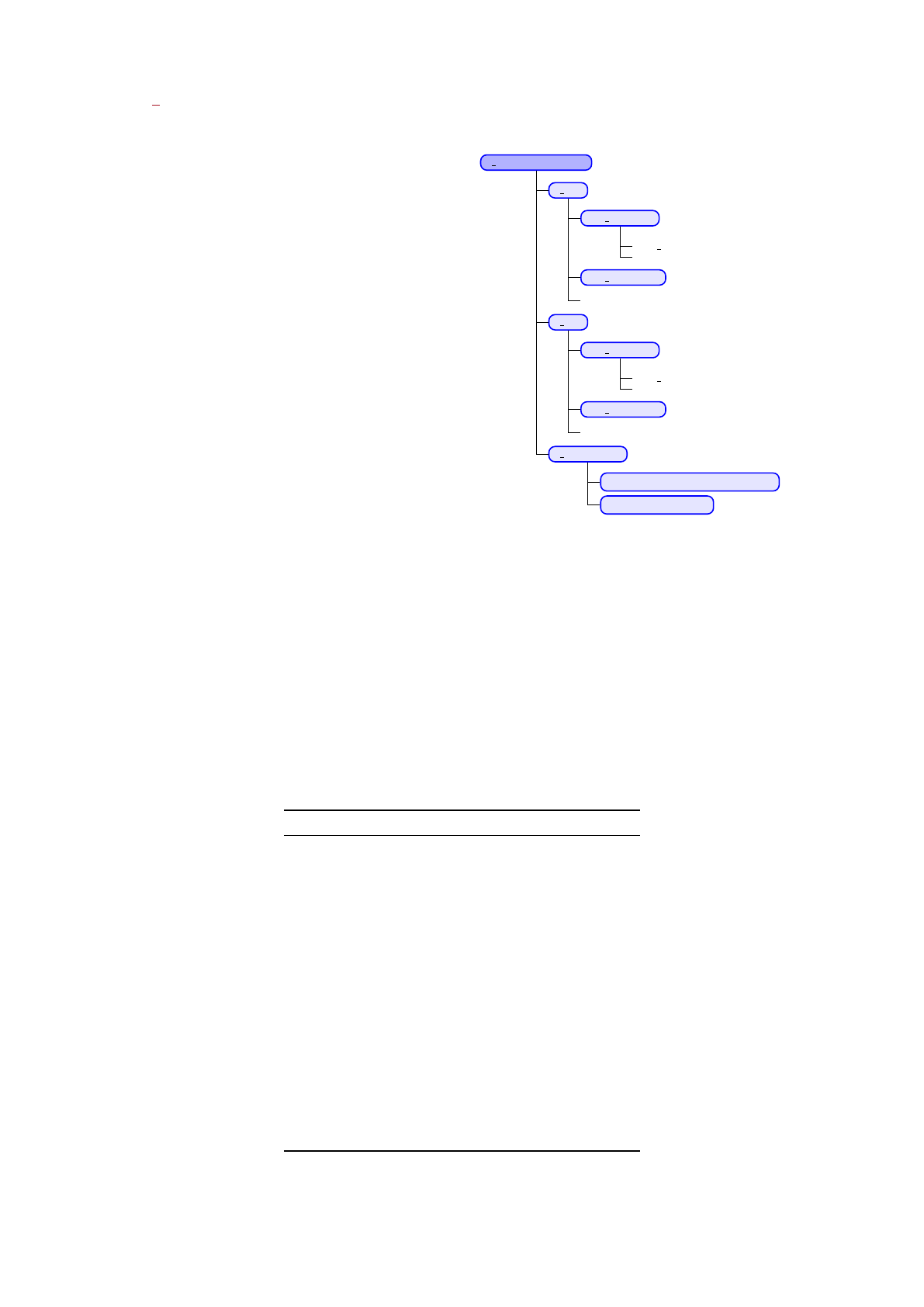
Figure 3: Data structure of the additional
data.
All the additional data can be downloaded
as one ZIP file. The data structure is
shown in Figure 3. An excerpt of the
anechoic recordings of the sixth move-
ment of the suite Children’s Corner, L.
113, by Claude Debussy is provided in
the folder RoomName_Stimuli. The nam-
ing of the audio data follows the scheme
RoomName_EmitterNr.wav, the detailed as-
signment to the musical instruments can
be found in Table 1. For each room, the
balance and timbre of the loudspeaker or-
chestra was adjusted to the room acoustic
properties by a professional sound engineer.
Thus, one anechoic recording is provided
per room, each containing the respective
level and timbre settings. For comparing
IR based auralizations against recordings,
it is thus sufficient to convolve the anechoic
recordings with the IRs without any addi-
tional filtering.
For both rooms, a 3D model of the scene
saved as SketchUp file is provided. Each
file contains the names, positions, and orientations of the sources and receivers.
In addition, pictures are provided showing the environment, the loudspeaker orchestra
and the various microphones. These data are stored separately for both spaces, the
Berliner Philharmonie (BPH) and the Berlin Open Lab (BOL).
Furthermore, images are included showing the reference point for determining the posi-
tion of all speakers with a red laser dot and the directivity index over the frequency for
the octave bands from 200 Hz to 8000 Hz of the musical instruments is stored.
Table 1: Assignments of the loudspeakers to the instruments of the audio material
Emitter Instrument Loudspeaker
E01 Violin 1 Neumann KH 120
E02 Violin 2 Neumann KH 120
E03 Viola Neumann KH 120
E04 Cello Neumann KH 120
E05 Double bass Genelec 1031
E06 Picolo flute Genelec 8020
E07 Flute Genelec 8020
E08 Oboe Genelec 8020
E09 Clarinet K+H O300D
E10 Bass clarinet K+H O300D
E11 Bassoon Neumann KH 120
E12 French horn Genelec 1031
E13 Trumpet Genelec 8331
E14 Snare drum HEDD Type 07
E15 Bass drum Genelec 8020 + KRK 12s
E16 Triangle Genelec 8020
E17 Crash cymbals HEDD Type 07
E18 Harp Genelec 8020
4
Loading more pages...