Monatshefte für Mathematik (2022) 198:717–740
https://doi.org/10.1007/s00605-022-01713-1
Interpolating between volume and lattice point
enumerator with successive minima
Ansgar Freyer1·Eduardo Lucas2
Received: 24 June 2021 / Accepted: 1 April 2022 / Published online: 11 May 2022
© The Author(s) 2022
Abstract
We study inequalities that simultaneously relate the number of lattice points, the vol-
ume and the successive minima of a convex body to one another. One main ingredient
in order to establish these relations is Blaschke’s shaking procedure, by which the
problem can be reduced from arbitrary convex bodies to anti-blocking bodies. As a
consequence of our results, we obtain an upper bound on the lattice point enumerator
in terms of the successive minima, which is equivalent to Minkowski’s upper bound
on the volume in terms of the successive minima.
Keywords Lattice points in convex bodies ·Successive minima ·Minkowski’s
second theorem ·Blaschke’s shaking procedure
Mathematics Subject Classification 11P21 ·52A10 ·52A20 ·52C05 ·52C07
Communicated by Monika Ludwig.
The research of the second author is part of the project PGC2018-097046-B-I00, supported by MCIN/
AEI/10.13039/501100011033/ FEDER “Una manera de hacer Europa”.
BAnsgar Freyer
Eduardo Lucas
1Technische Universität Berlin, Institut für Mathematik, Sekr. MA4-1, Straße des 17 Juni 136,
10623 Berlin, Germany
2Departamento de Matemáticas, Universidad de Murcia, Campus de Espinardo,
30100 Murcia, Spain
123
718 A. Freyer, E. Lucas
1 Introduction and results
Let Kndenote the class of all compact convex sets in Rnwith non-empty interior. For
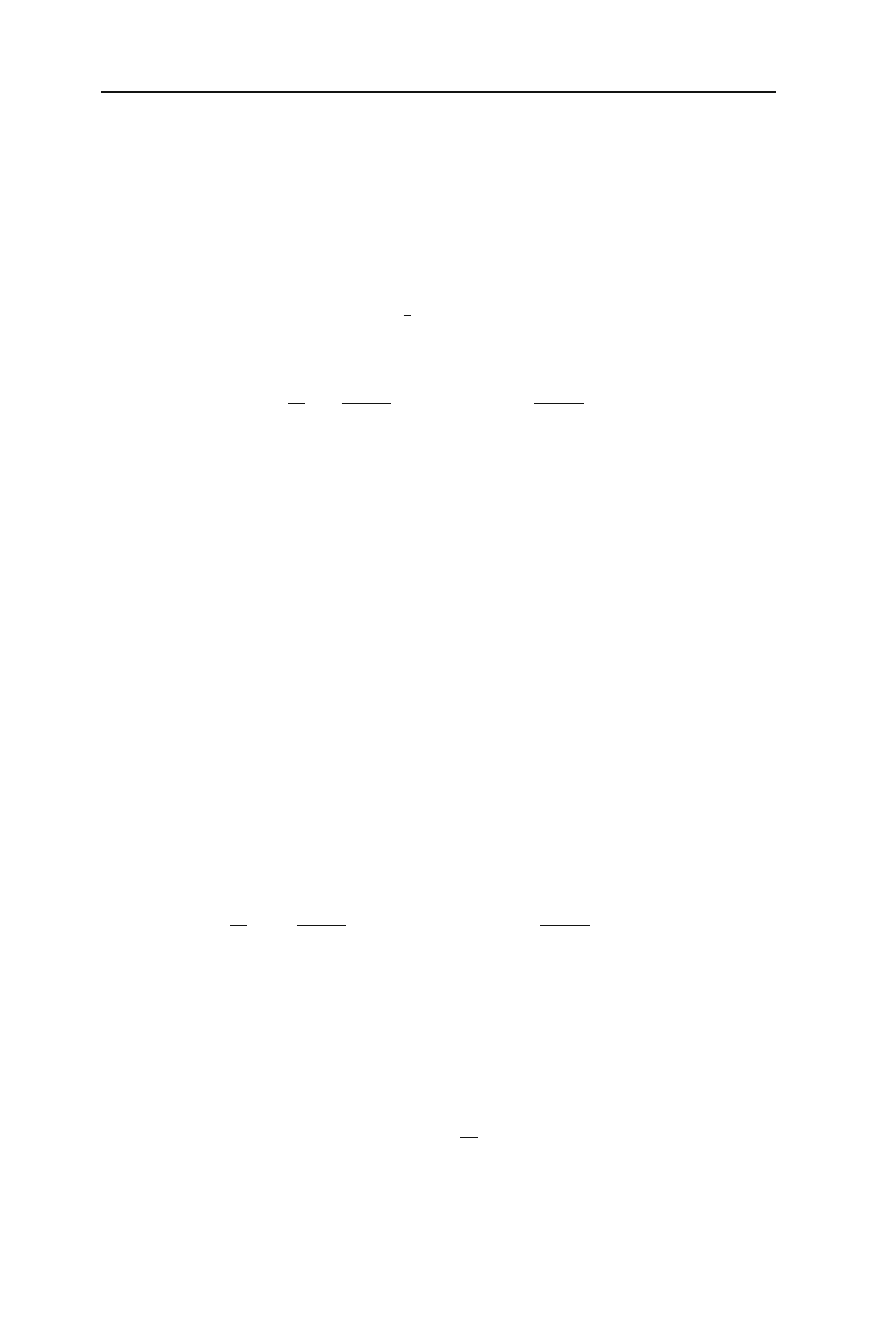
K∈Knwith K=−K,theith successive minimum is defined as
λi(K)=min λ>0:dim(λK∩Zn)≥i,(1.1)
for i=1,...,n. More generally, if Kis not necessarily symmetric, we define
λi(K)=λi(cs(K)), where cs(K)=1
2(K−K). The successive minima have origi-
nally been introduced by Minkowski and he related them to the volume in the following
way:
1
n!
n
i=1
2
λi(K)≤vol(K)≤
n
i=1
2
λi(K).(1.2)
This classical result is known as Minkowski’s second theorem on successive minima.
For origin-symmetric K, this has been proven by Minkowski [17,Ch.2, Theorems 9.1
and 9.2]. For general K∈Kn, the upper bound follows directly from the inequal-
ity vol(K)≤vol(cs(K)), which in turn is a special case of the Brunn-Minkowski
inequality [17,Ch.1, Theorem 1.7]. The lower bound can also be proved by an inclu-
sion argument, similar to the symmetric case: One considers the convex hull of the n
segments in Kthat realize the λi(K)[20,Remark 1.1].
Many alternatives to Minkowski’s complicated original proof have been obtained.
One of the first short proofs was given by Davenport [13]. More analytic proofs were
obtained by Weyl [31] and Estermann [14]; and Bambah, Woods and Zassenhaus
provided three new proofs in [2]. A more recent example was obtained by Henk [18].
The result has been extended, for instance, to more general successive minima by
Hlawka [17,Sect. 9.5]; to more general discrete sets, not necessarily lattices, by Woods
[32]; to intrinsic volumes by Henk [19]; or to surface area measures by Henk, Henze
and Hernández Cifre [20].
The lower and upper bound in (1.2) are attained, e.g., by simplices and cubes
respectively. Betke, Henk and Wills studied the relation of the lattice point enumerator
G(K)=|K∩Zn|to the successive minima of Kand obtained for K=−Kthat
1
n!
n
i=11
λi(K)−1≤G(K)≤
n
i=12i
λi(K)+1,
where for the lower bound λn(K)≤2 is needed [4,Proposition 2.1 and Corollary
2.1]. While the lower bound is best-possible, it is conjectured that the upper bound
can be strengthened as follows [4,Conjecture 2.1]:
Conjecture 1 (Betke, Henk, Wills) Let K ∈Knand λi=λi(K). Then one has
G(K)≤
n
i=12
λi+1,
where for a real number x ∈R,x=max{z∈Z:z≤x}denotes the floor function.
123

Interpolating between volume and lattice point enumerator… 719
Equalitywouldbeattained, e.g.,forboxesoftheform [−m1,m1]×···×[−mn,mn],
where mi∈Z>0. In dimension 2 the conjecture has been confirmed by Betke, Henk
and Wills themselves [4,Theorem 2.2] and in dimension 3 it has been shown by
Malikiosis [25,Sect. 3.2]. Moreover Malikiosis also proved that [25,Theorem 3.2.1]
G(K)≤4
e√3n−1n
i=12
λi+1,(1.3)
where again λi=λi(K). To this day, (1.3) is the best known upper bound for G(K)
in terms of the successive minima in general dimension.
Betke, Henk and Wills also pointed out in [4,Proposition 2.2] that any inequality
of the form
G(K)≤
n
i=12
λi+ci,(1.4)
for some numbers ci,1≤i≤n, independent of K(but not necessarily of n),
would imply the upper bound in Minkowski’s second theorem (1.2). Indeed, one can
asymptotically approximate the volume of Kby the lattice point enumerator with
respect to progressively finer lattices (using the properties of the Riemann integral),
to which (1.4) could then be applied, and the resulting limit is precisely Minkowski’s
bound.
In this paper, we use Minkowski’s second theorem to show (1.4) with ci=n(cf.
Corollary 1.2). In order to do so, we aim to express the deviation between G(K)and
vol(K)in terms of the successive minima λi(K),i=1,...,n. Our approach stems
from another conjecture by Betke, Henk and Wills that relates the volume, the lattice
point enumerator and the successive minima simultaneously.
Conjecture 2 (Betke, Henk, Wills) Let K ∈Knand λi=λi(K). Then,
G(K)≤vol(K)
n
i=11+iλi
2(1.5)
and, if λn≤2
n,
G(intK)≥vol(K)
n
i=11−iλi
2,(1.6)
where intK denotes the interior of K . Moreover, if K =−K and λn≤2, we have
G(intK)≥vol(K)
n
i=11−λi
2.(1.7)
The bound (1.7) is stated as Conjecture 2.2 in [4], where it is formulated for arbitrary
n-dimensional lattices. However, there is no loss of generality in restricting to the
integer lattice Zn.(1.5) and (1.6) have been communicated to the authors by Martin
123
720 A. Freyer, E. Lucas
Henk personally. In the general case, we obtain the following weakenings of (1.5) and
(1.6):
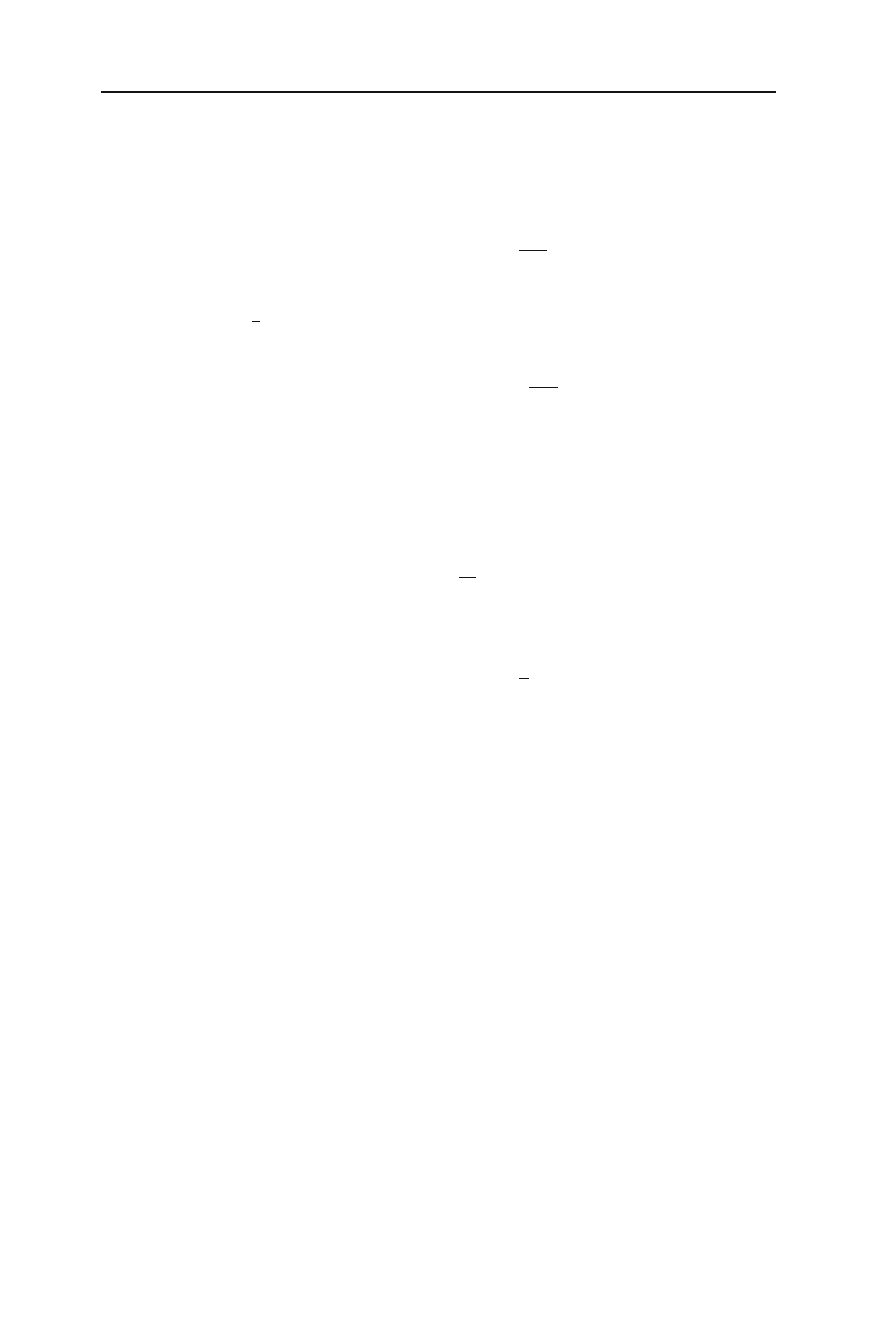
Theorem 1.1 Let K ∈Knand λi=λi(K),i∈[n]. Then we have
G(K)≤vol(K)
n
i=11+nλi
2.(1.8)
Moreover, if λn≤2
n, we have
G(intK)≥vol(K)
n
i=11−nλi
2.(1.9)
From this we can deduce immediately, by applying the upper bound in (1.2)tothe
volume in (1.8), the following inequality:
Corollary 1.2 Let K ∈Knand λi=λi(K),i ∈[n]. Then we have
G(K)≤
n
i=12
λi+n.
While our bound is tight for convex bodies rK,r→∞, it is weaker than Malikio-
sis’s bound (1.3), if, e.g., λi(K)=1/cfor some fixed number c>0. Then our bound
is of order nn, while the bound in (1.3)isoforder√3n.
The proof of Theorem 1.1 makes use of an inequality of Davenport [12], which
states that for any convex body K∈Knone has the bound
G(K)≤
n
k=1
I∈([n]
k)
voln−k(K|L⊥
I), (1.10)
where LI=span{ei:i∈I}and K|L⊥
Idenotes the orthogonal projection of K
on L⊥
I. Schymura generalized Davenport’s inequality and obtained for an arbitrary
linearly independent set {b1,...,bn}⊆Znthat
G(K)≤
n
k=1
I∈([n]
k)
voln−k(K|L⊥
I)volk(PI), (1.11)
where LI=span{bi:i∈I}and PI=i∈I[0,bi][22,Lemma 1.1]. We reverse
(1.11) in the following way.
Theorem 1.3 Let K ∈Knand let b1,...,bn∈Znbe linearly independent. Then
vol(K)≤
I⊆[n]
GZn|L⊥
I(intK|L⊥
I)(1.12)
123
Interpolating between volume and lattice point enumerator… 721
holds, where LI=span{bi:i∈I}and GZn|L⊥
Idenotes the lattice point enumerator
with respect to the projected lattice Zn|L⊥
I. The inequality is tight.
The factor volk(PI)in (1.11) is hidden in the correspondingly higher density of
Zn|L⊥
I. In fact, one has det(Zn|L⊥
I)≥volk(PI)−1.
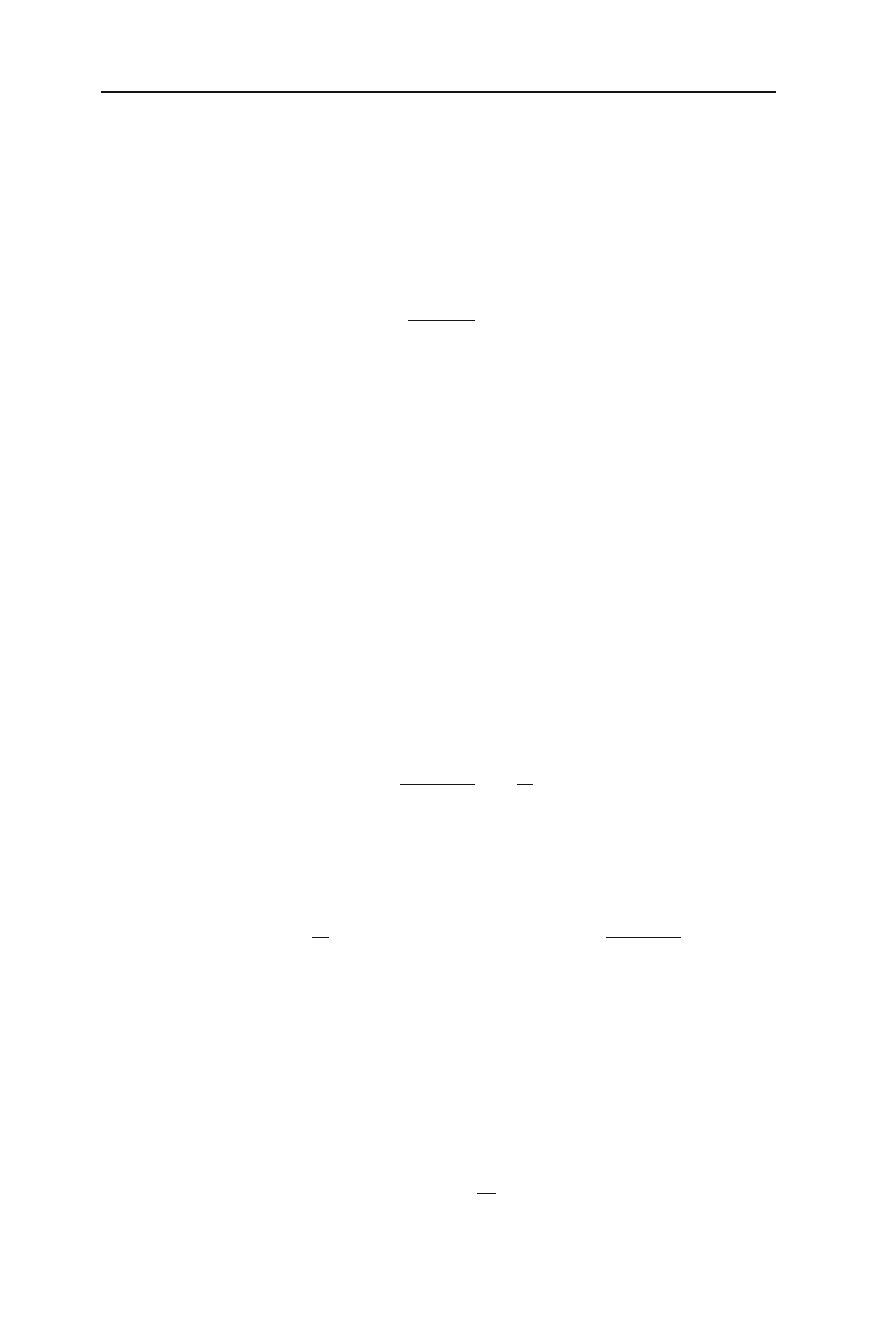
Apart from yielding discrete versions of Minkowski’s second theorem, Conjecture
2is interesting in its own right; on the one hand, one can deduce the well-known
formula
lim
r→∞
vol(rK)
G(rK)=1
from it, since λi(rK)tends to 0 as r→∞. On the other hand, if Kcontains an
n-dimensional set of lattice points it follows that λi(K)≤2 holds, and, if K=−K,
one has λi(K)≤1, 1 ≤i≤n. Therefore, we retrieve the universal bounds
G(K)≤(n+1)!vol(K),
for Kwith dim(K∩Zn)=n, and
G(intK)≥2−nvol(K),
for K=−Kwith dim(K∩Zn)=nfrom Conjecture 2. These bounds essentially
correspond to classical results of Blichfeldt [7] and van der Corput [17,Ch.2, Theorem
7.1].
In fact, all inequalities in Conjecture 2have equality cases that are invariant with
respect to integer scaling; (1.5) is tight, e.g., for integer multiples of the standard
simplex Tn=conv{0,e1,...,en}, since λi(Tn)=2 and thus,
vol(mTn)
n
i=11+iλi(mTn)
2=1
n!
n
i=1
(m+i),
where the right hand side is exactly the Ehrhart polynomial of Tn[3,Theorem 2.2 (a)].
In view of [3,Theorem 2.2 (b)], we have
Gint(mTn)=1
n!
n
i=1
(m−i)=vol(mTn)
n
i=11−iλi(mTn)
2
and so (1.6) is tight for integer multiples of Tnas well. As it has been mentioned
already in [4], equality cases for (1.7) are given for example by boxes parallel to the
coordinate axes with integral side lengths.
In dimension 2, we can confirm the upper bound in Conjecture 2. For the non-
symmetric lower bound we obtain an asymptotic confirmation:
Theorem 1.4 Let K ∈K2and λi=λi(K). Then we have
G(K)≤vol(K)1+λ1
2(1+λ2)(1.13)
123
Loading more pages...