
This version is available at https://doi.org/10.14279/depositonce-8475
© © 2019 IEEE. Personal use of this material is permitted. Permission from IEEE must be obtained for
all other uses, in any current or future media, including reprinting/republishing this material for
advertising or promotional purposes, creating new collective works, for resale or redistribution to
servers or lists, or reuse of any copyrighted component of this work in other works.
Terms of Use
Femmer, H.; Vogelsang, A. (2019). Requirements Quality Is Quality in Use. IEEE Software, 36(3),
83–91. https://doi.org/10.1109/ms.2018.110161823
Henning Femmer, Andreas Vogelsang
Requirements Quality Is Quality in Use
Accepted manuscript (Postprint)Journal article |
1
Requirements Quality is Quality in Use
Henning Femmer and Andreas Vogelsang
Abstract—The quality of requirements engineering artifacts
is widely considered a success factor for software projects.
Currently, the definition of high-quality or good RE artifacts
is often provided through normative references, such as quality
standards, textbooks, or generic guidelines. We see various
problems of such normative references: (1) It is hard to ensure
that the contained rules are complete, (2) the contained rules
are not context-dependent, and (3) the standards lack precise
reasoning why certain criteria are considered bad quality. To
change this understanding, we postulate that creating an RE
artifact is rarely an end in itself, but just a means to understand
and reach the project’s goals. Following this line of thought,
the purpose of an RE artifact is to support the stakeholders
in whatever activities they are performing in the project. This
purpose must define high-quality RE artifacts. To express this
view, we contribute an activity-based RE quality meta model
and show applications of this paradigm. Lastly, we describe the
impacts of this view onto research and practice.
Index Terms—Quality, quality standards, requirements, docu-
mentation, roadmap
Three Actionable Insights:
•Always remember: Requirements engineering artifacts
are a means, not an end.
•Therefore, before writing your requirements, think about
the readers and how they use the artifacts first.
•Use this simple model to define who is using RE artifacts,
what RE artifacts are used for, and how RE artifacts
should therefore look like.
I. CURRENT STANDARDS ARE INCOMPLETE, INADEQUATE
AND IMPRECISE ON REQUIREMENTS QUALITY.
Requirements Engineering (RE) artifacts are central entities
in the software engineering process. Based on these artifacts,
project managers estimate effort, designers create architec-
tures, developers build the system, and test managers set up a
test-strategy. Consequently, quality defects in RE artifacts can
cause expensive consequences in subsequent software devel-
opment activities. Therefore, quality control of RE artifacts is
key for successful software development projects.
The definition of high-quality or good RE artifacts is
often provided through normative references, such as quality
standards or textbooks (e.g., ISO/IEEE/IEC-29148 [1]). We
see various problems of such normative references.
Quality standards are incomplete. Several quality stan-
dards describe quality through a set of abstract criteria. When
analyzing the characteristics in detail, we see that there are
two different types of criteria: Some criteria, such as ambi-
guity, consistency, completeness, and singularity are factors
that describe properties of an RE artifact itself. In contrast,
feasibility, traceability, and verifiability state that activities can
be performed with the artifact. This is a small, yet important
difference: While the former can be assessed by analyzing
just the artifact by itself, the latter describe a relationship
of the artifact in the context of its usage. Yet this usage
context is incompletely represented in the quality standards:
For example, why is it important that requirements can be
implemented (feasible in the terminology of ISO-29148) and
verified, but other activities, such as maintenance, are not
part of the quality model? Therefore, we argue that normative
standards do not consider all activities systematically, and thus,
are missing relevant quality factors.
Quality standards are not context-dependent. One could
go even further and ask about the value of some artifact-based
properties such as singularity or formality. Still widely cited
quality models of the past [2] proclaimed that (all) projects
should strive towards formalized requirements. What is the
purpose and reason behind such a property? A normative
approach does not provide rationales. This is different for
activity-based properties, such as verifiability, since these
properties are defined by their usage: If we need to verify the
requirements, properties of the artifact that increase verifiabil-
ity are important. In particular, we need to understand up-front
how we want to verify the requirements. For a formal veri-
fication, formalized requirements are a reasonable approach.
For manual testing, however, formalized requirements might
actually make them harder to understand and, therefore, harder
to test. This example shows that, in contrast to the normative
definition of quality in RE standards, RE quality usually
depends on the usage context.
Quality standards lack precise reasoning. The standards
remain abstract and vague when defining the criteria. Only
for some criteria, such as ambiguity, the standards provide a
detailed list of factors to avoid (e.g., comparatives). However,
even then, the concrete impact of these factors (such as
comparatives) onto the abstract criteria (such as ambiguity)
remains unclear.
Set of Reqs. /
Reqs. Document
Complete
Affordable
Bounded
Consistent
Unambiguity
Clear Structure
Modifiability and
Extensibility
Traceability
Requirements
Language Criteria
Subjective
Language
Vague Pronouns
Superlatives
Ambiguous Adverbs
and Adjectives
Open-ended, non-
verifiable. Terms
Comparatives
Negatives
Statements
Loopholes
Incomplete
References
Short Sentences
and Paragraphs
One Req. per
Sentence
(Individual)
Requirements
Necessary
Implementation Free
Unambiguous
Consistent
Complete
Singular
Feasible
Traceable
Verifiable
Agreed
Understandable
ISO 29148
Characteristic
ISO 29148 & IREB
Characteristics
IREB
Characteristics
Key:

2
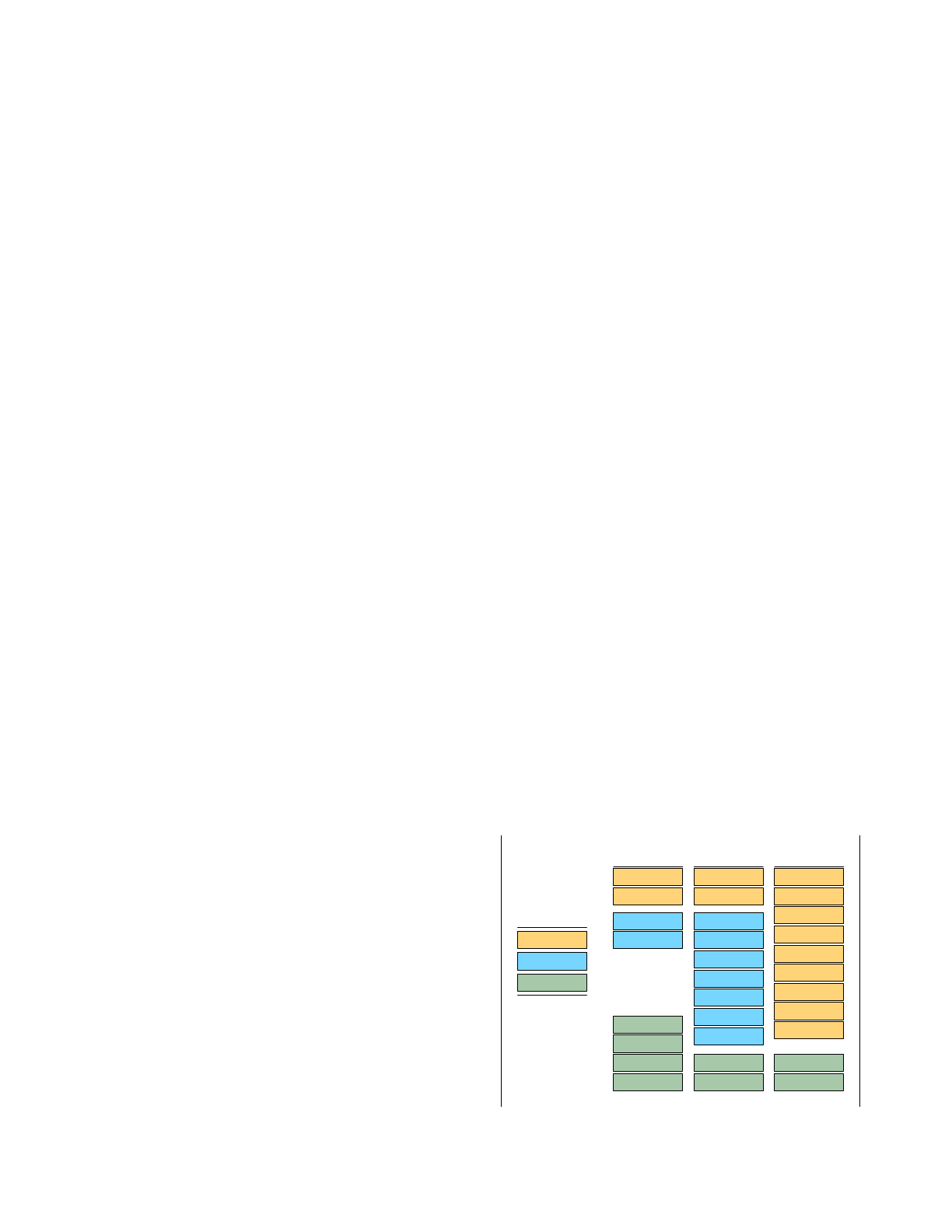
Fig. 1: This figure compares the quality character-
istics of ISO 29148 and the IREB syllabus. Blue
characteristics are shared characteristics, orange and
green characteristics appear only in one of the
standards.
II. SIDEBAR: COMPARISON OF RE QUALITY
STANDARDS
To get a taste of current RE quality standards,
we compare the ISO/IEC/IEEE-29148 [1] quality
standard with the definition of quality attributes
from the curriculum of the International Require-
ments Engineering Board (IREB), a certification
also widely used in industry.
Both standards define a quality model through
a simple list of characteristics. According to the
standards, good requirements documents are those
in which these characteristics are present. The stan-
dards share nine of the characteristics (see Fig. 1),
mostly those characteristics defined in earlier litera-
ture and standards, such as the IEEE 830. However,
the standards disagree on more characteristics than
they agree on. In particular, the standards disagree
when it comes to concrete language criteria. Un-
fortunately, even when the standards agree on the
characteristics, the definitions of these character-
istics vary in specific details. Take, for example,
consistency. While the IREB definition only con-
siders disagreeing requirements as inconsistent, the
ISO 29148 definition of inconsistency also includes
duplication issues and terminological deficiency. In
addition, the IREB assesses quality characteristics
on a continuous scale, whereas the definitions of the
ISO standard suggest a Boolean interpretation.
At a glance, both standards share the same
approach towards quality, but their details differ
tremendously. This is especially true for the con-
crete, assessable language criteria. We argue that
these differences indicate two problems. First, the
missing agreement on the level of concrete language
criteria indicates that we do not yet know what is
good or bad quality, and that we have little to no
established understanding of the impacts of concrete
language criteria. Second and even more problem-
atic, the missing agreement at the level of abstract
quality characteristics indicates there is neither an
established understanding about nor an established
approach towards quality for RE artifacts as a whole.
Other authors have also noticed these deficien-
cies and came up with quality models that con-
sider the viewpoint of the user. For example, Lind-
land et al. [3] define different facets of quality
(syntactic, semantic, pragmatic), where pragmatic
quality emphasizes the extent to which the re-
quirements model is understood by the user. Deis-
senboeck et al. define an activity-based quality
model [4] for quality-in-use characteristics of source
code, such as maintainability. Our work details the
pragmatic quality facet through the use of activity-
based quality models.
III. GOALS OF REQUIREMENTS ENGINEERING
Let us take a step back. If we want to get to the bottom
of RE artifact quality, we need to reconsider the goals of
requirements engineering itself since RE artifacts should even-
tually support the goals of RE. Following the definitions of the
goals of RE as understood by Glinz [5, p.18], we understand
quality in RE as the degree to which the following goals are
sufficiently fulfilled for system stakeholders and the project
team:
1Understand stakeholders’ needs: High quality in RE
is the degree of correct and complete understanding of
the goals, expectations, and constraints of the system
stakeholders.
2Achieve agreement: High quality in RE is the degree of
agreement on a system that manifests the consensus of
all system stakeholders. To this end, high quality in RE
correctly prioritizes requirements, and ensures that a best-
possible solution is derived for the system stakeholders’
needs (iteration between problem and solution space, see
twin-peaks model [6]).
3Create the same mental model between all system
stakeholders: High quality in RE is the degree to which
these system stakeholders’ needs and the derived consen-
sus are communicated correctly and completely between
all involved system stakeholders in the project.
4Structure & manage requirements-based activities:
Many project activities are structured along the system
stakeholders’ needs, e.g., in the form of requirements.
Some exemplary activities are estimating the costs, plan-
ning the implementation of the system, developing the
system, or testing the system. Consequently, high quality
in RE is the degree to which engineers working with
the requirements (i.e., the information) can efficiently
and effectively use the requirements to execute their
requirements-based activities [7].
RE artifact quality should be defined and assessed with
respect to the achievement of these goals.
IV. A DIFFERENT VIEW ON REQUIREMENTS QUALITY
Gross and Doerr [7] argue that in order to create high-
quality requirements documentations that fit the specific de-
mands of successive document stakeholders, the research
community needs to better understand the particular infor-
mation needs of downstream development roles. We follow
this idea but relate artifact quality to development activities
and not to document stakeholders because information needs
of stakeholders may change depending on the activities they
have to perform in a specific context.
In the following, we describe our approach towards require-
ments artifact quality. We first describe the basic concepts, then
the detailed model, and finally an exemplary quality factor.

3
A. The Idea
We postulate that creating an RE artifact is rarely an end in
itself, but just a means to reach the project’s goals. In particu-
lar, they are a tool to reach the goals of RE, as described in the
previous section. Following this line of thought, the purpose
of a requirements artifact is to support the stakeholders in
whatever activities they are performing in the project. This
change of view means that it is unreasonable to talk about
good or bad RE artifacts in general. What is good and what is
bad must always be assessed with respect to the given context.
More specifically, good quality depends on the RE artifact
stakeholders and the activities that they conduct with the RE
artifacts. In fact, we argue that common quality criteria, even
completeness and correctness, have to be rethought from a
quality-in-use perspective. This contributes a novel view on
requirements engineering artifact quality, which discusses RE
artifact quality from a quality-in-use viewpoint.
B. The Model
To define RE artifact quality, we designed Activity-Based
RE artifact Quality Models (ABRE-QMs). To describe the
structure of ABRE-QMs, we provide an ABRE-QM meta
model that introduces the concepts needed to describe an
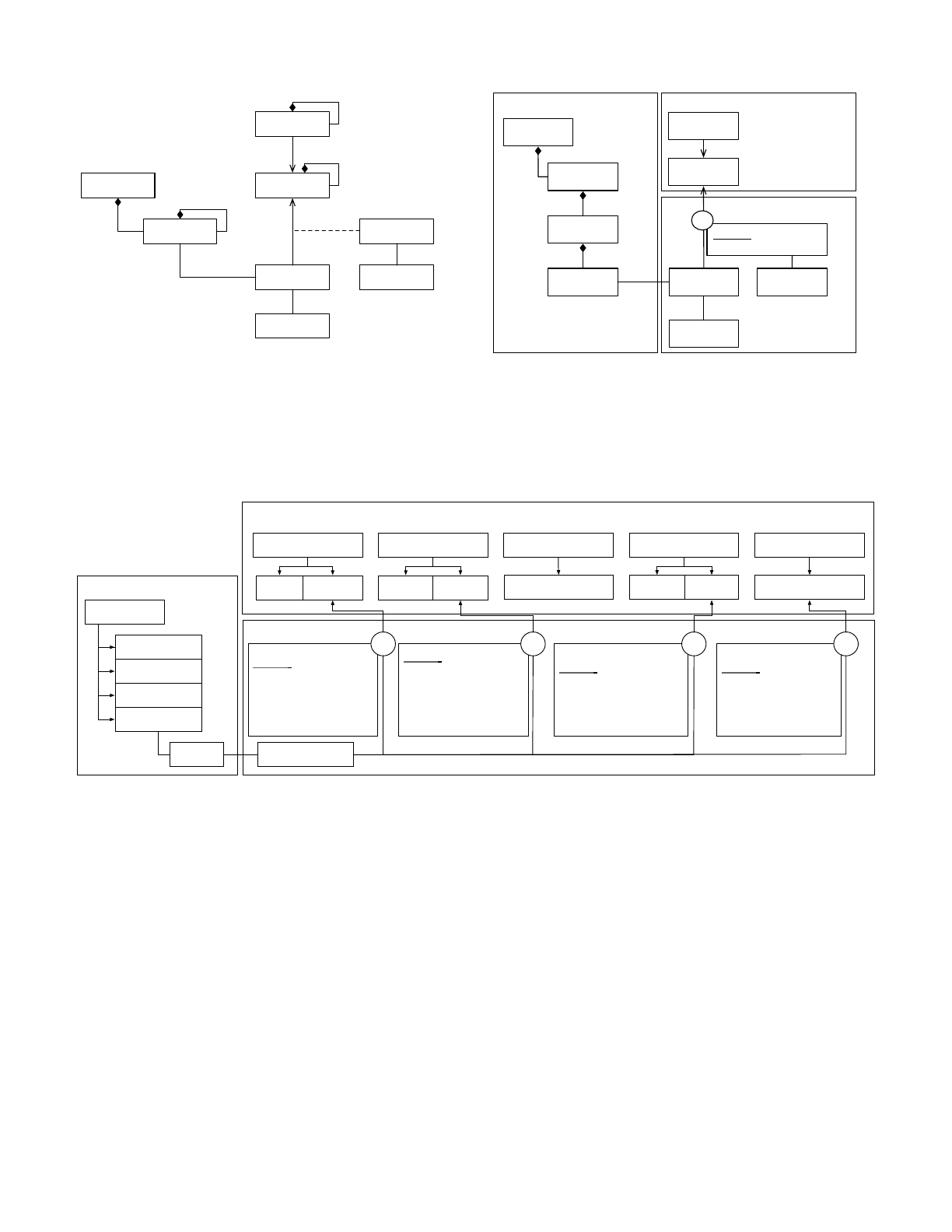
ABRE-QM (see Fig. 2 left):
An artifact is a documented collection of requirements
entities, which is produced during an RE process. An example
for an artifact is a use case document.
An entity is a coherent documented information. An entity
can be an information content item, but can also be further
decomposed, for example into the linguistic components of
such a content item. Examples for entities are a use case, an
alternative flow, or a step within the flow.
A stakeholder role is the role of someone with an interest
in the RE artifact [8], such as a test engineer. Each role
can include other roles that are more generic. For example,
both test engineer and developers are also readers of the
requirements artifact. Therefore, quality factors that affect the
activity read, affect all readers of the artifact, including test
engineers and developers through their included generic role
reader. This allows combining shared activities that multiple
stakeholders must execute.
An activity is an invested effort, which involves one or more
of the aforementioned artifacts, such as creating test cases, and
one or more of the aforementioned stakeholder roles, such
as the test engineer. An activity can be broken down into
subactivities. For example, the testing activity is decomposed
into creating,running, and maintaining test cases.
A quality factor is a property that is or is not present in an
entity. This property must be objectively assessable through a
measure to be used for quality control.
An impact is an explicit relation between a quality factor
and an activity. The impact influences either effectiveness or
efficiency of that activity. This impact is explicitly discussed
through: First, a reason, i.e., an argumentation why the pres-
ence of a specified characteristic (the quality factor) of an
artifact impacts the associated activity; second, consequences
on costs, schedule or quality of the developed system; and
third, a source from which this impact was derived and which
can provide further information, i.e., a requirements quality
standard or corporate guidelines.
A context factor influences the impact of a quality factor.
For example, the problematic impact of a passive voice re-
quirement varies, depending on the background of the reader.
If the reader has no or few domain knowledge, the passive
voice has a stronger impact. In contrast, in cases where the
reader is well aware of the domain and the ideas of the system,
the impact can be less problematic. Context factors can be
human, process or tool factors.
An assessment is a description for evaluating an entity
against a quality factor. The application of an assessment
against an entity results in a (potentially empty) set of quality
defects (cf. [4]). We see three potential categories of assess-
ments: manual, automatic, and semi-automatic assessments.
C. An Exemplary Quality Factor
To foster understanding, this section provides an exemplary
excerpt of an ABRE-QM (see Fig. 2 right). The example shows
the definition of one quality factor, namely the presence of
explicit steps in a use case flow.
1. Artifacts and entities: Ause case document is a common
artifact for specifying functional requirements to software
systems. A use case usually contains a basic flow, which is a
sequence of steps that describes how the user interacts with
the system.
2. Stakeholder roles: For the sake of simplicity, in this
example, we consider only test engineers.
3. Activities: When we analyze how a test engineer pro-
cesses the use case document in a specific project, we discover
that, among other activities, the test engineers goes through the
use case steps and creates test step(s) for the use case’s basic
flow.
4. Quality factors: It is considered good practice in use
cases to explicitly separate each step instead of describing the
whole basic flow in one text block. With the aforementioned
context and activity in mind, we understand why a use case
with this quality factor is considered higher quality: The
test engineer can directly translate the use case steps to test
steps. Therefore, the test engineer’s task of creating a test
sequence can be executed more effectively (and maybe also
more efficiently) when the factor is present in the use case.
Fig. 2 explicates this reasoning through a positive (’+’) impact
in an ABRE-QM. Please note, that for simplicity, we only
discuss one of the impacts of this quality factor here.
5. Context factors: One could consider the applied tool
environment to be a context factors. Depending on the concrete
tools in use, the translation is more or less efficient.
6. Assessment: One could discuss various types of as-
sessments, depending on the tools used. An easy-to-apply
assessment is a manual review, which can spot this quality
defect. In addition, for various requirements management
tools, one could discuss automatic (or at least semi-automatic)
methods through automatic analysis of the use case’s structure.
This example shows the definition of one quality factor. An
ABRE-QM is a composition of a set of such quality factors
4
Artifact
Entity
Quality
Factor
Stakeholder
Role
Activity
Impact
performs
impacts
is
present
contains
contains
Context
Factor
Assessment
influenced by
evaluated by
includes generic role
consists of
Artifacts & Entities
Use Case
Document
Basic Flow
Step is explicitly
separated
Test Engineer
(T.E.)
Create Test
Steps
Rationale: T.E. can translate
steps
+
performs
impacts
is
present
contains
contains
Tool-Features
Manual Review
influenced by
evaluated by
Use Case
contains
Stakeholder & Activities
Quality Factors & Impacts
Fig. 2: This figure shows the ABRE-QM meta model (left) and a simple example of a quality factor in an ABRE-QM (right).
The meta model consists of artifacts and their decomposition into entities, quality factors and their impact on activities, which
are performed by certain stakeholder roles. Impacts are influenced by context factors. Lastly, quality factors are evaluated by
assessments. The example discusses why explicitly separated steps in basic flows of use cases are considered good quality. In
this example, we discuss the impact on creating test steps, i.e., explicitly separated steps in basic flows allow more efficient
and effective creation of test steps through reuse.
Req. Engineer Implementer Tester User
Implement
UC
All Stakeholders
Create
UC
Maintain
UC
Find
UC
Understand
UC
Perform
UC
Use Case
Basic Flow
Name
Preconditions
Postconditions
Step UI Design Details
Rationale:
A visual representation of a
UI supports the stakeholder
in understanding, because it
makes the Use Case more
concrete.
+
Rationale:
Visual elements change
more often than the way
how a user interacts with
the system. Therefore, UC
with UI detail must be
changed more often.
-
Rationale:
The tester can associate the
UC directly to the UI which
makes running the test case
easier.
+
Rationale:
A user might have to use a
suboptimal UI, because it
was determined early in
the process.
-
Run
Test
Derivate
Test Idea
Impacts
Stakeholder & Activities
Artifacts & Entities
Fig. 3: This figure shows a more complex ABRE-QM. It discusses positive as well as negative impacts of UI design details
in use cases: On the one hand, UI details in use case descriptions eases understanding the use case and running tests. On the
other hand, it makes maintaining the use cases less efficient and might lead to suboptimal design, which makes it harder for
the user to perform the use case.
with their respective relations. Fig 3 shows a more extensive
example, where a quality factor has positive and negative
impacts onto activities and needs to be evaluated in context.
This model enables researchers to provide practitioners with
a precise definition of what they consider to be good or bad
quality, why (i.e., due to which consequences) and in which
context (i.e., based on which activities). Practitioners can then
use such a precise quality model and, based on artifacts,
activities and impacts, decide which quality characteristics are
relevant for their context.
V. APPLICATIONS IN RESEARCH AND PRACTICE.
We have applied the proposed meta model for different
purposes. The meta model proved beneficial in several contexts
that are discussed in the following.
Activity-based RE Guidelines. Nowadays, many compa-
nies have generic guidelines to help employees improve their
requirements and to create a baseline for quality. We argue
that guidelines that are defined in an activity-based manner
could help to make these guidelines more complete, precise,
and specific for their context. In a first study [9], practitioners
reported that a translated guideline helps to both discuss
validity of the existing rules and to create guidelines that are
more complete.
Activity-based Tailoring of Requirements Templates. Re-
quirements templates are blueprints that determine the syntac-
tic structure of a single requirement. One reported advantage
of requirements templates is that they facilitate requirements
Loading more pages...