
Article
Productivity and Oil Content in Relation to Jatropha
Fruit Ripening under Tropical Dry-Forest Conditions
Álvaro Cañadas-López 1,2,* , Diana Yasbhet Rade-Loor 3, Marianna Siegmund-Schultze 4,
Marys Iriarte-Vera 3, Juan Manuel Domínguez-Andrade 5, Jesús Vargas-Hernández 6and
Christian Wehenkel 7
1Universidad Laica Eloy Alfaro de Manabí, Facultad de Ingeniería Agropecuaria, Carrera Ingeniería
Agropecuaria, Campus ULEAM-Extensión Chone, Av. Eloy Alfaro, Chone C.P. 130301,
Provincia de Manabí, Ecuador
2Instituto Nacional de Investigaciones Agropecuarias (INIAP), Estación Experimental Tropical Pichilingue,
Programa de Forestaría, Km 5 vía Quevedo—El Empalme, Cantón Mocache C.P. 120501,
Provincia Los Ríos, Ecuador
3Escuela Superior Politécnica de Manabí(ESPAM-MFL), Centro de Investigación de las Carreras de la
ESPAM-MFL (CICEM), Campus Politécnico Calceta, Sitio El Limón, Calceta, Cantón Bolívar C.P. 130250,
[email protected] (M.I.-V.)
4Technische Universität Berlin, Environmental Assessment and Planning Research Group, Straße des 17,
5Escuela Superior Politécnica del Litoral (ESPOL), ESPAE Graduate School of Management, Campus Las
6Colegio de Postgraduados, Posgrado en Ciencias Forestales, Montecillo, Texcoco, Mexico;
7Instituto de Silvicultura e Industria de la Madera, Universidad Juárez del Estado de Durango,
Boulevard Guadiana #501, Ciudad Universitaria, Torre de Investigación, Durango C.P. 34120, Mexico;
*Correspondence: alvar[email protected]; Tel.: +593-93-906-8644
Received: 27 August 2018; Accepted: 1 October 2018; Published: 4 October 2018
Abstract:
Jatropha is promoted as a pro-poor bioenergy plant, while basic information about its
productivity, age of maximum production, and oil content are missing. This study aims to determine
the seed yield (dry weight) for three INIAP elite jatropha accessions, and to evaluate the changes
in physical and chemical seed traits at the different fruit ripening stage in a split-plot design.
Maximum seed production occurred four years after planting for the accessions CP041 and CP052,
while for accession CP054, it occurred after the first year. CP041 was the most productive, with a
mean of 316.46 g tree
−1
year
−1
(
±
76.50) over the 8-year study period. No significant differences
in oil content were found among accessions, fruit ripening stage, and their respective interactions.
Seed moisture content decreased drastically as the fruit ripening stage increased, from 40.5%
±
1.0% at
fruit ripening stage 1 (greenish-yellow) down to 13.8%
±
0.4% at fruit ripening stage 4 (black-brown).
No significant differences in seed weight were found among accessions, but it decreased as maturation
progressed. Yellow fruits (stage 2) were the heaviest (62.4 g
±
1.5 g) and the black-brown fruits the
lightest (44.3 g
±
1.9 g). The oil content (%) increased with seed weight up to the point of 58.3 g,
but then decreased for heavier seeds.
Keywords: harvesting point; jatropha accessions; seed productivity; seed humidity; seed oil content
Forests 2018,9, 611; doi:10.3390/f9100611 www.mdpi.com/journal/forests

Forests 2018,9, 611 2 of 13
1. Introduction
Jatropha curcas L. (in the following: jatropha) is a shrub or small tree belonging to the tribe
Joannesieae of the family Euphorbiaceae, adapted to arid zones, with potential use for biofuel production.
Jatropha is commonly used in the Manabíprovince, Ecuador, as living fence for pasture division [
1
].
Jatropha had often been classified as an ideal “pro-poor” crop, due to its potential value for seed oil
production in marginal and degraded areas. Consequently, substantial public and private investment
has been made available for jatropha plantations in marginal lands [
2
]. Nonetheless, it has become
clear that the requirements to obtain economically viable seed yields have been underestimated,
and therefore, many investments have been withdrawn [
3
–
5
]. Despite this reversal, production derived
from jatropha under favorable growing conditions continues to be a concept receiving considerable
political and commercial interest [
6
,
7
], and efforts are being made to estimate the biomass production
so that small jatropha producers could sell the carbon sequestration in the trees under the emissions
trading scheme of the Clean Development Mechanism (CDM) of the Kyoto Protocol [
8
]. For example,
in Ecuador, the Ministry of Electricity and Renewable Energy (Ministerio de Electricidad y Energía
Renovable, MEER), with the support of private investors, implemented the “Jatropha for Galápagos”
Project in 2011. The main objective of this project is to replace petro diesel by jatropha oil through
the agro industrial development of jatropha in the continent [
1
]. The selected province is Manabí,
which belongs to the tropical, dry forest zone [9], and focusing on smallholders.
Determination of seed productivity using long-term field data is crucial for the management of
jatropha plantations [
10
]. When regional or local data on seed productivity is missing, information
from the literature is commonly used to evaluate the economic and financial feasibility of jatropha
plantations [
10
]. However, estimates of jatropha production used in several economic studies range
between 3000–7000 kg ha
−1
year
−1
[
10
]. In Ecuador, Rade et al. [
2
] observed a huge seed production
variation during seven years’ data collection of the INIAP accession CP041 planted in jatropha live
fences in Manabí, Ecuador (average of 243.32 g tree
−1
year
−1
). In a jatropha pure plantation under
tropical dry forest conditions, Cañadas et al. [
1
] reported an average jatropha dry seed productivity
of 283.20 g tree
−1
year
−1
with 1677 trees per hectare for the INIAP accession CP041, but also
with a broad variation in productivity from one year to the next. In addition to year-to-year
variation in environmental factors, plantation age influences seed production. According to GTZ [
11
],
jatropha plantations reach maturity at about eight years of age. Van Eijck et al. [
10
] highlighted that
the jatropha production horizon is too short (10 years or less) to be able to reliably assess medium and
long-term economic viability of jatropha plantations. However, a perspective on jatropha productivity
in Ecuador was presented by Rade et al. [
2
], who found a negative covariance between jatropha dry
seed production and time in a live fence for the INIAP accession CP041 (
−
991.35) and for traditional
jatropha (−715.00) during seven years’ field observations.
Moreover, jatropha oil content in seeds is known to vary between 40% to 60%, with protein
content varying from 10% to 30% (although it is not usable due to the presence of phrobol ester and
curcin contents) [
12
]. Jatropha fruits show different maturity degrees within the same tree as a result
of a continuous fructification process [
13
]. Since physiological changes occur during the maturation
stages [
14
], harvesting the fruits at an adequate maturation stage is an important factor determining seed
quality and oil content. This information is essential for planning harvesting and processing, with the
aim of optimizing oil extraction [
15
]. In addition, genetic variation of the lipid content of jatropha seeds
has been found among genotypes [
16
]. Oil content and moisture change with time, and affect the seed
quality and behavior in response to environmental changes, especially relative humidity [
17
]. Thus, it is
important to evaluate changes in physical and chemical properties, including oil and moisture content,
and dry weight of jatropha seed along the maturation process. These data are not only essential for
harvest timing and equipment, but also for seed processing and storage [18].
The productivity of mature jatropha stands is poorly described under tropical dry forest conditions.
Moreover, determination of optimum seed quality in relation to oil content during the jatropha fruit
ripening process is of utmost importance to establish the optimum time for fruit harvesting in jatropha.
Forests 2018,9, 611 3 of 13
The objective of this study was to evaluate the productivity and physical changes at four fruit ripening
stages for three INIAP elite jatropha accessions.
2. Materials and Methods
2.1. Study Area
The study was conducted at the Portoviejo Experimental Station (EEP) of the National
Institute of Agricultural Research (INIAP) during the period from August 2009 to December 2017.
The geographical coordinates are 0
◦
01
0
S and 80
◦
23
0
W, sector Lodana, canton Portoviejo, province of
Manabí. The EEP is located at 47 m.a.s.l, with an annual mean temperature of 26.4
◦
C and average
annual rainfall of 798 mm, with a large year-to-year rainfall variability, 78% average relative humidity,
and a total sun-light sum of 1159 h year
−1
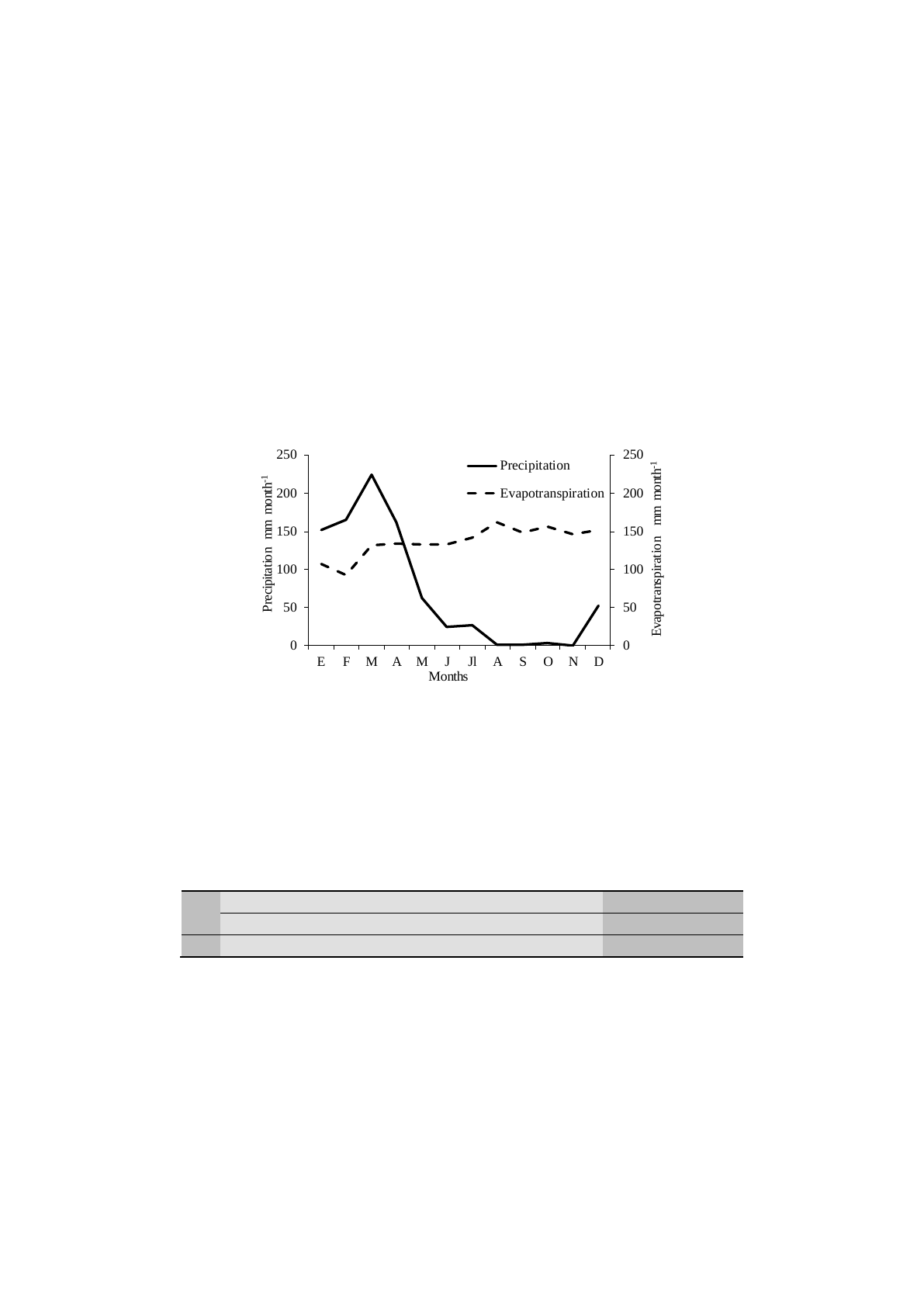
. Figure 1shows the monthly precipitation along with
potential evapotranspiration, averaged over the experiment’s period. A surplus of water generally
occurs in the course of January to March, while there is a water deficit the rest of the year.
Forests 2018, 9, x FOR PEER REVIEW 3 of 13
harvesting in jatropha. The objective of this study was to evaluate the productivity and physical
changes at four fruit ripening stages for three INIAP elite jatropha accessions.
2. Materials and Methods
2.1. Study Area
The study was conducted at the Portoviejo Experimental Station (EEP) of the National Institute
of Agricultural Research (INIAP) during the period from August 2009 to December 2017. The
geographical coordinates are 0°01′ S and 80°23′ W, sector Lodana, canton Portoviejo, province of
Manabí. The EEP is located at 47 m.a.s.l, with an annual mean temperature of 26.4 °C and average
annual rainfall of 798 mm, with a large year-to-year rainfall variability, 78% average relative
humidity, and a total sun-light sum of 1159 h year−1. Figure 1 shows the monthly precipitation along
with potential evapotranspiration, averaged over the experiment’s period. A surplus of water
generally occurs in the course of January to March, while there is a water deficit the rest of the year.
Figure 1. Water balance in the INIAP-EEP, 2009–2017. The solid line represents the monthly average
of precipitation and the dashed line the potential evapotranspiration.
2.2. Soil Conditions
A soil analysis for the study area was carried out in the INIAP-EEP (Table 1). The soil has a
neutral pH, with low levels of Nitrogen, Zinc, and Iron, medium levels of Boron, and high levels of
Phosphorus, Potassium, Calcium, Magnesium, Copper, and Manganese.
Table 1. Soil chemical properties in the study area, INIAP-EEP, 2009.
pH
NH4
P
Zn
Cu
Fe
Mn
Zn
B
K
Ca
Mg
(in ppm)
(in meq 100 mL−1)
7.3
17.12
23.01
1.82
7.14
12.11
23.75
1.82
0.92
2.07
20.90
4.02
2.3. Preparation of Experimental Site
The land was prepared by mechanized clearing, ploughing, and harrowing. Jatropha curcas L.
cuttings were collected from the mother trees. Three INIAP jatropha accessions (CP041, CP052 and
CP054) were used in the present study. Diammonium phosphate fertilizer (18-46-0) was applied at a
dose of 50 g per planting hole before cuttings were transplanted. The plantlets were planted in
August 2009 as 70-day-old bare root transplants. Potassium chloride was subsequently applied, at a
dose of 4 g per tree, 30, 90, and 120 days after transplanting. Weeds were cut manually, once a month
with a machete, and Igran® liquid herbicide (Nufarm Australia Limited: Melboume, VIC, Australia)
was applied by spraying every 4 months, at a dose of 200 mL per 20 L of water. After jatropha
establishment, no fertilization, or pest or mite controls were provided.
0
50
100
150
200
250
0
50
100
150
200
250
E F M A M J Jl A S O N D
Evapotranspiration mm month-1
Precipitation mm month-1
Months
Precipitation
Evapotranspiration
Figure 1.
Water balance in the INIAP-EEP, 2009–2017. The solid line represents the monthly average of
precipitation and the dashed line the potential evapotranspiration.
2.2. Soil Conditions
A soil analysis for the study area was carried out in the INIAP-EEP (Table 1). The soil has a
neutral pH, with low levels of Nitrogen, Zinc, and Iron, medium levels of Boron, and high levels of
Phosphorus, Potassium, Calcium, Magnesium, Copper, and Manganese.
Table 1. Soil chemical properties in the study area, INIAP-EEP, 2009.
Forests 2018, 9, x FOR PEER REVIEW 3 of 13
harvesting in jatropha. The objective of this study was to evaluate the productivity and physical
changes at four fruit ripening stages for three INIAP elite jatropha accessions.
2. Materials and Methods
2.1. Study Area
The study was conducted at the Portoviejo Experimental Station (EEP) of the National Institute
of Agricultural Research (INIAP) during the period from August 2009 to December 2017. The
geographical coordinates are 0°01′ S and 80°23′ W, sector Lodana, canton Portoviejo, province of
Manabí. The EEP is located at 47 m.a.s.l, with an annual mean temperature of 26.4 °C and average
annual rainfall of 798 mm, with a large year-to-year rainfall variability, 78% average relative
humidity, and a total sun-light sum of 1159 h year−1. Figure 1 shows the monthly precipitation along
with potential evapotranspiration, averaged over the experiment’s period. A surplus of water
generally occurs in the course of January to March, while there is a water deficit the rest of the year.
Figure 1. Water balance in the INIAP-EEP, 2009–2017. The solid line represents the monthly average
of precipitation and the dashed line the potential evapotranspiration.
2.2. Soil Conditions
A soil analysis for the study area was carried out in the INIAP-EEP (Table 1). The soil has a
neutral pH, with low levels of Nitrogen, Zinc, and Iron, medium levels of Boron, and high levels of
Phosphorus, Potassium, Calcium, Magnesium, Copper, and Manganese.
Table 1. Soil chemical properties in the study area, INIAP-EEP, 2009.
pH
NH
4
P
Zn
Cu
Fe
Mn
Zn
B
K
Ca
Mg
(in ppm)
(in meq 100 mL
−1
)
7.3
17.12
23.01
1.82
7.14
12.11
23.75
1.82
0.92
2.07
20.90
4.02
2.3. Preparation of Experimental Site
The land was prepared by mechanized clearing, ploughing, and harrowing. Jatropha curcas L.
cuttings were collected from the mother trees. Three INIAP jatropha accessions (CP041, CP052 and
CP054) were used in the present study. Diammonium phosphate fertilizer (18-46-0) was applied at a
dose of 50 g per planting hole before cuttings were transplanted. The plantlets were planted in
August 2009 as 70-day-old bare root transplants. Potassium chloride was subsequently applied, at a
dose of 4 g per tree, 30, 90, and 120 days after transplanting. Weeds were cut manually, once a month
with a machete, and Igran® liquid herbicide (Nufarm Australia Limited: Melboume, VIC, Australia)
was applied by spraying every 4 months, at a dose of 200 mL per 20 L of water. After jatropha
establishment, no fertilization, or pest or mite controls were provided.
0
50
100
150
200
250
0
50
100
150
200
250
E F M A M J Jl AS O N D
Evapotranspiration mm month
-1
Precipitation mm month
-1
Months
Precipitation
Evapotranspiration
2.3. Preparation of Experimental Site
The land was prepared by mechanized clearing, ploughing, and harrowing. Jatropha curcas L.
cuttings were collected from the mother trees. Three INIAP jatropha accessions (CP041, CP052 and
CP054) were used in the present study. Diammonium phosphate fertilizer (18-46-0) was applied at a
dose of 50 g per planting hole before cuttings were transplanted. The plantlets were planted in August
2009 as 70-day-old bare root transplants. Potassium chloride was subsequently applied, at a dose of
4 g per tree, 30, 90, and 120 days after transplanting. Weeds were cut manually, once a month with
a machete, and Igran
®
liquid herbicide (Nufarm Australia Limited: Melboume, VIC, Australia) was
applied by spraying every 4 months, at a dose of 200 mL per 20 L of water. After jatropha establishment,
no fertilization, or pest or mite controls were provided.

Forests 2018,9, 611 4 of 13
2.4. Plot Sizes and Determination of Jatropha Productivity
A split-plot design with three replications was used. The experiment covered a total of 2304 m
2
(48 m
×
48 m). The three INIAP jatropha accessions (INIAP CP041, INIAP CP052, INIAP CP054) were
assigned to the main plots (768 m
2
), and the fruit ripening stage was considered as four sub-plots
(64 m
2
) which were located in each of the main plots. The experimental unit (each sub-plot) included
a total of 16 trees at a spacing of 2
×
2 m. From October 2009 to December 2017, jatropha fruits were
harvested monthly from four trees in each sub-plot. Seed weight was measured with a precision
balance after removing the pulp from the yellow fruits, extracting the seeds and drying them in a
convection oven at 60 ◦C until constant weight.
2.5. Determination of Seed Weight, Moisture, and Oil Content at Different Fruit Ripening Stages
In April 2012, when jatropha stands were three years old, fruits at several fruit ripening stages were
harvested in order to determine the relationship between fruit ripening and seed characteristics, such as
seed weight, moisture, and oil content. Once collected from the research plots, fruits were taken to the
laboratory, where they were separated visually according to their ripening stage. Four fruit ripening
stages were distinguished in the analysis: (a) early maturity (greenish-yellow fruits); (b) physiological
maturity (yellow fruits); (c) over maturity (mottled-yellow fruits); and (d) senescent (black-brown
fruits). After fruit separation, the fresh weight of 100 seeds per fruit ripening stage and replication
were weighed with a precision balance.
To determine seed moisture, a sample of 100 seeds from each replication was sun-dried for 30 days
and then dehydrated by the standard hot air oven method at 105
◦
C
±
10
◦
C for 24 h to obtain the
dry weight [
19
]. The moisture content was estimated as the weight loss (fresh weight - dry weight) of
the sample, divided by the dry weight, expressed in percent. The oil content was determined for each
seed sample by the solvent extraction method. The seeds were ground and placed in an extraction
thimble. The oil was extracted using a Soxhlet apparatus with hexane for 6 h. The solvent material
was evaporated with a rotary vacuum evaporator, and the remaining jatropha oil was weighed. The oil
content of the seed was expressed as percent of dry matter mass. All the analyses were done in the
seed laboratory of INIAP-EEP.
2.6. Statistical Analyses
Analysis of variance (ANOVA) for seed dry weight, seed moisture, and oil content was performed
with the MIXED procedure, using SAS software (V 9.4, SAS Institute Inc., Cary, NC, USA), and mean
values were compared by a post-hoc Tukey’s multiple comparison test. A significance level of 0.05 was
assumed. The following linear model for the split-plot design was used:
Yijk =µ+ Bi+ Aj+ Bi×Aj + Rk+ Aj×Rk+εijk
where Y
ijk
is the value of the seed sample in the kth sub-plot of the jth main-plot in the ith block;
µ
is
the population mean; B
i
is the random effect of the ith block; A
j
is the fixed effect of the jth accession;
B
i×
A
j
is the random effect of the main-plot error; R
k
is the fixed effect of the kth ripening stage; A
j×
R
k
is the fixed effect of the interaction between the jth accession and the kth ripening stage; and
εijk
is
the experimental error.
To determine the relationship between oil content (%) and seed weight for the seed samples
harvested in April 2012 (n = 36), linear, quadratic and two-segment piecewise linear regression models
were evaluated with the GLM procedure of SAS software, considering their respective coefficient of
determination (R
2
) and mean square error (MSE). For piecewise linear regression, the optimal break
point model (with the lowest MSE) was found before comparisons were made with the linear and
quadratic regression models.
Forests 2018,9, 611 5 of 13
3. Results
3.1. Jatropha Seed Productivity
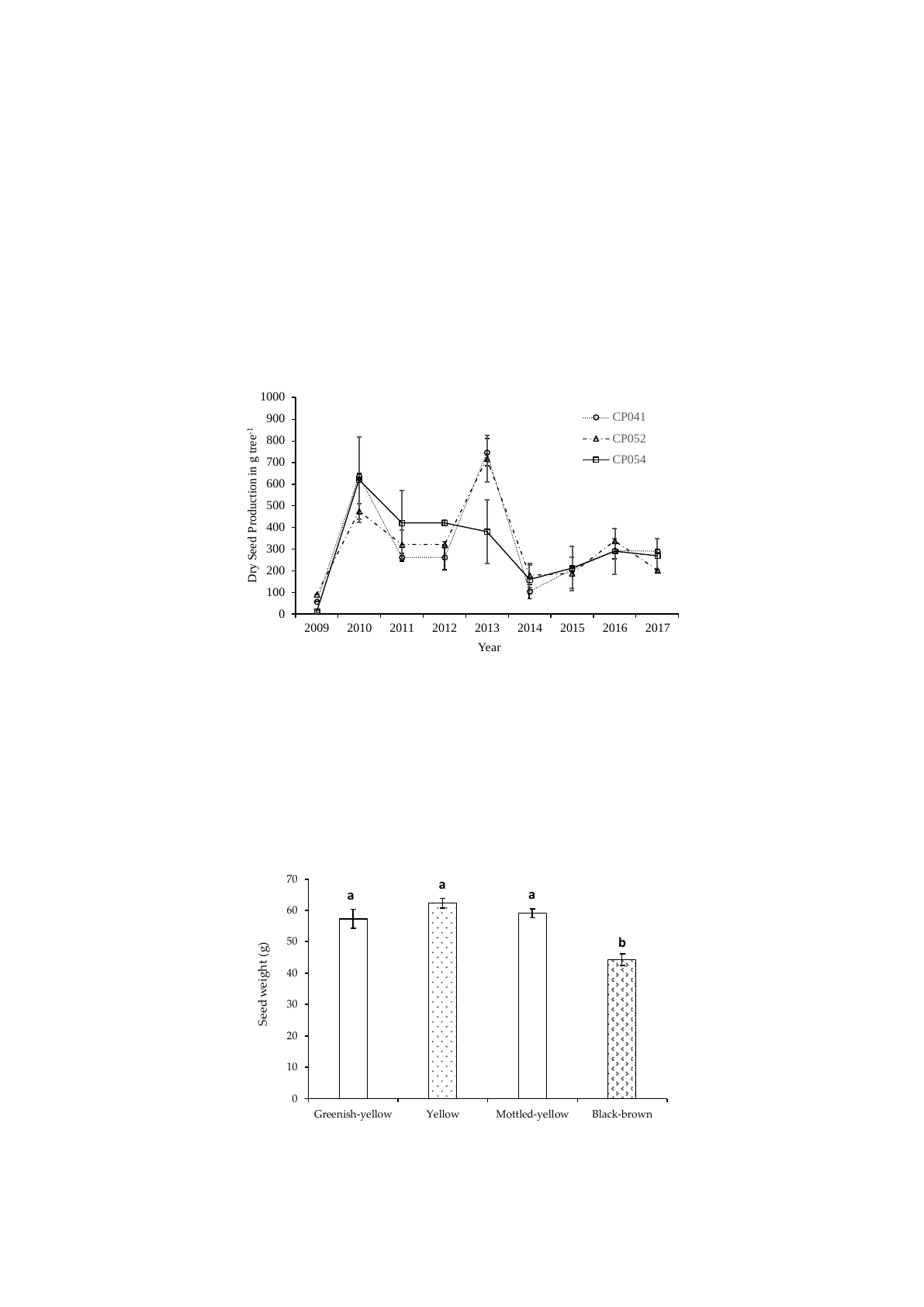
The dry seed production per tree from October 2009 to December 2017 is shown in Figure 2.
Three months after the jatropha plantation, the fruit production began. The maximum jatropha dried
seeds production occurred at four-year-old plantations for the accessions CP041 and CP052, while for
accession CP054 it occurred after the first year.
Jatropha accession CP041 was the most productive, with 316.46
±
76.50 g tree
−1
year
−1
(here and
in the following: mean followed by its standard error), taking into account all harvests from the early
fruits in the first year up to the harvest at 8 years of age. The jatropha accession CP052 obtained an
average of 314.02 ±63.19 g tree−1year−1and CP054 308.74 ±59.07 g tree−1year−1.
Forests 2018, 9, x FOR PEER REVIEW 5 of 13
3. Results
3.1. Jatropha Seed Productivity
The dry seed production per tree from October 2009 to December 2017 is shown in Figure 2.
Three months after the jatropha plantation, the fruit production began. The maximum jatropha dried
seeds production occurred at four-year-old plantations for the accessions CP041 and CP052, while
for accession CP054 it occurred after the first year.
Jatropha accession CP041 was the most productive, with 316.46 ± 76.50 g tree−1 year−1 (here and
in the following: mean followed by its standard error), taking into account all harvests from the early
fruits in the first year up to the harvest at 8 years of age. The jatropha accession CP052 obtained an
average of 314.02 ± 63.19 g tree−1 year−1 and CP054 308.74 ± 59.07 g tree−1 year−1.
Figure 2. Dry seed production per tree for three jatropha INIAP accessions during the years 2009–2017
at INIAP Portoviejo Research Station, Ecuador. Vertical bars indicate the standard error.
3.2. Seed Dry Weight and Fruit Ripening Stage
There were no significant differences in seed weight among jatropha accessions or for the
interaction accessions × fruit ripening stage, but seed weight was significantly affected (p < 0.001) by
fruit ripening stage (Table 2). Tukey’s (alpha value of 0.05) multiple test showed two distinctive
group ranges of seed ripening. The first was the yellow fruits, being the heaviest, with 62.4 g ± 1.5 g
(for 100 seeds), and the black-brown fruits the lightest, with 44.3 g ± 1.9 g (Figure 3).
Figure 3. Dry seed weight (100 seeds) at four jatropha fruit ripening stages. Vertical bars indicate the
standard error. Different letters indicate a significant difference.
0
100
200
300
400
500
600
700
800
900
1000
2009 2010 2011 2012 2013 2014 2015 2016 2017
Dry Seed Production in g tree-1
Year
CP041
CP052
CP054
0
10
20
30
40
50
60
70
Greenish-yellow Yellow Mottled-yellow Black-brown
Seed weight (g)
a
aa
b
Figure 2.
Dry seed production per tree for three jatropha INIAP accessions during the years 2009–2017
at INIAP Portoviejo Research Station, Ecuador. Vertical bars indicate the standard error.
3.2. Seed Dry Weight and Fruit Ripening Stage
There were no significant differences in seed weight among jatropha accessions or for the
interaction accessions
×
fruit ripening stage, but seed weight was significantly affected (p< 0.001)
by fruit ripening stage (Table 2). Tukey’s (alpha value of 0.05) multiple test showed two distinctive
group ranges of seed ripening. The first was the yellow fruits, being the heaviest, with 62.4 g
±
1.5 g
(for 100 seeds), and the black-brown fruits the lightest, with 44.3 g ±1.9 g (Figure 3).
Forests 2018, 9, x FOR PEER REVIEW 5 of 13
3. Results
3.1. Jatropha Seed Productivity
The dry seed production per tree from October 2009 to December 2017 is shown in Figure 2.
Three months after the jatropha plantation, the fruit production began. The maximum jatropha dried
seeds production occurred at four-year-old plantations for the accessions CP041 and CP052, while
for accession CP054 it occurred after the first year.
Jatropha accession CP041 was the most productive, with 316.46 ± 76.50 g tree−1 year−1 (here and
in the following: mean followed by its standard error), taking into account all harvests from the early
fruits in the first year up to the harvest at 8 years of age. The jatropha accession CP052 obtained an
average of 314.02 ± 63.19 g tree−1 year−1 and CP054 308.74 ± 59.07 g tree−1 year−1.
Figure 2. Dry seed production per tree for three jatropha INIAP accessions during the years 2009–2017
at INIAP Portoviejo Research Station, Ecuador. Vertical bars indicate the standard error.
3.2. Seed Dry Weight and Fruit Ripening Stage
There were no significant differences in seed weight among jatropha accessions or for the
interaction accessions × fruit ripening stage, but seed weight was significantly affected (p < 0.001) by
fruit ripening stage (Table 2). Tukey’s (alpha value of 0.05) multiple test showed two distinctive
group ranges of seed ripening. The first was the yellow fruits, being the heaviest, with 62.4 g ± 1.5 g
(for 100 seeds), and the black-brown fruits the lightest, with 44.3 g ± 1.9 g (Figure 3).
Figure 3. Dry seed weight (100 seeds) at four jatropha fruit ripening stages. Vertical bars indicate the
standard error. Different letters indicate a significant difference.
0
100
200
300
400
500
600
700
800
900
1000
2009 2010 2011 2012 2013 2014 2015 2016 2017
Dry Seed Production in g tree-1
Year
CP041
CP052
CP054
0
10
20
30
40
50
60
70
Greenish-yellow Yellow Mottled-yellow Black-brown
Seed weight (g)
a
aa
b
Figure 3.
Dry seed weight (100 seeds) at four jatropha fruit ripening stages. Vertical bars indicate the
standard error. Different letters indicate a significant difference.
Loading more pages...