MINI REVIEW
published: 24 April 2015
doi: 10.3389/fpls.2015.00289
Edited by:
Nicolas Denancé,
Institut National de la Recherche
Agronomique, France
Reviewed by:
Joao C. Setubal,
University of Sao Paulo, Brazil
Julian J. Smith,
Fera Science Ltd., UK
*Correspondence:
Stéphane Cociancich,
UMR BGPI, Cirad, TA A-54/K,
Campus international de Baillarguet,
F-34398 Montpellier Cedex 5, France
Specialty section:
This article was submitted to
Plant-Microbe Interaction,
a section of the journal
Frontiers in Plant Science
Received: 24 February 2015
Accepted: 09 April 2015
Published: 24 April 2015
Citation:
Pieretti I, Pesic A, Petras D, Royer M,
Süssmuth RD and Cociancich S
(2015) What makes Xanthomonas
albilineans unique amongst
xanthomonads?
Front. Plant Sci. 6:289.
doi: 10.3389/fpls.2015.00289
What makes Xanthomonas
albilineans unique amongst
xanthomonads?
Isabelle Pieretti 1, Alexander Pesic 2, Daniel Petras 2, Monique Royer 1,
Roderich D. Süssmuth 2and Stéphane Cociancich 1*
1UMR BGPI, Cirad, Montpellier, France, 2Institut für Chemie, Technische Universität Berlin, Berlin, Germany
Xanthomonas albilineans causes leaf scald, a lethal disease of sugarcane. Compared to
other species of Xanthomonas, X. albilineans exhibits distinctive pathogenic mechanisms,
ecology and taxonomy. Its genome, which has experienced significant erosion, has
unique genomic features. It lacks two loci required for pathogenicity in other plant
pathogenic species of Xanthomonas: the xanthan gum biosynthesis and the Hrp-T3SS
(hypersensitive response and pathogenicity-type three secretion system) gene clusters.
Instead, X. albilineans harbors in its genome an SPI-1 (Salmonella pathogenicity island-1)
T3SS gene cluster usually found in animal pathogens. X. albilineans produces a potent
DNA gyrase inhibitor called albicidin, which blocks chloroplast differentiation, resulting in
the characteristic white foliar stripe symptoms. The antibacterial activity of albicidin also
confers on X. albilineans a competitive advantage against rival bacteria during sugarcane
colonization. Recent chemical studies have uncovered the unique structure of albicidin
and allowed us to partially elucidate its fascinating biosynthesis apparatus, which involves
an enigmatic hybrid PKS/NRPS (polyketide synthase/non-ribosomal peptide synthetase)
machinery.
Keywords: Xanthomonas albilineans, leaf scald disease of sugarcane, genomic features, albicidin, NRPS and PKS
genes
Introduction
Xanthomonas albilineans (Ashby) Dowson is known to invade the xylem of sugarcane and to
cause leaf scald disease (Rott and Davis, 2000; Birch, 2001). Symptoms of this disease vary from
a single, white, narrow, sharply defined stripe to complete wilting and necrosis of infected leaves,
leading to plant death. Dissemination of X. albilineans occurs mainly mechanically through use of
contaminated harvesting tools and by distribution and planting of infected cuttings. However, aerial
transmission and potential for epiphytic survival have also been reported for this pathogen (Autrey
et al., 1995; Daugrois et al., 2003; Champoiseau et al., 2009).
Xanthomonas albilineans is a representative of the genus Xanthomonas, members of which
are exclusively Gram-negative plant-associated bacteria that collectively cause dramatic damage to
hundreds of plant species of ornamental or agronomical interest. Indeed, both monocotyledonous
(e.g., rice, sugarcane, or banana) and dicotyledonous (e.g., citrus, cauliflower, bean, pepper, cabbage,
and tomato) plants are targeted worldwide by various Xanthomonas species. While sharing numerous
phenotypic characteristics, at least 27 species and over 120 pathovars (variants of pathogeny)
of the genus Xanthomonas are currently recognized. Each pathovar individually exhibits a very
Frontiers in Plant Science | www.frontiersin.org April 2015 | Volume 6 | Article 2891

Pieretti et al. Specific features of Xanthomonas albilineans
restricted host range and/or tissue-specificity and this leads to
clustering of bacterial strains causing similar symptoms on the
same host.
Multilocus sequence analysis (MLSA) with four housekeeping
genes resulted in the distribution of Xanthomonas species in two
clades. The main one contains the majority of species whereas the
secondary clade contains X. albilineans,Xanthomonas sacchari,
Xanthomonas theicola,Xanthomonas hyacinthi, and Xanthomonas
translucens (Young et al., 2008). Phylogenetic analyses with the
gyrB sequence indicate that this secondary group also contains
several uncharacterized species of Xanthomonas isolated mainly
on rice, banana or sugarcane (Studholme et al., 2011, 2012).
Intriguingly, two multiMLSA studies with 28 genes and 228 genes,
respectively, in which X. albilineans is the only representative of
this secondary clade, resulted in the branching of Xylella fastidiosa
between X. albilineans and the main clade (Rodriguez-R et al.,
2012; Naushad and Gupta, 2013). X. fastidiosa is a xylem-limited
bacterium which is insect-vectored to a variety of diverse hosts,
has a reduced genome and lacks the Hrp-T3SS (hypersensitive
response and pathogenicity–type III secretion system; Simpson
et al., 2000).
Analysis of the X. albilineans genome has revealed unusual
features compared to other xanthomonads, the most prominent
being the absence of the Hrp-T3SS gene cluster and the occurrence
of genome erosion. Furthermore, to our knowledge, X. albilineans
is the only xanthomonad that produces the phytotoxin albicidin.
This mini-review aims to summarize the characteristics that,
taken together, make X. albilineans so unique.
Genome Erosion
The genome of X. albilineans strain GPE PC73 has been fully
sequenced and annotated. It consists of a 3,768,695-bp circular
chromosome with a G+C content of 63%, and three plasmids of
31,555-bp, 27,212-bp and 24,837-bp, respectively (Pieretti et al.,
2009). This genome size is much smaller than that of any other
xanthomonad sequenced to date (commonly ∼5 Mb). Examina-
tion of the genome of strain GPE PC73 together with OrthoMCL
comparative analyses performed with other sequenced xan-
thomonads highlights several genomic features that distinguish
X. albilineans from its near relatives (Pieretti et al., 2009, 2012;
Marguerettaz et al., 2011; Royer et al., 2013).
Orthologous analyses show that X. albilineans and X. fastidiosa
have experienced a convergent genome reduction during their
respective speciation, with a more extensive genome reduction
for X. fastidiosa (Pieretti et al., 2009). Based on these analyses,
X. albilineans has lost at least 592 genes that were present in the
last common ancestor of the xanthomonads. Interestingly, most of
these ancestral genes are conserved in the genome of X. sacchari
strains NCPPB4393 and LMG 476 and Xanthomonas spp. strains
NCPPB1131 and NCPPB1132, which are the sequenced strains
phylogenetically closest to X. albilineans (Studholme et al., 2011,
2012; Pieretti et al., 2015). This indicates that genome erosion
is specific to X. albilineans. Convergent genome erosion of X.
albilineans and X. fastidiosa could be linked to a similar adaptation
to a xylem-invading lifestyle in which interactions with living
plant tissues are minimal (Pieretti et al., 2009). More recently, a
study of the somewhat reduced genome of Xanthomonas fragariae
(4.2 Mb) led to the hypothesis that the convergent genome reduc-
tion observed in some xanthomonads could be linked to their
endophytic lifestyle and typically to their commitment to a single
host (Vandroemme et al., 2013).
Compared to other xanthomonads, a low number of insertion
sequences (IS) has been found in the genome of X. albilineans.
Taken together with a limited recombination of the chromosome
and a GC skew pattern containing a low number of distortions, it
was postulated that genome erosion of X. albilineans was mainly
not due to IS and other mechanisms were proposed for this
erosion (Pieretti et al., 2009). The low number of IS could be linked
to the activity of CRISPR (clustered regularly interspaced short
palindromic repeats) systems. Strain GPE PC73 of X. albilineans
possesses two CRISPR loci. The first one, CRISPR-1, is conserved
in X. oryzae pv. oryzae,X. axonopodis pv. citri,X. campestris
pv. vasculorum, and X. campestris pv. musacearum. The second,
CRISPR-2, is present in X. campestris pv. raphani (Pieretti et al.,
2012). Interestingly, many spacers of CRISPR-1 and CRISPR-2
of strain GPE PC73 are identical to IS or phage-related DNA
sequences present on the chromosome of this strain (Pieretti et al.,
2012).
Specific Genes Linked to a Xylem-Invading
Lifestyle
Although determinants for host- or tissue-specificity of X. albilin-
eans remain unclear, the presence in its genome of genes encoding
cell-wall-degrading enzymes (CWDEs) with specific features is
probably important for its ability to spread in xylem and for
pathogenicity. Indeed, all CWDEs from X. albilineans harbor a
cellulose-binding domain (CBD) and a long linker region both
adapted to the utilization of cell-wall breakdown products as
carbon source and to the ability to spread in sugarcane xylem
vessels (Pieretti et al., 2012). These enzymes may also be required
to disrupt pit membranes in sugarcane, thereby promoting prop-
agation of the bacteria in the plant. Interestingly, X. fastidiosa also
encodes two CWDEs containing a long linker and a CBD. It has
been shown that one of these two CWDEs is involved in the spread
of X. fastidiosa in the xylem by increasing the pore size of pit
membranes. CWDEs are therefore considered as virulence factors
(Roper et al., 2007; Chatterjee et al., 2008; Pérez-Donoso et al.,
2010). TonB-dependent transporters (TBDTs) may be used by
X. albilineans to transport cell-wall-degrading products resulting
from the activity of CWDEs, and thus may facilitate spread of the
organism in the nutrient-poor conditions prevailing in the xylem
of sugarcane. In the genome of X. albilineans, 35 TBDT genes
have been identified, including one specific to this species and
two others that are functionally associated to pathogenicity of the
bacterium (Rott et al., 2011; Pieretti et al., 2012).
Lack of Hrp-T3SS
Most phytopathogenic bacteria rely on the type III secretion
system (T3SS) of the hypersensitive response and pathogenicity
family (Hrp1 and Hrp2, respectively). This syringe-like apparatus
allows pathogens to deliver, into their host cells, proteins (type
Frontiers in Plant Science | www.frontiersin.org April 2015 | Volume 6 | Article 2892

Pieretti et al. Specific features of Xanthomonas albilineans
III effectors) that modulate plant physiology and immunity for
the benefit of the pathogen. Interestingly, genes encoding the
injectisome and associated effectors of the Hrp-T3SS are missing
in the genome of X. albilineans, as is also the case in the genomes of
X. sacchari strains NCPPB4393 and LMG 476 and Xanthomonas
spp. strains NCPPB1131 and NCPPB1132 (Studholme et al., 2011,
2012; Pieretti et al., 2015). Yet, an Hrp system is present in
other close neighbor species of X. albilineans, such as X. translu-
cens pv. graminis strain 29, X. translucens pv. translucens strain
DSM18974, and X. translucens strain DAR 61454 (Wichmann
et al., 2013; Gardiner et al., 2014). Although the Hrp-T3SS is
described as a crucial key component in plant–host interactions
for most Xanthomonas spp, it seems not to be essential in X.
translucens pv. graminis strain 29 for xylem colonization, even
though it is involved in symptom development (Ryan et al., 2011;
Wichmann et al., 2013). Similarly, despite being devoid of any Hrp
T3SS, X. albilineans displays pathogenicity and is able to cause
serious damage to sugarcane.
Acquisition of a SPI-1 T3SS
The annotated sequence of the genome of X. albilineans strain
GPE PC73 reveals the presence of a T3SS belonging to the
Salmonella pathogenicity island-1 (SPI-1) injectisome family.
Genes encoding this system are located near the terminus of the
replication site of the chromosome and were probably acquired
by lateral gene transfer. This secretion system, found mainly in
mammals and insects bacterial pathogens or symbionts, exhibits
high similarity to that described in Burkholderia pseudomallei—a
human pathogen causing melioidosis (Stevens et al., 2002). The
SPI-1 needle-like assemblies of X. albilineans strain GPE PC73 and
B. pseudomallei strain K96243 are homologous. Both species share
all but two genes—orgA and orgB, encoding putative oxygen-
regulated invasion proteins involved in type three secretion that
are not conserved in B. pseudomallei. The genome composi-
tion of the SPI-1 T3SS in X. albilineans additionally includes
genes encoding translocon components (xipB,xipC, and xipD),
injectisome components (xsaJ to xsaS and xsaV to xsaZ) and a
chaperone (xicA). Furthermore, the locus contains 15 additional
genes referred to as xapA–xapO, encoding hypothetical proteins.
These genes, which show homology neither to sequences from
B. pseudomallei nor to sequences available from protein sequence
databases, are specific to X. albilineans and their products repre-
sent good candidates to be considered as effectors for this SPI-1
T3SS (Marguerettaz et al., 2011). Interestingly, this SPI-1 T3SS is
conserved in Xanthomonas axonopodis pv. phaseoli strains CFBP
2534, CFBP 6164 and CFBP 6982, which moreover possess a
second T3SS belonging to the Hrp2 family (Alavi et al., 2008;
Marguerettaz et al., 2011). Pathogenicity of X. albilineans strains
seems not to be linked to the presence of the SPI-1 T3SS in
their genome; besides, no SPI-1 T3SS locus has been identified
in strain PNG130 of X. albilineans even though it is able to
spread in sugarcane. Functional analyses showed that, in planta,
multiplication of a SPI-1 T3SS knockout mutant of X. albilineans
was not impaired when compared to the wild-type, indicating
that the SPI-1 T3SS is not required for spread in sugarcane
vessels or for development of leaf scald symptoms. The role of
the SPI-1 T3SS of X. albilineans remains unclear, although it
has been conserved during its evolution in X. albilineans with-
out frame-shifting indels or nonsense mutations (Marguerettaz
et al., 2011). It remains possible, in conditions other than those
tested with our knockout mutant, that the SPI-1 T3SS system
may be required for interaction with sugarcane, as in the case of
SPI-1 of Salmonella, which is involved in interactions with Ara-
bidopsis thaliana (Schikora et al., 2011). The SPI-1 T3SS system
may also be associated with other aspects of the X. albilineans
lifestyle, e.g., an involvement in adherence as reported for Erwinia
tasmaniensis (Kube et al., 2008) or in formation of pellicle or
biofilm-like structures (Jennings et al., 2012), which could be
related to epiphytic survival on sugarcane leaves. Although no
insect vector has been identified for X. albilineans to date, we
cannot rule out that the SPI-1 T3SS could be involved in insect
association or might mediate persistence of the bacterium in an
insect vector as was shown for Pantoea stewartii (Correa et al.,
2012).
Lack of T6SS and the Xanthan Gum Gene
Cluster
Xanthomonas albilineans lacks two other major pathogenicity
factors that are common features of most xanthomonads. First,
it lacks the gum gene cluster for extracellular polysaccharide
(EPS) synthesis. This gene cluster is responsible for biofilm and
xanthan gum formation, and is associated with pathogenesis in
xanthomonads (Katzen et al., 1998; Kim et al., 2009; Galván et al.,
2012). Exceptions are X. fragariae, which lacks the gumN,gumO
and gumP genes, and X. albilineans, which lacks the complete set
of gum genes, indicating those are not essential for virulence of
both these pathogens (Pieretti et al., 2012; Vandroemme et al.,
2013).
Xanthomonas albilineans is also devoid of any type VI secre-
tion system (T6SS) described in other xanthomonads, as for
example in Xanthomonas fuscans pv. fuscans strain 4834-R and
Xanthomonas citri subsp. citri strain 306, which each contain a
single T6SS (Potnis et al., 2011; Darrasse et al., 2013) or X. translu-
cens strain DAR61454, which encodes two distinct T6SS (Gar-
diner et al., 2014). Structurally, the T6SS looks like an inverted
bacteriophage. Functionally, this system is able to interact with
both eukaryotic and prokaryotic cells by delivering effectors or
toxins into host cells to subvert the signaling process to its own
advantage, but also into other bacteria from the same habitat to
outcompete them during infection (Filloux, 2013; Russell et al.,
2014). Despite its multifunctional roles during host–pathogen
interactions, the lack of T6SS in Xanthomonas campestris pv.
campestris strain 8004, Xanthomonas gardneri strain 101, and
X. albilineans seems to have no effect on pathogenesis of these
xanthomonads.
Albicidin and Other Non-Ribosomally
Synthesized Peptides
A unique feature of X. albilineans is the production of albi-
cidin—a phytotoxin causing the white foliar stripe symptoms
Frontiers in Plant Science | www.frontiersin.org April 2015 | Volume 6 | Article 2893
Pieretti et al. Specific features of Xanthomonas albilineans
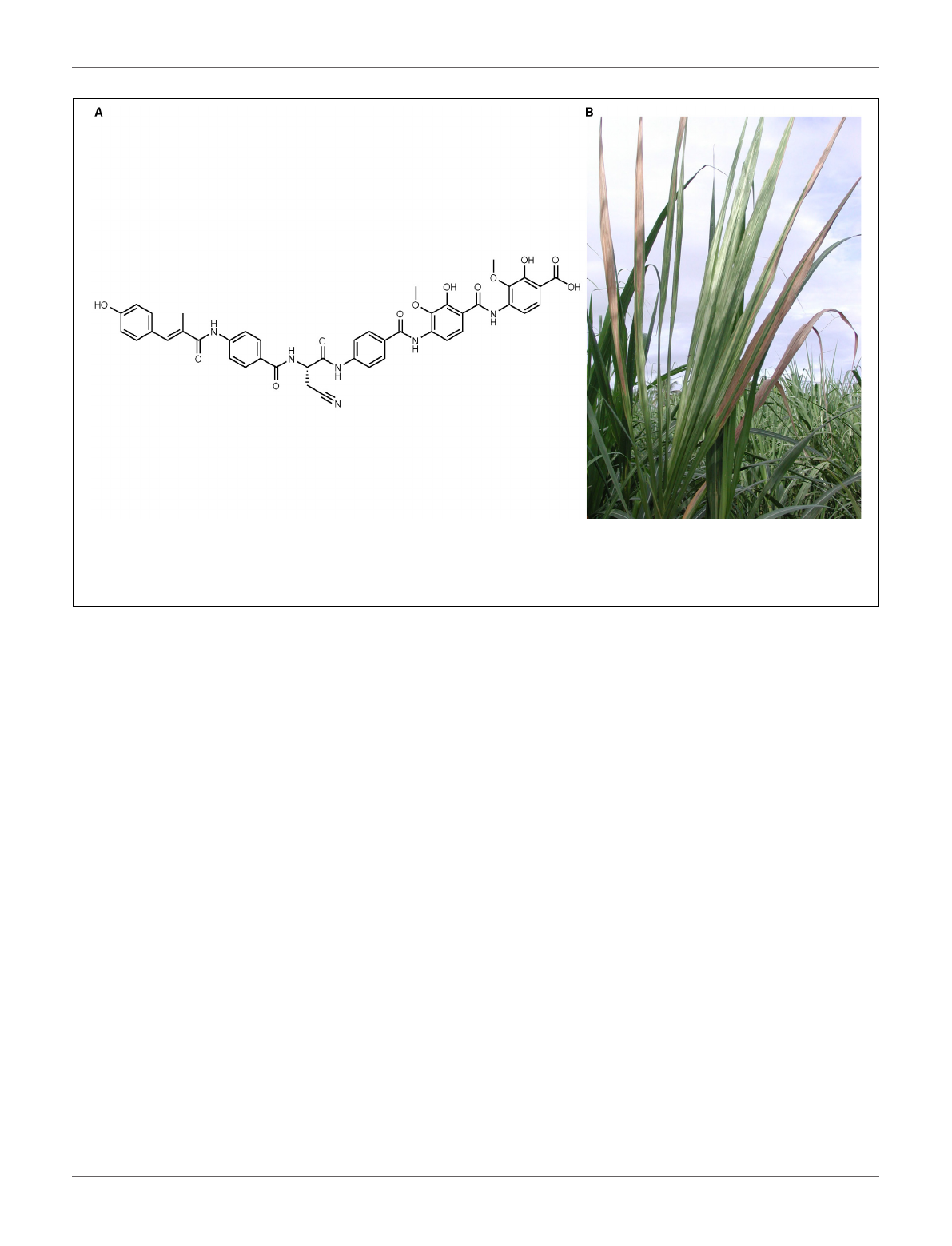
FIGURE 1 | Xanthomonas albilineans produces the phytotoxin
albicidin—a potent gyrase inhibitor that blocks chloroplast
differentiation, resulting in sugarcane leaf scald disease
symptoms. (A) Structure of albicidin, a hybrid PKS/NRPS compound
with unique composition including p-aminobenzoic acid and
cyanoalanine. (B) Diseased sugarcane plant with characteristic leaf scald
symptoms: white foliar bleaching and necrosis of infected leaves
(© J. H. Daugrois/Cirad).
characteristic of leaf scald disease of sugarcane (Birch and Patil,
1985). Albicidin is a potent DNA gyrase inhibitor that blocks the
differentiation of chloroplasts (Figure 1). It also targets bacterial
gyrase by a mechanism different from that of other DNA gyrase
inhibitors like coumarins and quinolones (Hashimi et al., 2007).
This mode of action accounts for the potent antibacterial activity
of albicidin, which inhibits the growth of Gram-positive and
Gram-negative pathogenic bacteria at nanomolar concentrations
(Birch and Patil, 1985). Albicidin gives a competitive advantage
to X. albilineans against other bacteria within the xylem vessels
of sugarcane (Magnani et al., 2013). Interestingly, two sugarcane-
living bacteria harbor an albicidin resistance gene: Leifsonia xyli
(Monteiro-Vitorello et al., 2004) and Pantoea dispersa (Zhang and
Birch, 1997).
Albicidin is produced by a hybrid polyketide synthase
(PKS)/non-ribosomal peptide synthetase (NRPS) enzyme com-
plex. PKS and NRPS genes are often clustered together with a large
set of regulatory, transport or modification (tailoring) genes, as
well as genes involved in the biosynthesis of non-proteinogenic
amino acids. In addition to a phosphopantetheinyl transferase
required for activation of the PKS/NRPS system and a HtpG
chaperone, the role of which remains unclear, a locus (alb cluster)
containing 20 genes is required for albicidin biosynthesis. Among
these 20 genes, 3 encode the PKS/NRPS system; 15 others act
as transport, regulatory, modification or resistance genes (Royer
et al., 2004).
Non-ribosomal peptide synthetases are multimodular mega-
synthetases used by bacteria and fungi to produce peptides in a
ribosome-independent manner (Strieker et al., 2010). Each mod-
ule governs the specific incorporation of an amino acid substrate
based on signature sequences in the adenylation (A) domains
(Stachelhaus and Marahiel, 1995), which are loaded onto pep-
tidyl carrier protein (PCP) domains. Elongation of the peptide
is mediated by condensation (C) domains present within each
module. PKSs function according to the principles of fatty acid
biosynthesis (Weissman and Leadlay, 2005).
For decades, the structure elucidation of albicidin was impeded
by its extremely low production yield by X. albilineans. A first
step to overcome this bottleneck was achieved by transferring the
biosynthetic genes into a heterologous host, namely X. axonopodis
pv. vesicatoria, resulting in a significant increase in albicidin
production (Vivien et al., 2007). Extensive HPLC purification of
albicidin and thorough analysis of the purified compound by
means of mass spectrometry and nuclear magnetic resonance
spectroscopy then allowed us to unravel its unique structure
(Figure 1). Albicidin proved to be a linear pentapeptide composed
of cyanoalanine and p-amino benzoic acids N-terminally linked to
ap-coumaric acid derivative (Cociancich et al., 2015). Although
over 500 different monomers (amino acid substrates) have been
identified to date as being incorporated by NRPS systems, eluci-
dation of the structure of albicidin revealed for the first time the
incorporation by NRPSs of cyanoalanine and p-amino benzoic
acids. Moreover, the incorporation of p-amino benzoic acids is the
first example of incorporation of a δ-aminoacid by NRPSs, since
all NRPSs described to date incorporate only αor βaminoacids.
The use of unusual amino acid substrates is linked to unique
Frontiers in Plant Science | www.frontiersin.org April 2015 | Volume 6 | Article 2894

Pieretti et al. Specific features of Xanthomonas albilineans
features that were identified in silico 10 years ago within the
albicidin NRPS modules sequence (Royer et al., 2004). The forma-
tion and incorporation of cyanoalanine most likely occurs in situ
through an additional module present in the PKS-NRPS assembly
line that was investigated in one of our present studies (Cociancich
et al., 2015).
Chemical synthesis of albicidin is now available, allowing both
production of high quantities of the compound for further study
of its mode of action and activity spectrum, and the synthesis of
analogs (Kretz et al., 2015). The uniqueness of its structure and the
specific mode of action of this compound make albicidin a strong
lead structure for antibiotic development.
Data mining of the genome of X. albilineans strain GPE PC73
has led to the identification, in addition to the albicidin biosyn-
thesis locus, of five other NRPS loci (Pieretti et al., 2012; Royer
et al., 2013). The first, named Meta-B, encodes megasynthases
performing peptidic elongation of a 16-amino acid lipopeptide.
This locus also encodes a transcription regulator belonging to the
AraC family, a cyclic peptide transporter, and enzymes involved
in biosynthesis of the non-proteinogenic amino acids di-amino
butyric acid and dihydroxyphenylglycine. Interestingly, the NRPS
locus Meta-B has been identified in the genome of strains of
three other Xanthomonas species, namely Xanthomonas oryzae pv.
oryzae strains BAI3 and X11-5A, X. translucens strain DAR61454
and Xanthomonas spp. strain XaS3 (Royer et al., 2013). Despite
a similar organization of the genes within these loci, the in silico
prediction of the sequences of the peptides produced indicates that
each strain produces a different lipopeptide.
Two other NRPS gene clusters, Meta-A and Meta-C, have been
identified in the genome of X. albilineans strain GPE PC73. They
encode megasynthases that perform the biosynthesis of peptides
of 12 and 7 amino acids, respectively. A partial sequence has been
predicted for each of these peptides (Royer et al., 2013).
Finally, two short NRPS genes have also been identified on
the chromosome of X. albilineans: they both encode only one
NRPS module. Interestingly, there is an overlap between both
these genes and a gene encoding a glycosyltransferase. It has been
hypothesized that these genes encode glycosylated amino acids, to
which, however, no precise function could yet be attributed (Royer
et al., 2013).
Conclusion
Although most xanthomonads require pathogenicity factors such
as gum genes, T3SS Hrp and T6SS for survival, growth and spread
within host plants, X. albilineans lacks these pathogenicity factors,
de facto reducing its artillery to circumvent sugarcane defense
mechanisms and innate immunity. While being “disarmed” could
be disadvantageous for a vascular plant pathogen, X. albilineans
remains able to invade and spread in sugarcane, suggesting that
it uses other strategies, such as stealth, i.e., being unobtrusive
in planta, to minimize inducible host defense responses. On the
other hand, the reduced genome of X. albilineans has specific
features that may be involved in the adaptation of the bacterium
to live and spread in sugarcane xylem vessels. For example, spe-
cific CWDEs and TBDTs appear to be optimized for life in the
nutrient-poor sugarcane xylem environment. The uniqueness of
X. albilineans resides also in the production of the phytotoxin
and antibiotic albicidin. The recently unraveled structure and
concomitant development of a chemical synthesis protocol for
this compound leads to additional prospects for its use in the
antibiotherapy field. According to the specificities deriving from
the biological, biochemical, phylogenetic and genomic analyses
described in this review, one can truly say that X. albilineans is
quite unique amongst the genus Xanthomonas.
Acknowledgments
Work on albicidin was supported by a grant from the Deutsche
Forschungsgemeinschaft (DFG SU239/11-1; SU 18-1), by the
Cluster of Excellence “Unifying Concepts in Catalysis (UniCat)”
(DFG) and by a grant from the Agence Nationale de la Recherche
(ANR-09-BLAN-0413-01). The authors are indebted to Helen
Rothnie for English editing.
References
Alavi, S. M., Sanjari, S., Durand, F., Brin, C., Manceau, C., and Poussier, S. (2008).
Assessment of the genetic diversity of Xanthomonas axonopodis pv. phaseoli and
Xanthomonas fuscans subsp. fuscans as a basis to identify putative pathogenicity
genes and a type III secretion system of the SPI-1 family by multiple suppres-
sion subtractive hybridizations. Appl. Environ. Microbiol. 74, 3295–3301. doi:
10.1128/aem.02507-07
Autrey, L., Saumtally, S., Dookun, A., Sullivan, S., and Dhayan, S. (1995). Aerial
transmission of the leaf scald pathogen, Xanthomonas albilineans.Proc. Int. Soc.
Sug. Cane Technol. 21, 508–526.
Birch, R. G. (2001). Xanthomonas albilineans and the antipathogenesis approach
to disease control. Mol. Plant Pathol. 2, 1–11. doi: 10.1046/j.1364-3703.2001.
00046.x
Birch, R. G., and Patil, S. S. (1985). Preliminary characterization of an antibiotic pro-
duced by Xanthomonas albilineans which inhibits DNA synthesis in Escherichia
coli.J. Gen. Microbiol. 131, 1069–1075. doi: 10.1099/00221287-131-5-
1069
Champoiseau, P., Rott, P., and Daugrois, J. H. (2009). Epiphytic populations of
Xanthomonas albilineans and subsequent sugarcane stalk infection are linked
to rainfall in Guadeloupe. Plant Dis. 93, 339–346. doi: 10.1094/pdis-93-4-
0339
Chatterjee, S., Almeida, R. P. P., and Lindow, S. (2008). Living in two worlds:
the plant and insect lifestyles of Xylella fastidiosa.Annu. Rev. Phytopathol. 46,
243–271. doi: 10.1146/annurev.phyto.45.062806.094342
Cociancich, S., Pesic, A., Petras, D., Uhlmann, S., Kretz, J., Schubert, V., et al.
(2015). The gyrase inhibitor albicidin consists of p-aminobenzoic acids and
cyanoalanine. Nat. Chem. Biol. 11, 195–197. doi: 10.1038/nchembio.1734
Correa, V. R., Majerczak, D. R., Ammar, E.-D., Merighi, M., Pratt, R. C., Hogenhout,
S. A., et al. (2012). The bacterium Pantoea stewartii uses two different type III
secretion systems to colonize its plant host and insect vector. Appl. Environ.
Microbiol. 78, 6327–6336. doi: 10.1128/aem.00892-12
Darrasse, A., Carrere, S., Barbe, V., Boureau, T., Arrieta-Ortiz, M., Bonneau, S., et
al. (2013). Genome sequence of Xanthomonas fuscans subsp. fuscans strain 4834-
R reveals that flagellar motility is not a general feature of xanthomonads. BMC
Genom. 14:761. doi: 10.1186/1471-2164-14-761
Daugrois, J. H., Dumont, V., Champoiseau, P., Costet, L., Boisne-Noc, R., and
Rott, P. (2003). Aerial contamination of sugarcane in Guadeloupe by two strains
of Xanthomonas albilineans.Eur. J. Plant Pathol. 109, 445–458. doi: 10.1023/
a:1024259606468
Frontiers in Plant Science | www.frontiersin.org April 2015 | Volume 6 | Article 2895
Loading more pages...