
440
Mechanochemical solid state synthesis of copper(I)/NHC
complexes with K3PO4
Ina Remy-Speckmann‡1, Birte M. Zimmermann‡1, Mahadeb Gorai2, Martin Lerch1
and Johannes F. Teichert*2
Letter Open Access
Address:
1Institut für Chemie, Technische Universität Berlin, Straße des
17. Juni 115, 10623 Berlin, Germany and 2Fakultät für
Naturwissenschaften, Technische Universität Chemnitz, Straße der
Nationen 62, 09111 Chemnitz, Germany
Email:
Johannes F. Teichert* - [email protected]
* Corresponding author ‡ Equal contributors
Keywords:
ball mill; bifunctional catalysis; catalytic hydrogenations; copper;
mechanochemical synthesis; N-heterocyclic carbenes
Beilstein J. Org. Chem. 2023, 19, 440–447.
https://doi.org/10.3762/bjoc.19.34
Received: 04 December 2022
Accepted: 06 April 2023
Published: 14 April 2023
Associate Editor: J. G. Hernández
© 2023 Remy-Speckmann et al.; licensee Beilstein-Institut.
License and terms: see end of document.
Abstract
A protocol for the mechanochemical synthesis of copper(I)/N-heterocyclic carbene complexes using cheap and readily available
K3PO4 as base has been developed. This method employing a ball mill is amenable to typical simple copper(I)/NHC complexes but
also to a sophisticated copper(I)/N-heterocyclic carbene complex bearing a guanidine moiety. In this way, the present approach
circumvents commonly employed silver(I) complexes which are associated with significant and undesired waste formation and the
excessive use of solvents. The resulting bifunctional catalyst has been shown to be active in a variety of reduction/hydrogenation
transformations employing dihydrogen as terminal reducing agent.
440
Introduction
Prominent goals of green chemistry heralded for synthetic
chemistry are minimization or ideally the complete prevention
of chemical waste. In this vein, the use of innocuous chemicals,
replacement of hazardous reagents, atom efficient reactions and
overall safer chemical processes are desirable [1,2]. Therefore,
one current challenge for syntheses is the development of green
and environmentally friendly routes to access value-added prod-
ucts.
One important way to more economical syntheses is the concept
of catalysis to avoid stoichiometric amounts of reactants and to
design reactions more atom efficient [1-3]. However, the focus
has seldomly been on the preparative methods to access the re-
quired catalysts themselves. As case in point, we decided to
re-investigate the synthesis of copper(I)/N-heterocyclic carbene
(NHC) complexes, which are broadly applicable catalysts for a
wide variety of transformations [4-6]. While generally there are
many different synthetic routes to transition metal/NHC
complexes [7-15] not all of them are applicable to the prepara-
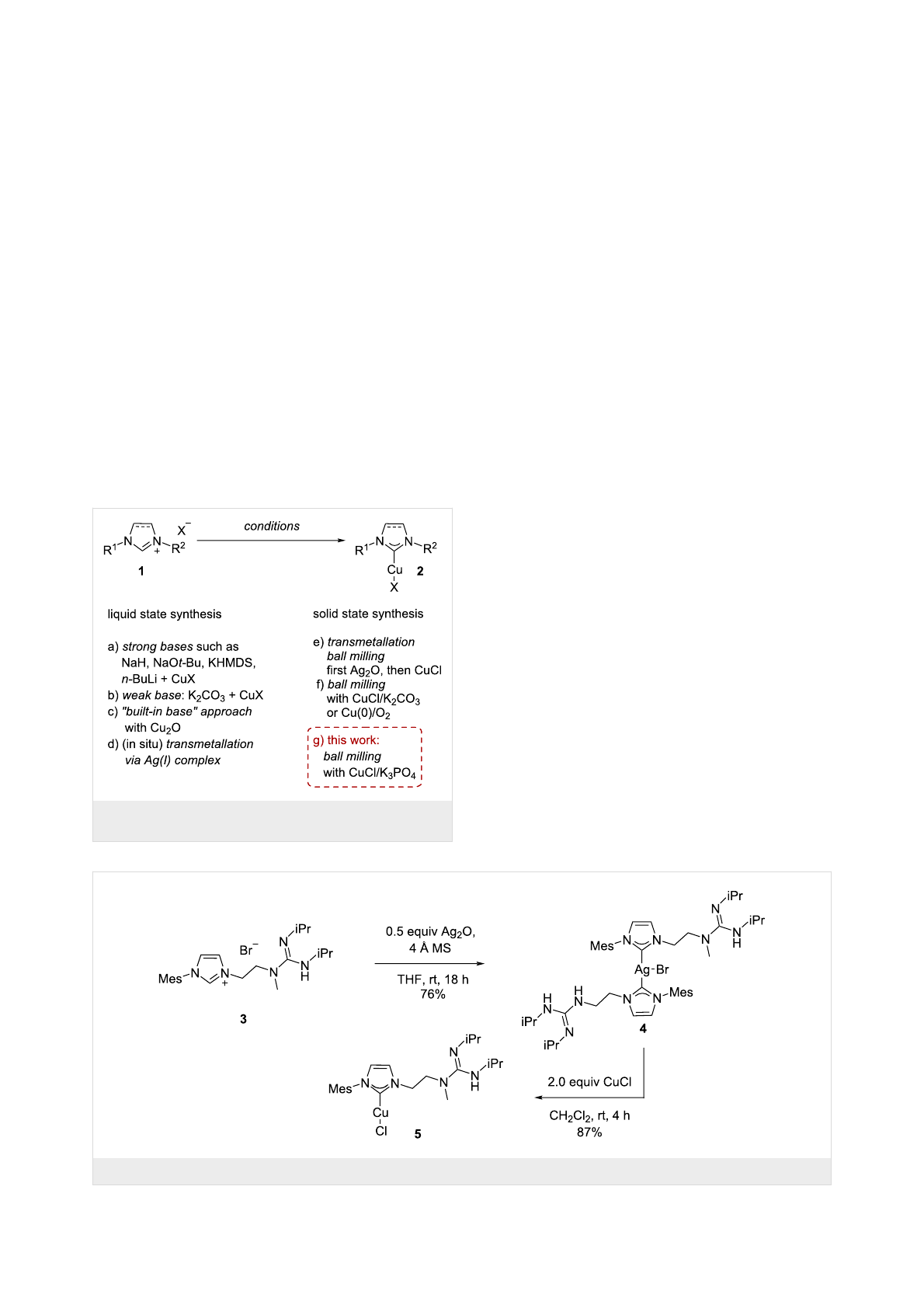
tion of copper(I)/NHC compounds (Scheme 1) [5,6,13,16-19].
Generally, the so-called direct routes via the appropriate
imidazol(in)ium salt, a copper precursor and a suitably strong
Beilstein J. Org. Chem. 2023, 19, 440–447.
441
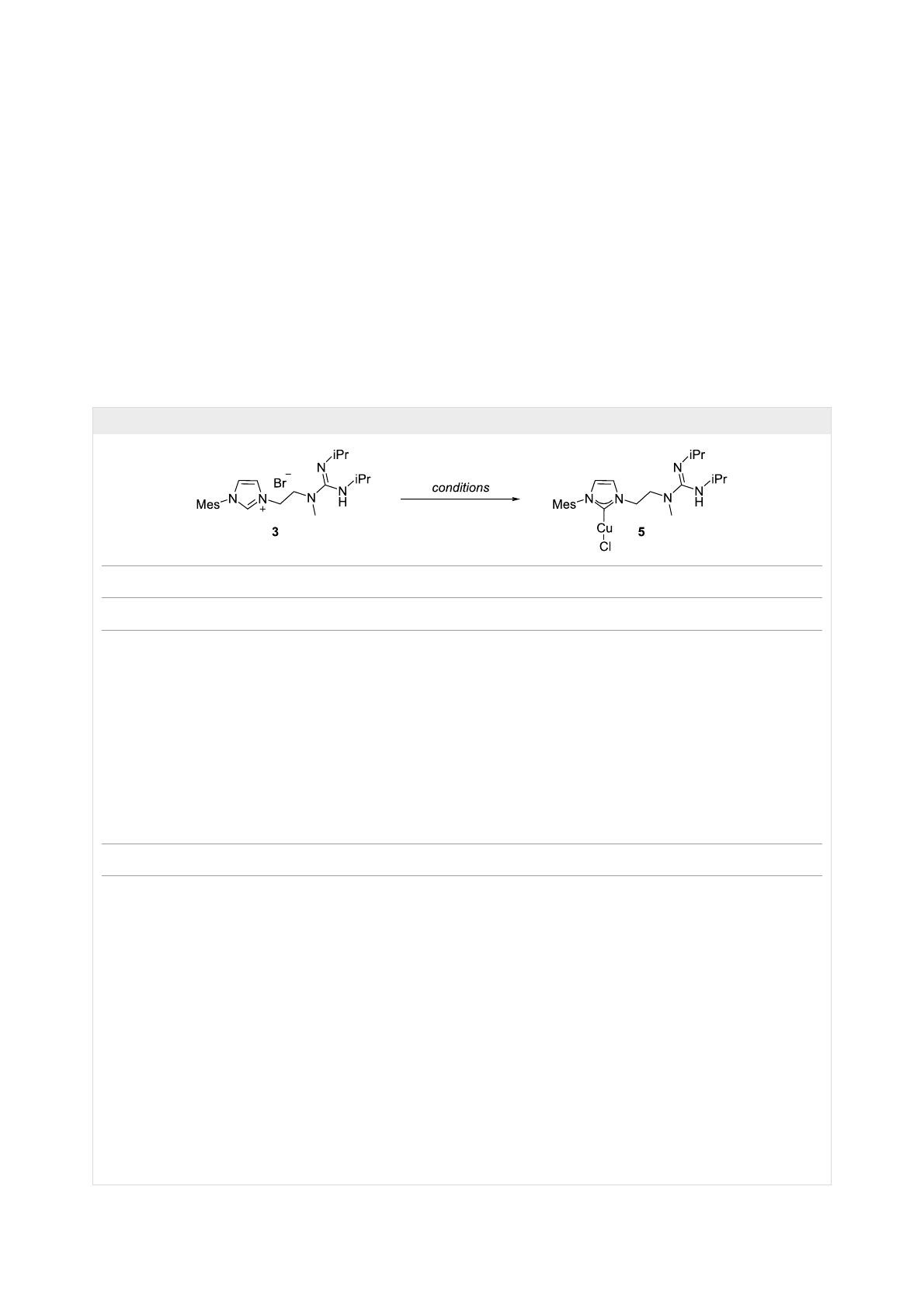
Scheme 2: Preparation of sophisticated Cu(I)/NHC complexes: Synthesis of bifunctional catalyst 5 via transmetallation. Mes = mesityl [48,49].
Scheme 1: General synthetic routes to copper(I)/NHC complexes
(X = Cl, Br).
base (e.g., NaH, NaOt-Bu, KHMDS or n-BuLi) [20-26] are
challenging for copper complexes 2 as they tend to give low
yields (Scheme 1a) [5,6,13,16-19]. One elegant protocol em-
ploying K2CO3 as weak base in combination with copper(I)
salts for simple copper(I)/NHC complexes has been disclosed
(Scheme 1b) [27]. While this variant is the method of choice
due to its simplicity and practicability, other alternatives have to
be sought in cases where these direct synthesis approaches fail:
On the one hand, the so-called “built-in base” route relies on the
use of Cu2O which can be directly reacted with a suitable NHC
precursor 1 (Scheme 1c) [28]. In any case, the most common
approach hinges upon the use of the preliminary preparation of
an intermediate silver(I)/NHC complex followed by facile
transmetallation to copper(I) (Scheme 1d). In some cases, this
transmetallation step is carried out in situ [14,15,29-32].
Notably, these generally successful synthetic routes produce a
considerable amount of transition metal waste (next to the
inherent use of solvents) and are therefore in misalignment with
the principles of green chemistry.
Syntheses via mechanochemical methods offer elegant and
atom-economic alternatives to liquid state synthesis approaches
[33-43]. In accordance with the in situ transmetallation route in
liquid state synthesis, a one-pot two-step procedure in a ball
mill was discovered (Scheme 1e) [44]. The possibility of
synthesizing copper(I)/NHC complexes in the ball mill is prom-
ising due to the avoidance of organic solvents. Direct ap-
proaches from the NHC-precursor to the copper(I)/NHC com-
plex not undergoing the transmetallation step have been
disclosed (Scheme 1f) [45-47]. These approaches are an elegant
alternative to the transmetallation route performing without
unwanted transition metal waste. Two possible direct
mechanochemical pathways have been presented for the synthe-
sis of copper(I)/NHC complexes: First, the complexes can be
synthesized by milling the ligand precursor 1 with metallic
copper powder in air [45]. Another mechanochemical pathway
was published using K2CO3 as a base and copper(I) chloride
[46,47]. This latter procedure is practical, avoids the use of sol-
vents, and relies on an abundant and cheap base.
We have recently disclosed an ester reduction with H2 as termi-
nal reducing agent utilizing bifunctional copper(I)/NHC com-
plex 5 bearing a guanidine moiety as additional catalytic unit
[48]. This catalyst acts by employing the copper(I)/NHC com-
plex for H2 activation on the one hand and by using the guani-
dine subunit for simultaneous organocatalytic activation of the
ester on the other hand. Following a previously established syn-
thetic pathway [49], we have found that transmetallation via
silver(I)/NHC complex 4 was the only viable synthetic entry
point to this sophisticated bifunctional catalyst (Scheme 2)
Beilstein J. Org. Chem. 2023, 19, 440–447.
442
Table 1: Attempted direct synthesis of bifunctional catalyst 5 from imidazolinium salt 3: liquid and solid state approaches.
Entry Reagents Conditions Results
Liquid state aproaches [20]
1 strong bases 1.00 equiv 3, 1.10 equiv CuCl,
3.00 equiv n-BuLi THF, 0 °C → rt, 16 h no formation of 5
2 1.00 equiv 3, 1.10 equiv CuCl,
1.05/2.00/3.00/5.00 equiv NaOt-Bu THF, rt, 16 h no formation of 5
3 weak bases 1.00 equiv 3, 1.10 equiv CuCl,
3.00 equiv NEt3
THF, 0 °C → rt, 16 h no formation of 5
4 1.00 equiv 3, 1.00 equiv CuCl,
2.00 equiv K2CO3
acetone, 60 °C, 16 h formation of catalytically
inactive 5∙CO2
5 1.00 equiv 3, 1.00 equiv CuCl,
2.00 equiv K3PO4
acetone, 60 °C, 16 h no formation of 5
6 “built-in base”
approach 1.00 equiv 3, 2.0 equiv Cu2O CH2Cl2, 4 Å MS, 60 °C, 16 h no formation of 5
Solid state approaches (steel vessel (12 mL), 6 steel balls (1 cm diameter) if not noted otherwise)
7 strong bases 1.0 equiv 3, 1.0 equiv CuCl,
1.5 equiv NaOt-Bu 450 rpm, 4 h no formation of 5
8 1.0 equiv 3, 1.0 equiv CuCl,
1.5 equiv NaOH 450 rpm, 4 h no formation of 5
9 1.0 equiv 3, 1.0 equiv CuCl,
1.5 equiv KHMDS 450 rpm, 4 h no formation of 5
10 1.0 equiv 3, 1.0 equiv CuCl,
1.5 equiv NaH gastight zirconia vessel
(45 mL), 6 zirconia balls
(1.5 cm diameter), 450 rpm,
4 h
formation of 5 observed,
inseparable mixture of
products
11 no added base
[46] 1.0 equiv 3, 1.0 equiv CuCl 450 rpm, 4 h formation of [3][CuClBr]–
observed by HRMS
12 “built-in base”
approach 1.0 equiv 3, 0.5 equiv Cu2O 450 rpm, 4 h no formation of 5
13 weak base 1.0 equiv 3, 1.0 equiv CuCl,
1.5 equiv K2CO3
450 rpm, 4 h 44% of 5
14 1.0 equiv 3, 1.0 equiv CuCl,
1.5 equiv K3PO4
450 rpm, 4 h 91% of 5
[10,12,14,50]. First, the silver(I)/NHC complex 4 had to be syn-
thesized and isolated prior to transmetallation with copper(I)
chloride [48,49]. The required formation of silver(I) complex 4
diminishes the overall yield of copper complex 5. As an addi-
tional disadvantage, the silver(I) byproducts have to be care-
fully removed in order to maintain reproducible results in
subsequent catalytic hydrogenations [48]. We deemed this syn-
thetic route unattractive with regards to sustainable synthesis
due to the silver waste generated in the process and sought to
replace the transmetallation route with a more atom economic
approach to circumvent these problems.
Results and Discussion
We therefore examined different approaches to avoid the trans-
metallation step (4→5) and to establish a protocol for the direct
synthesis of 5 in solution from imidazolium salt 3 (Table 1,
liquid state approaches) [48]. The use of strong bases such as
n-BuLi or NaOt-Bu (in various equivalents, Table 1, entries 1
and 2) or weak bases (Et3N, K2CO3 or K3PO4, Table 1, entries
3–5) either did give no conversion to 5 at all or delivered a cata-
lytically inactive complex, which we assign to a CO2 adduct of
5 (Table 1, entry 4) [51,52]. We hypothesize that in this CO2
adduct, the guanidine moiety is unavailable to perform its

Beilstein J. Org. Chem. 2023, 19, 440–447.
443
assisting part in catalysis through hydrogen-bonding interaction
[48]. As additional evidence to support the formation of the
CO2 adduct of 5, we can show that bubbling of CO2 through a
solution of 5 leads to catalytically inactive complexes (see Sup-
porting Information File 1 for details). This also supports the
notion that during catalytic ester hydrogenation, the guani-
dinium moiety acts as a hydrogen bond donor to the esters [48].
The formation of a CO2 adduct hinders the ability to form
hydrogen bonds. Furthermore, utilizing Cu2O for a “built-in
base” approach did not give complex 5 (Table 1, entry 6).
Since our attempts to establish direct synthetic routes to 5 from
3 in liquid state were not fruitful, we turned our attention to the
mechanochemical synthesis of bifunctional catalyst 5, based on
two recent reports on preparation of copper(I)/NHC complexes
[45,47].
All mechanochemical syntheses were carried out in a planetary
ball mill and the vessel was loaded in an argon-filled glovebox.
Copper(I) chloride, imidazolium salt 3 and the appropriate base
were mixed (in a molar ratio of 1.0:1.0:1.5, respectively) and
ground for 4 hours. Afterwards purification included dissolving
the crude product in CH2Cl2, filtration over a PTFE syringe
filter and concentrating the filtrate under reduced pressure. Em-
ploying strong bases such as KHMDS, NaOt-Bu or NaOH did
not lead to the desired product (Table 1, entries 7–9). All three
approaches have in common that the conjugated acid of the
added base is a liquid. In the literature, the improvement of
mechanochemical syntheses by addition of small amounts of a
liquid have been reported (LAG, liquid-assisted grinding) [43].
However, in our case, the formation of small amounts of
liquid during the milling process lead to agglutination
of the remaining solids and therefore insufficient homo-
genization of the reaction mixture. This gave a mixture of com-
pounds, in which the envisaged complex 5 could not be identi-
fied.
A different approach was made using sodium hydride as a base
(Table 1, entry 10). Instead of small amounts of liquid, here, de-
protonation leads to the formation of dihydrogen. Hence,
another gastight mill was utilized for this approach. Unfortu-
nately, a successful synthesis of 5 directly from 3 was not
possible under these conditions: NMR analysis of the resulting
mixture indicated the presence of 5, but also of unwanted side-
products that could not be identified. Purification of 5 from
this complex mixture turned out not to be feasible. Further
modifications of the milling conditions did not lead to the elimi-
nation of these side-products, therefore the experiments with
NaH as a base were discontinued. As a side comment, the addi-
tion of no base at all led to the formation of the imidazolinium
cuprate ([3][CuClBr]−, Table 1, entry 11) [46]. The direct
transition of the “built-in base” approach conditions to
mechanochemical synthesis (copper(I) oxide and imidazolium
salt 3 as starting materials), lead to no formation of 5 (Table 1,
entry 12).
The use of K2CO3 for the mechanochemical synthesis of
copper(I)/NHC complexes [46,47] was feasible for the prepara-
tion of 5 (Table 1, entry 13). Importantly, we found that
extending on this concept also K3PO4 could be employed
equally well while giving significantly higher yields than the
previous protocol [46,47] (Table 1, entry 14). All of the ap-
proaches discussed here are attractive due to the use of
copper(I) chloride as the copper source. Interestingly, the use of
K2CO3, which led to the formation of a catalytically inactive
postulated CO2 adduct of 5 in the liquid state synthesis, did lead
to catalytically active 5 in the mechanochemical approach. In a
similar vein, the different outcome with K3PO4 as a base (which
led to no catalytically active complexes in the liquid state syn-
thesis) was surprising, as in the ball mill, clean and catalytical-
ly active copper(I) complex 5 was obtained. To avoid the
possible formation of the catalytically inactive CO2 adduct
when employing K2CO3 for the synthesis of 5 we decided to
use K3PO4 for subsequent investigations (see also below,
Table 2). Even though the imidazolium bromide salt 3 was em-
ployed in combination with CuCl as copper(I) precursor,
elemental analysis of 5 clearly supported the formation of 5 as a
chloride salt (see Supporting Information File 1).
For the optimized protocol, the starting materials were mixed in
a steel vessel and ground at 450 rpm for a total time of four
hours. After ball milling, an off-white powder was obtained
which gave complex 5 in very good yield of 91% after extrac-
tion with CH2Cl2 and filtration. NMR analysis of 5 matched
previously reported data [48,49] and showed no side products.
It has to be mentioned that complex 5 synthesized via the
mechanochemical route is isolated as a CH2Cl2 adduct
(5/CH2Cl2 = 1:1) as confirmed by NMR spectroscopy and
elemental analysis. If complex 5 is formed via the liquid state
synthesis [48,49], also a CH2Cl2 adduct is isolated, albeit with a
5/CH2Cl2 ratio of 2:1.
In order to demonstrate the general applicability of the K3PO4-
based protocol for the mechanochemical synthesis of copper(I)/
NHC complexes, we decided to prepare the most common
copper(I)/NHC complexes 7a–d [5,6] employing our method
(Table 2). When the corresponding imidazoli(ni)um salts 6a–d
were submitted to the standard protocol, complexes 7a–d were
obtained with acceptable yields, with similar yields compared to
previous methods. In some cases, the homoleptic cationic
copper(I) complexes [(NHC)2Cu]+CuCl2− were observed as
side products [48,53].
Beilstein J. Org. Chem. 2023, 19, 440–447.
444
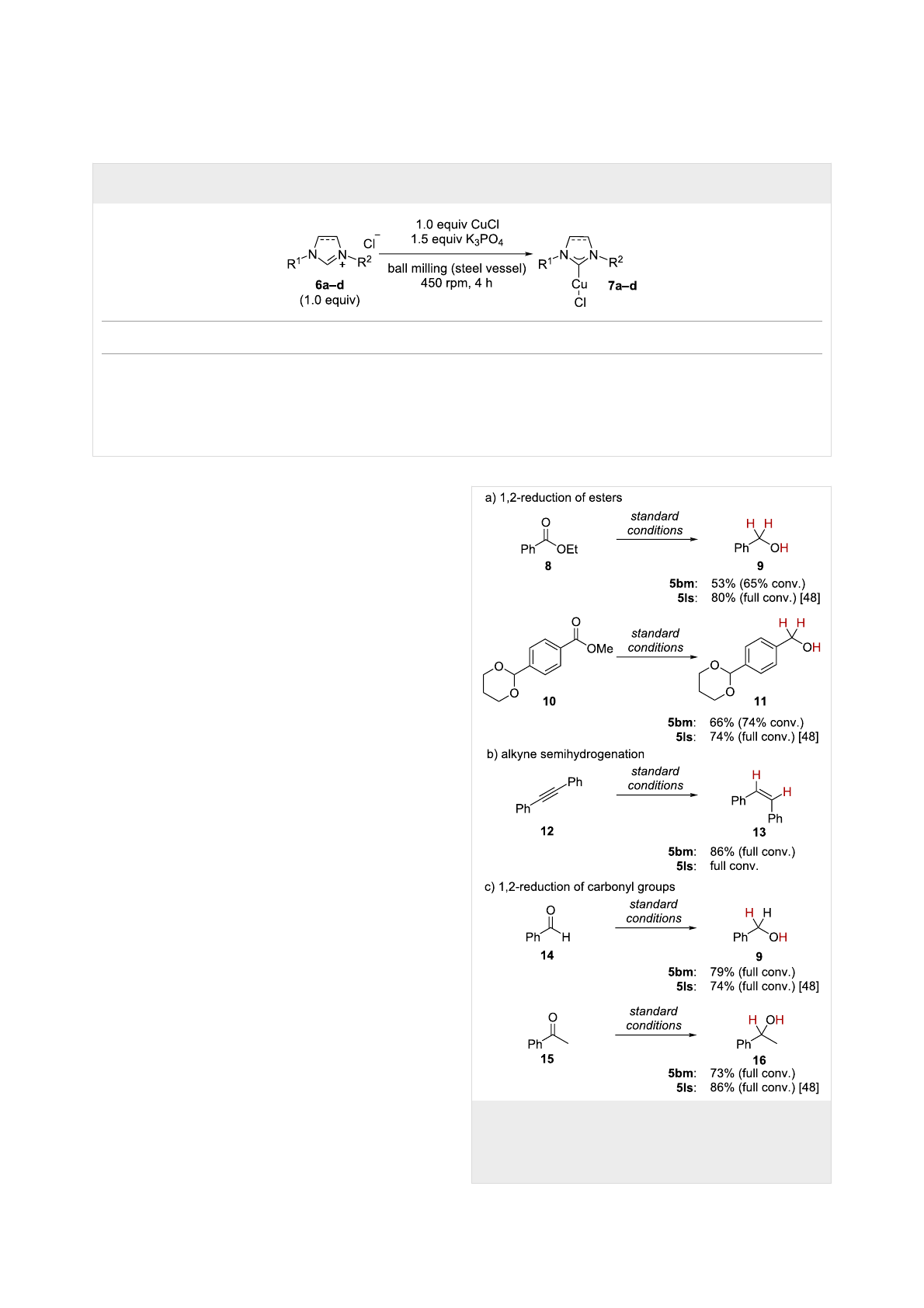
Table 2: Synthesis of standard Cu(I)/NHC-complexes using K3PO4 as a weak base (standard procedure: steel vessel (12 mL), 6 steel balls (1 cm di-
ameter), 450 rpm, 4 h). (dimer = [(NHC)2Cu+]Cl−).
Complex Yield Cu(0)/O2 [45] CuCl/K2CO3 [46]
[Cu(IMes)Cl] (7a) 71% (8% homoleptic cationic Cu(I) complex) 85% 65%
[Cu(SIMes)Cl] (7b) 73% 76% 53%
[Cu(IPr)Cl] (7c) 63% 82% 78%
[Cu(SIPr)Cl] (7d) 64% (12% homoleptic cationic Cu(I) complex) 65% 66%
We decided to directly compare complex 5 from mechanochem-
ical synthesis (5bm) with its counterpart from the liquid state
transmetallation route (5ls) in catalysis. We found that 5bm was
catalytically active, however displaying slightly diminished
activity in general most likely due to different adduct ratio
inhibiting the catalytic activity (Scheme 3). This was estab-
lished using the standard reactions for catalytic hydrogenations
with copper(I)/NHC complexes [4]. In this vein, we tested
complex 5 from solid and liquid phase synthesis in the catalytic
hydrogenation of esters, carbonyl compounds and in the
semihydrogenation of alkynes. In the catalytic hydrogenation
of ethyl benzoate (8) lower overall conversion to benzyl alcohol
(9) and lower yield was found with 5bm (65% conv.
and 53% yield with 5bm, in comparison to 100% conv.
and 80% yield with 5ls; Scheme 3a). We hypothesize that the
higher amount of CH2Cl2 as part of the prepared complex,
which is not a suitable solvent for catalytic ester reduction
with H2 [48], led to lower catalyst activity. Possible coor-
dination of residual phosphate to the guanidine moiety was
excluded as analysis by 31P NMR experiments. The copper(I)-
catalyzed 1,2-reduction of functionalized ester 10 was also suc-
cessfully achieved using the ball mill synthesized bifunctional
catalyst 5bm, again with slightly diminished yields and conver-
sions.
Application of the ball mill-synthesized complex 5bm in the
alkyne semihydrogenation of tolane (12) gave (Z)-stilbene (13)
with full stereoselectivity in good yield (86%, Scheme 3b).
Noteworthy, the complex 5 was never evaluated in this re-
ported reaction. Therefore, 5bm behaves similarly to other
copper(I)/NHC complexes in this transformation [54-60]. The
catalytic 1,2-reduction of carbonyl compounds is mainstay for
copper(I)/NHC complexes [61-67], which is why we also tested
5bm in these transformations: The 1,2-reduction of benzalde-
hyde (14) and acetophenone (15) proceeded with good yields
Scheme 3: Application of bifunctional catalyst 5 in copper(I)-catalyzed
hydrogenations: comparison of 5 prepared by solid state/ball milling
(5bm) and liquid state (5ls) synthesis. Standard conditions: Substrate
(0.40 mmol), 10 mol % 5, 1.1 equiv NaOt-Bu, 1.3 equiv 15-crown-5,
100 bar H2, 1,4-dioxane (3 mL), 70 °C, 24 h.
Loading more pages...