
Nikolas Schöne, Jassem Khairallah, Boris Heinz
Model-based techno-economic evaluation of
power-to-hydrogen-to-power for the electrification
of isolated African off-grid communities
Open Access via institutional repository of Technische Universität Berlin
Document type
Journal article | Accepted version
(i. e. final author-created version that incorporates referee comments and is the version accepted for
publication; also known as: Author’s Accepted Manuscript (AAM), Final Draft, Postprint)
This version is available at
https://doi.org/10.14279/depositonce-17078
Citation details
Schöne, N., Khairallah, J., & Heinz, B. (2022). Model-based techno-economic evaluation of
power-to-hydrogen-to-power for the electrification of isolated African off-grid communities. In Energy for
Sustainable Development (Vol. 70, pp. 592–608). Elsevier BV. https://doi.org/10.1016/j.esd.2022.08.020.
Terms of use
This work is protected by copyright and/or related rights. You are free to use this work in any way permitted by
the copyright and related rights legislation that applies to your usage. For other uses, you must obtain
permission from the rights-holder(s).

1
Model-based techno-economic evaluation of power-to-hydrogen-to-power for the electrification
of isolated African off-grid communities
Nikolas Schöne1*, Jassem Khairallah1, Boris Heinz1,2
1 Department of Community Energy and Adaptation to Climate Change, Technische Universität Berlin, Ackerstraße 76,
13355 Berlin
2 Hudara gGmbH, Rollbergstraße 26, 12053 Berlin
*Author to whom correspondence should be addressed via n.schoene@tu-berlin.de
ABSTRACT
Mini-grids are expected to be the least cost option to electrify more than half a billion people living predominantly in
isolated communities in sub-Saharan Africa. Providing a high reliability of power supply to satisfy paying customers is
vital for the challenging business case of mini-grid owners. Therefore, renewable-based mini-grids of the third generation
commonly include either diesel generators or battery storage for backup power supply.
Power-to-hydrogen-to-power (P2H2P) is a promising alternative to overcome technical, financial, and social shortcomings
of diesel generators and batteries. Previous research highlights the challenging economic competitiveness of P2H2P in
specific case studies only. Here, we conduct a model-based techno-economic analysis on an archetypal representative mini-
grid to compare the economic performance of P2H2P against the diesel generator and battery storage. We identify key
parameters decisive for the competitiveness of P2H2P via sensitivity analysis.
Under today´s conditions, P2H2P is financially viable in 100% decarbonized mini-grid systems. Ongoing trends of
increased fuel price and P2H2P technology improvements must continue to achieve economic advantages of P2H2P over
the diesel generator. However, P2H2P is competitive in locations in which the diesel price is higher than 2.6 USD/l or when
P2H2P investment costs drop by more than 50%, which is expected beyond 2040. Sensitivity analysis shows that increasing
P2H2P system efficiency can substantially benefit the economic performance. Seasonal variations on the African continent
are insufficient to create exploitable advantages of P2H2P against the short-term storage of batteries.
The results suggest especially larger future PV mini-grids to combine battery storage and P2H2P rather than including
common diesel generators or only including batteries when trends toward cheaper and more efficient technologies continue
and diesel prices increase. Future work should investigate economic effects of the unique multi-usability of hydrogen on
the mini-grid system, such as the usage as clean cooking fuel.
KEYWORDS
Access-to-electricity, off-grid electrification, isolated mini-grid, decentralized hydrogen, techno-
economic analysis, power-to-hydrogen-to-power.
INTRODUCTION
1.1 Background and motivation
Eight years before the completion of the Sustainable Development Goal (SDG) period the goal of
universal electrification outlined in SDG 7 is still at significant distance. 600 million people lack
access to electricity in sub-Saharan Africa (SSA) only (International Energy Agency, 2019).
Especially affected is the rural population. Three out of ten people living in rural areas had no reliable
access to electricity in 2020 (World Bank, 2021). Isolated small scale grids – hereinafter referred to as
mini-grids – are a promising pathway to electrify rural communities in addition to Solar Home
Systems and grid extension (Morrissey, 2017). Recording rapid cost-decline of components and a
politically incentivized establishment of a competitive private sector market in many African
countries, mini-grids have become increasingly popular (IRENA, 2015; Se4all, 2020) and
economically competitive (Africa Process Panel, 2016) for rural electrification in the recent past. As a
consequence, mini-grids are expected to be the most suitable electrification pathway for more than half
a billion people in future (ESMAP, 2019).
However, mini-grids pose significant economic challenges to the owner and operator. Revenues and
profit margin in rural mini-grids are often small (Peters, Sievert, & Toman, 2019). When not designed
conscientious towards economic threads, mini-grid projects end up being business failures (Palit &
Sarangi, 2014; Sovacool, 2013). Regular and reliable payments are indispensable for the owner, in
order not to endanger the economic profitability. Therefore, the reliability of power supply, evidently a
major driver for customer satisfaction impacting the ability and willingness to pay for electricity of
customers (Robert, Sisodia, & Gopalan, 2019) is one fundamental pillar of a financially sustainable
mini-grid project. Especially costumers with higher income and demand, e.g., entrepreneurs, who

2
require a reliable supply, may either stop paying their bills or invest in individual supply systems when
facing frequent power outages (Schnitzer et al., 2014). Therefore, mini-grids of the third generation –
powered by volatile renewable energies of unpredictable nature – commonly include diesel generators
(DGs) or battery storage as backup technologies to increase the reliability of power supply. Duran et
al. report that 94 out of 104 analyzed mini-grids (90%) include a DG as a backup generator (Duran &
Sahinyasa, 2020). Such DGs, however, are not in line with global efforts towards decarbonization and
environmental protection. Further, DGs jeopardize self-sufficiency of communities but create
dependencies on diesel imports. In rural areas, diesel imports can be challenging and costly, while the
price of such oil derivates fluctuates with market movements on global stock exchange. Considering
decreasing resources of crude oil, a long-term trend of increasing diesel prices may be likely (U.S.
Energy Information Administration, 2021).
An alternative solution to provide backup power is electricity storage. Storage technologies store
electricity produced in excess by renewable energies. When demand exceeds the production, i.e.
during the night, the storage discharges to satisfy the loads. The most common and mature technology
for such electricity storage in mini-grids are batteries. In the past, significant advances have been made
especially for lithium-ion batteries (IRENA, 2016). Nevertheless, batteries still have technical
limitations and physical boundaries that restrict the optimal fields of application. Such limitations
include the property of self-discharge, which limits the application for longer-term storage. With this,
the battery may fail to serve power during extended cloudy days (considering PV primary production)
or during maintenance of the primary power generation unit. Also, cyclic loading and operation over
the entire charging capacity can harm the lifetime of batteries. To still exploit sufficient energy
capacity to mitigate daily or weekly variability phenomena, oversizing of battery storage systems
would be required. This in return leads to reduced average utilization and thereby increased average
costs (ESMAP & World Bank Group, 2020). Thus, the optimal field of application of batteries is still
seen in short-term storage of up to a few hours (ESMAP & World Bank Group, 2020).
Facing the limitations of these two common backup technologies – DG and battery –, mini-grid
developers are looking for alternative solutions to increase the reliability of power supply. A recently
discussed technology is power-to-hydrogen-to-power (P2H2P). In P2H2P, excess electricity is
converted to gaseous hydrogen (and oxygen) via electrolysis and stored in (pressurized gas) tanks. The
stored hydrogen is reconverted into electricity (and water) through a fuel cell (FC). P2H2P may
overcome the obstacles of the aforementioned backup systems:
• Environmental protection: P2H2P does not emit any harmful local emissions when noise
emissions are avoided through correct shelter.
• Self-sufficiency: Decentralized hydrogen production via renewable energies avoids any
dependency on external supply during system operation (Notably, we consider water resources are
available for at least small-scale hydrogen production according to the H2-Atlas in most African
countries (H2 Atlas consortium, 2022))
• Storability: Hydrogen storage allows for long-term energy storage without significant losses. This
allows to cover for seasonal variations of renewable energy generation or longer disruptions in the
primary supply of electricity.
• Multi-usability: In addition to power supply, hydrogen can also be used as a clean cooking fuel
(Topriska, Kolokotroni, Dehouche, Novieto, & Wilson, 2016; Topriska, Kolokotroni, Dehouche,
& Wilson, 2015), mobility fuel, or for other productive uses, e.g., in fertilizer production, which
might unlock synergies to other sectors (ESMAP & World Bank Group, 2020).
Reflecting on this potential, P2H2P is expected to become a competitive option for power supply in
remote mini-grids in future (Duran & Sahinyasa, 2020; Schöne, de Rochette, & Heinz, 2021).
However, today, the P2H2P technologies are in an early stage of entering the electrification sector.
Besides technical challenges, economic competitiveness against other backup technologies may not
yet be achieved. It remains a challenge for research to identify economic use-cases, barriers, and
chances to financially viable P2H2P integration in isolated mini-grids.
Previous literature has proposed P2H2P for rural electricity supply systems (Al-Sharafi, Sahin, Ayar,
& Yilbas, 2017; Ayodele, Mosetlhe, Yusuff, & A.S.O., 2021; Barzola-Monteses & Espinoza-Andaluz,
2019; Ghenai, Salameh, & Merabet, 2018; Hailu Kebede & Bekele Beyene, 2018; Khemariya, Mittalb,

3
Baredarb, & Singh, 2017; Pal & Mukherjee, 2021) and small island systems (Cozzolino, Tribioli, &
Bella, 2016; Groppi, Garcia, Basso, Cumo, & De Santoli, 2018; Marocco, Ferrero, Martelli, Santarelli,
& Lanzini, 2021; Marocco, Ferrero, Lanzini, & Santarelli, 2022). Only a few research has explored the
techno-economic competitiveness of P2H2P against DGs, battery storage, or both. Silva et al. (Silva,
Severino, & de Oliveira, 2013) (2013) compared the economic performance of P2H2P to battery
storage in a PV-powered mini-grid installed in rural Brazil, applying the Hybrid Optimization Model
for Electric Renewables (HOMER) (HOMER Energy, 2018). Based on the real costs of the pilot
project, the optimization indicates the FC integration to be not viable against a system including a
battery as storage only (Silva et al., 2013). Brenna et al. (Brenna, Foiadelli, Longo, & Abegaz, 2016)
(2016) applied HOMER to detect the optimal energy system configuration for a rural community in
Ethiopia, considering DG, battery storage, and P2H2P. With costs derived from literature, the study
finds a system including hydrogen to have only 0.1% higher initial costs – but 0.1% lower operational
costs – compared to the optimal solution integrating only a DG and battery storage (Brenna et al.,
2016). Das et al. (Das, Tan, Yatim, & Lau, 2017) find battery storage to be economically advantageous
against a DG or P2H2P for a village longhouse located in rural Malaysia (Das et al., 2017). In contrast,
the results of an optimization applying a multi-objective crow search algorithm applied by Jamshidi et
al. (Jamshidi & Askarzadeh, 2018), propose P2H2P to be economically advantageous against a diesel-
powered electricity supply for a rural off-grid community in Kerman, south Iran (Jamshidi &
Askarzadeh, 2018).
1.2 Ambition and contribution to research
The review of previous literature reveals significant gaps in the economic assessment of P2H2P in
rural mini-grids.
Existing techno-economic analyses are limited to case studies in specific considered settings. While
this approach may provide a sophisticated answer for the specific case and setting of investigation, the
transferability of findings is limited. Due to the high complexity of the considered systems and the
variety of parameters influencing the result, estimating the impact of changes in parameters on the
result is difficult. Thereby, transferability of the results is jeopardized. Further, the case studies consult
latest economic and technical data, but miss to include potential future development of parameters.
This paper aims to overcome these limitations and produce transferable results in a techno-economic
comparison of P2H2P against DGs and batteries. Therefore, the paper will apply an opposite approach
to previous work, by creating a linear problem-based energy system model of a representative
archetypal mini-grid. The paper will investigate the impact of several technical and economic
parameters on the competitiveness of P2H2P against the DG and battery in supplying power to the
mini-grid. Selected parameters will be varied within a sensitivity analysis according to their potential
development or variation on the African continent. This allows transferring the findings of the study to
any other context on the continent. The parameters considered during sensitivity analysis are:
• Parameters influencing investment of a single technology: specific electrolyzer (EL)
investment costs, specific FC investment costs, specific battery investment costs, specific DG
investment costs, P2H2P efficiency (influencing the required size of the components)
• Parameters influencing the operation of a single technology: Diesel fuel price, P2H2P
efficiency (influencing the required energy throughput), battery depth of discharge (DoD),
• Parameters influencing all present technologies: Load profile shape, seasonality of PV
irradiation, weighted average costs of capital (WACC).
The paper follows a materials and methods section, which includes a description of the energy system
model, components of the energy system considered, and parameters applied. Section 3 presents the
results, which are discussed and interpreted in Section 4. The paper closes with a conclusion and
summary of findings.
2. MATERIAL AND METHODS
This section covers the materials used and methodology applied to evaluate the economic
competitiveness of P2H2P for supplying backup power to an isolated African community. Section 2.1
4
describes the considered mini-grid and its components. Section 2.2 describes the applied methodology
to define an optimal solution to the research question.
2.1 Integration of P2H2P in the mini-grid
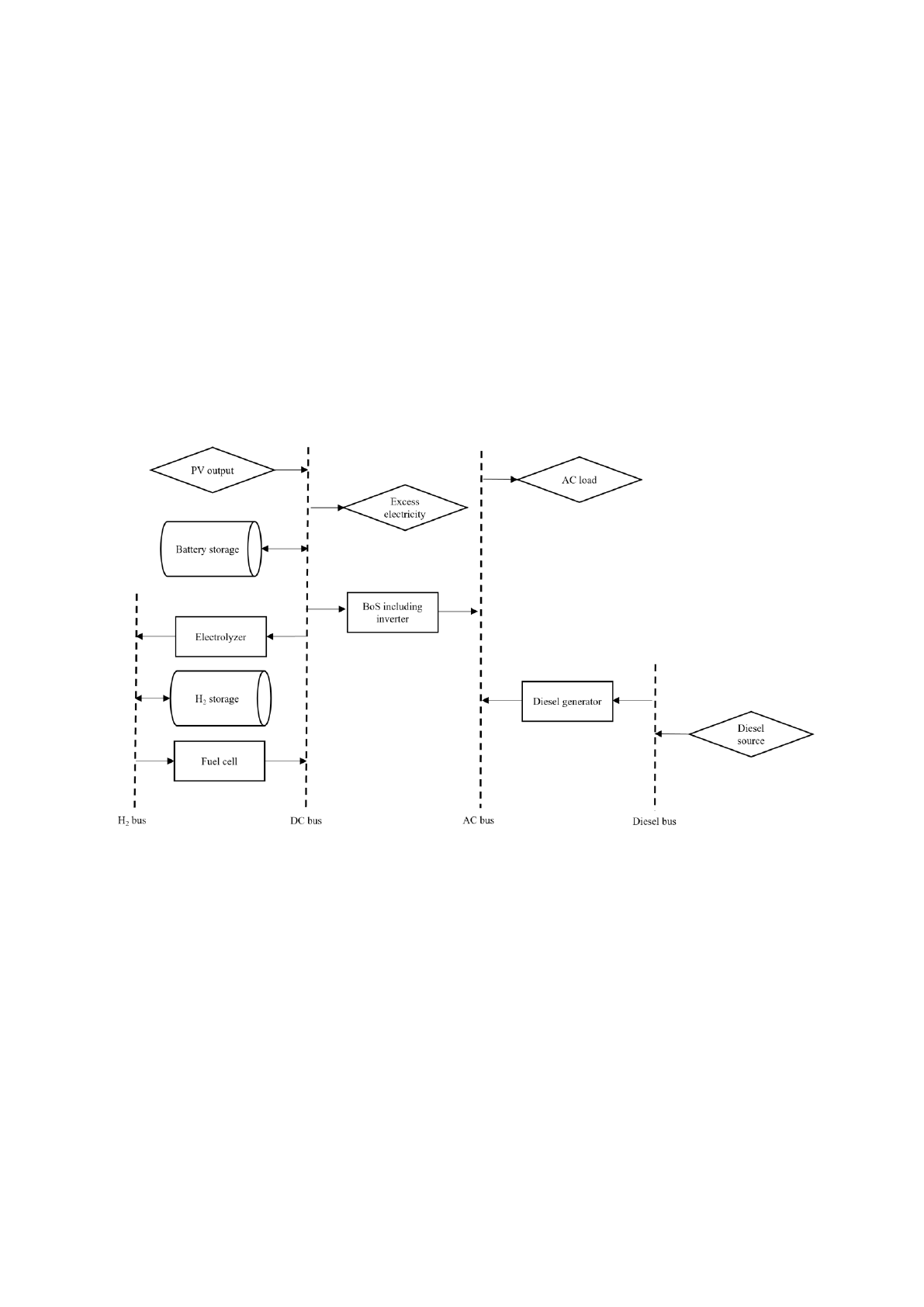
Figure 1 presents the set-up of the mini-grid topology when including all options of backup power
supply technologies. The P2H2P system is connected to the direct current (DC) bus, while the EL
converts DC electricity to hydrogen and the FC reverts the process to satisfy electricity demands. A
detailed description of P2H2P integration in isolated small-scale systems is given in (Akinyele,
Olabode, & Amole, 2020). Notably, our considerations in this study are limited to electricity and
exclude the potential usage of waste heat released by any component, such as the fuel cell. Further, the
usage of electrolysis by-product O2 is neglected. While in other settings with local O2 demand the use
of the byproduct has shown to improve the economic P2H2P system performance (Roeben, Schöne, &
Bau, 2021), the local use of O2 in mini-grids may be context-specific and must be explored in further
research.
Figure 1: Energy system topology considering the three backup technologies to be compared during our analysis.
The following subsections will detail the function of the distinct energy system components.
Assumptions made for in analysis are discussed on the background of recent literature.
2.1.1 Load
We consider a common alternating current (AC) load in the analysis. As of limited seasonality in
electricity demand behavior, load profiles for African mini-grids in the literature are usually reported
as single-day resolution, rather than annual profiles (Lorenzoni et al., 2020). A common attempt in
defining the load profile is to specify distinct load profiles for categories of loads (i.e. residential load,
business loads, community loads, and productive use loads) by either measurement or survey.
However, this bottom-up approach – accurate for the individual mini-grid – is questionable to serve as
a representative mini-grid profile, as it contains the specific socio-demographic, tariff, and climate
influencing parameters of the case studied. For our representative mini-grid, we follow Lorenzoni et
al. (Lorenzoni et al., 2020), who, in a top-down approach, defined distinct archetypal load profiles for
mini-grid clustered according to socio-demographic and other parameters (Lorenzoni et al., 2020). The
generated archetypal load profiles show a trend with the two extreme profiles being a peak profile –
Loading more pages...