Photocatalytic hydrogenation of acetophenone on
a titanium dioxide cellulose film†
Tabea A. Thiel,
a
Keisuke Obata,
b
Fatwa F. Abdi,
b
Roel van de Krol,
ab
Reinhard Schom¨
acker
a
and Michael Schwarze *
a
A previously developed sustainable immobilization concept for photocatalysts based on cellulose as
a renewable support material was applied for the photocatalytic hydrogenation of acetophenone (ACP) to
1-phenyl ethanol (PE). Four different TiO
2
modifications (P25, P90, PC105, and PC500) were screened for
the reaction showing good performance for PC25 and PC500. PC500 was selected for a detailed kinetic
study to find the optimal operating conditions, and to obtain a better understanding of the photocatalytic
pathway in relation to conventional and transfer hydrogenation. The kinetic data were analyzed using the
pseudo-first-order reaction rate law. A complete conversion was obtained for ACP concentrations below
1 mM using a 360 nm filter and argon as the purge gas within 2–3 hours. High oxygen concentrations slow
down or prevent the reaction, and wavelengths below 300 nm lead to side-products. By investigating the
temperature dependency, an activation energy of 22 kJ mol
1
was determined which is lower than the
activation energies for conventional and transfer hydrogenation, because the light activation of the
photocatalyst turns the endothermic to an exothermic reaction. PC500 was immobilized onto the cellulose
film showing a 37% lower activity that remains almost constant after multiple use.
1. Introduction
Green chemistry has become increasingly signicant in the
context of environmental problems and climate change in the
recent 20 years.
1
It is dened by twelve principles including
catalysis, energy efficiency, atom economy, renewable feed-
stocks, less hazardous synthesis pathways, and chemicals, and
overall accident prevention. Hydrogenation of C]O, C]N, C]
C, and N]O bonds is one of the most basic reactions, per-
formed industrially, and can be done using various pathways
(Fig. 1). For “classic”hydrogenation with molecular hydrogen,
technical safety equipment and assessments, as well as trained
personnel concerning explosion hazards, are necessary.
Furthermore, for this type of hydrogenation, harsh reaction
conditions are required. For instance, the widely used repre-
sentative molecule for aromatic ketones, acetophenone,
requires elevated pressures up to 50 bar and temperatures up to
170 C.
2–5
Although many transfer hydrogenations use iso-
propanol as hydrogen donor and solvent simultaneously, they
still need temperatures up to 70–80 C, and catalysts that are
sometimes difficult to synthesize and oen sensitive to air and
water.
6–9
Photocatalytic hydrogenation reactions are similar to
transfer hydrogenations since they also take place in a liquid
phase and use alcohols as hydrogen donors, although with
rather different reaction mechanisms.
9,10
The photocatalytic
process can make use of cheap and readily accessible photo-
catalysts like titanium dioxide (TiO
2
) that can be used without
further modications. Titanium dioxide is one of the most
studied catalysts for photocatalytic applications, since it is used
for the purication of wastewater, water splitting, and also for
organic synthesis reactions.
11
Photocatalytic hydrogenations of C]O, C]N, and N]O
double bonds in the liquid phase provide an even greener
alternative to conventional hydrogenation reactions as they take
place under mild reaction conditions and use alcohols as
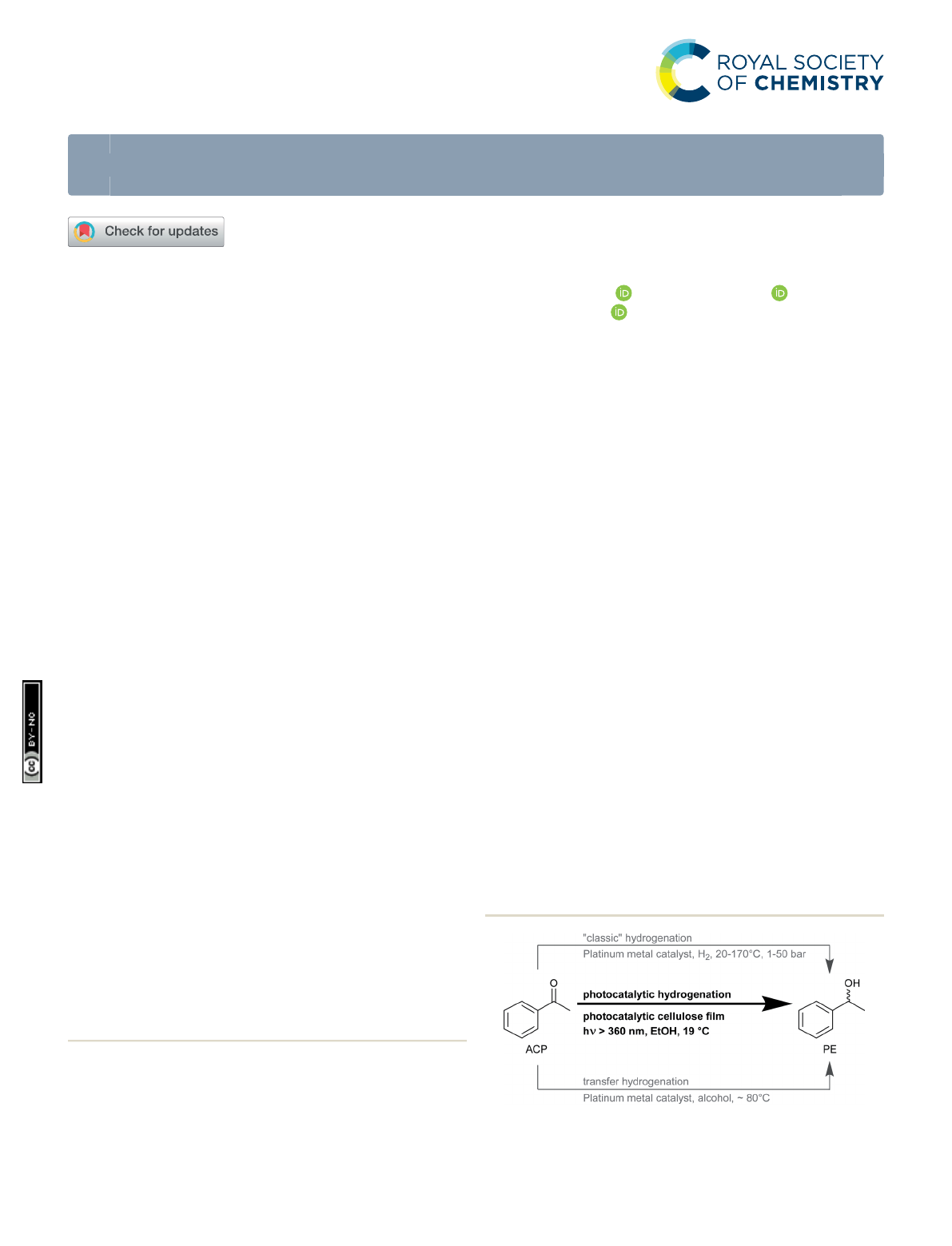
Fig. 1 Three different types of hydrogenation reaction of acetophe-
none (ACP) to 1-phenyl ethanol (PE) with common reaction
conditions.
a
Technische Universit¨
at Berlin, Department of Chemistry: Multiphase Reaction
Engineering, Straße des 17. Juni 124, Sekr. TC8, 10623 Berlin, Germany. E-mail:
b
Institute for Solar Fuels, Helmholtz-Zentrum Berlin f¨
ur Materialien und Energie
GmbH, Hahn-Meitner-Platz 1, 14109 Berlin, Germany
†Electronic supplementary information (ESI) available. See DOI:
10.1039/d1ra09294d
Cite this: RSC Adv., 2022, 12,7055
Received 23rd December 2021
Accepted 22nd February 2022
DOI: 10.1039/d1ra09294d
rsc.li/rsc-advances
© 2022 The Author(s). Published by the Royal Society of Chemistry RSC Adv., 2022, 12,7055–7065 | 7055
RSC Advances
PAPER
Open Access Article. Published on 01 March 2022. Downloaded on 5/4/2022 10:20:38 AM.
This article is licensed under a
Creative Commons Attribution-NonCommercial 3.0 Unported Licence.
View Article Online
View Journal
| View Issue
a green solvent and hydrogen donor.
12
Since suspended pho-
tocatalysts are a problem for large-scale photoreactors with
regard to separation and reuse of the catalyst from the liquid
reaction medium, immobilization of the photocatalyst is
necessary. Metal oxide photocatalysts like titanium dioxide can
be deposited as a lm on substrates via dip coating, sol–gel
coating, spin coating or atomic layer deposition, where metal
substrates like steel plates or polymeric substrates like poly-
propylene, polyacrylonitrile, and polyethersulfone can be
used.
13,14
Recently we reported the fabrication and testing of
photocatalytic cellulose lms for hydrogen evolution
15
as
cellulose is one of the most abundant biopolymers and can be
inexpensively isolated from various sources and modied.
16,17
Reported titanium dioxide cellulose composites were produced
by depositing the titanium dioxide onto the cellulose via
bottom-up approaches
18
or by non-solvent induced phase
separation.
19
The advantage of our lms is their non-elaborate
fabrication method, where the existing photocatalyst powder
is dispersed into the cellulose dispersion in a methanol–water
mixture and ltered onto a lter paper.
15
In this contribution,
a self-supporting photocatalyst cellulose lm (PCF) was
prepared, in which cellulose acts as a support for the TiO
2
photocatalyst. It was studied for the photocatalytic hydrogena-
tion of acetophenone (ACP) to 1-phenylethanol (PE). The main
target was to investigate, if a PCF can be used as a green and
simple catalyst in photocatalytic synthesis reactions. For the
study of the PCF in comparison to the dispersed photocatalyst,
high initial ACP concentrations as reported in the literature
20,21
would involve long and elaborate experiments. The comparison
between a suspended photocatalyst and a PCF can also be done
with less time consuming and less costly experiments at lower
initial ACP concentrations. Therefore, initial ACP concentra-
tions were xed below 1 mM. At rst, a suitable experimental
approach was developed and photocatalytic experiments were
carried out with varying the kind of purge gases, cut-offlters,
commercial TiO
2
photocatalysts, initial ACP concentrations,
temperatures, and reactor geometries. The activity of the used
TiO
2
was evaluated based on the reaction rate constant obtained
from tting the experimental data to a pseudo-rst-order reac-
tion rate law. Finally, the optimum reaction conditions were
applied to the PCF, and the activity and stability of the PCF for
ACP hydrogenation were investigated.
2. Materials and methods
2.1. Chemicals
For the experiments, the following chemicals and photo-
catalysts were used as received: acetophenone (ACP, >98.5%,
TCI-Chemicals), 1-phenylethanol (PE, 98.0%, TCI-Chemicals),
ethanol (EtOH, >99.7%, VWR-Chemicals), acetonitrile (ACN,
99.9%, Roth), and four titanium dioxide (TiO
2
) modications
namely PC500 (>99%, Cristal Activ), PC105 (>99%, Cristal Activ),
P90 ($99.5%, Evonik), and P25 ($99.5%, Evonik). Argon (5.0,
Linde) and nitrogen from the household line were used as purge
gases.
2.2. Preparation of photocatalyst cellulose lms
The modication of cellulose was carried out by sulfuric acid
hydrolysis (see ESI†). The modied cellulose (abbreviated as
ModCe) was dispersed in a methanol–water mixture (v/v ¼70/
30) to prepare a ModCe dispersion which was used as the
liquid phase. For the preparation of the photocatalyst cellulose
lm (PCF), PC500 (41 mg) was mixed with the ModCe disper-
sion (8.8 mL, 5 g L
1
) and sonicated for 15 min. Then it was
ltered through a common lter paper in an ultraltration cell
at a pressure of 1.5 bar set with nitrogen, washed with water,
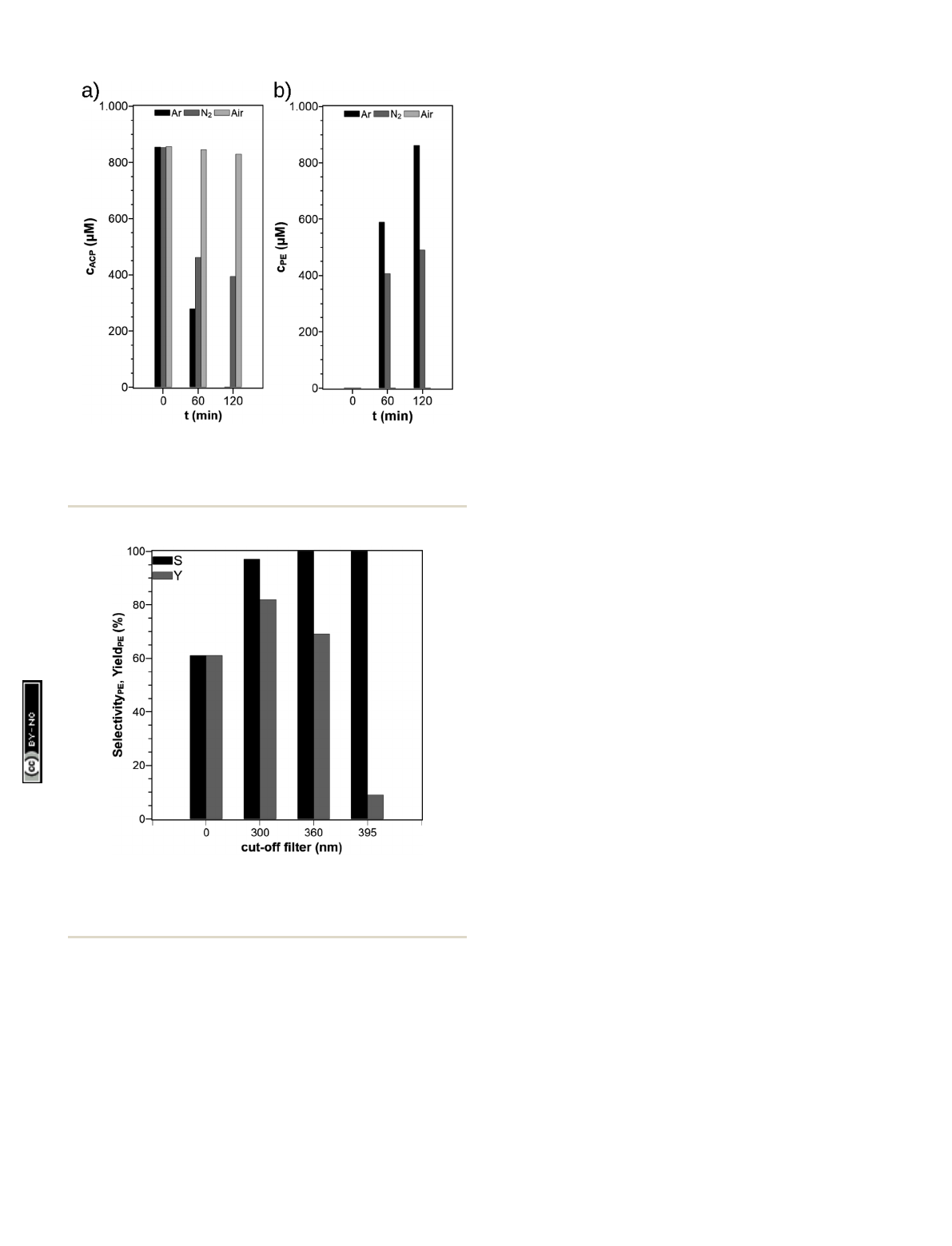
Fig. 2 ACP concentration (a) and PE concentration (b) before and
after irradiation using different purge gases (reaction conditions: T¼
19 C, l$360 nm, V
L
¼20 mL, reactor ¼SIR, c
ACP,0
¼860 mM, catalyst
¼TiO
2
(PC500)).
Fig. 3 Selectivity and yield of PE after 60 min using different wave-
length filters (reaction conditions: purge gas ¼Ar, T¼19 C, V
L
¼20
mL, reactor ¼SIR, c
ACP,0
¼860 mM, catalyst ¼TiO
2
(PC500)). The value
0 nm indicates that no filter was used.
7056 |RSC Adv., 2022, 12,7055–7065 © 2022 The Author(s). Published by the Royal Society of Chemistry
RSC Advances Paper
Open Access Article. Published on 01 March 2022. Downloaded on 5/4/2022 10:20:38 AM.
This article is licensed under a
Creative Commons Attribution-NonCommercial 3.0 Unported Licence.
View Article Online
and dried there. The dry PCF has a diameter of 4.2 cm. The PCF
for photocatalytic hydrogenations was cut out with a punching
iron for a diameter of 3.2 cm and easily pulled offfrom the lter
paper.
2.3. Photocatalytic hydrogenation of ACP
Two double-walled photoreactors, sealed with a rubber septum,
one for side-irradiation (SIR, V¼35 mL) and another one for
top-irradiation (TIR, V¼250 mL), were used for the photo-
catalytic hydrogenation experiments. For measurements with
suspended catalysts, 24 mg of the photocatalyst were placed in
the SIR and 20 mL ethanol containing 100 ppm ACP were
added. For experiments with immobilized catalysts, the
prepared PCF has an immobilized amount of TiO
2
photocatalyst
of 24 mg. It was xed to a Teon holder and placed into the TIR
and 20 mL ethanol containing 100 ppm ACP was added. For the
reference experiment with the powdered photocatalyst in TIR,
the same approach as in SIR was used. The reactor was then
sealed with rubber septa. The liquid phase was ushed with
argon for 20 min with cannulas inserted through the septa. The
reactors were tempered to 19 C and irradiated through a quartz
glass window by a 300 W Xe-lamp (Quantum Design Europe) for
each setup. A cut-offlter that cuts the wavelengths below
360 nm was placed between the lamp and the reactor to remove
a part from the UV spectrum. The liquid phases were mixed with
a magnetic stirrer at 300 rpm for SIR and 1200 rpm for TIR. The
distance between the lamp and the liquid surface was 10 cm for
the SIR and 11.5 cm for the TIR. Samples were taken at given
time intervals for 120 min for the SIR and 300 min for the TIR.
2.4. HPLC analysis
The samples from the photocatalytic hydrogenation were
ltered through a cellulose acetate (CA, 0.2 mm) syringe lter
and analyzed by high-performance liquid chromatography
(HPLC) using a chromatography setup from Agilent (model
1260 Innity II) equipped with an RP18 column from Ziemer
Chromatographie. ACN and water were used as eluents in
a volume ratio of 40/60, at a column temperature of 25 C and
aow rate of 1.3 mL min
1
. The retention times were 6.0 min
and 4.3 min for ACP and PE, respectively.
In experiments with regular sampling, the ACP concentra-
tion proles were tted using a pseudo-rst-order reaction rate
law, where c
ACP
is the ACP concentration, kis the reaction rate
constant, and tthe time.
dcACP
dt¼kcACP (1)
For curve tting, the program Berkeley Madonna (Version
8.3.18) was used. From the reaction rate constants obtained for
different reaction temperatures, the apparent activation energy
was obtained by the Arrhenius plot, where E
A
is the activation
energy, Rthe universal gas constant, and k
N
the pre-exponential
factor:
ln k¼
EA
R
1
Tþln kN(2)
For further information about the reaction kinetics see ESI.†
2.5. SEM and GC analysis
The morphology of the lm was studied by scanning electron
microscopy (SEM) using a Zeiss DSM 982 GEMINI microscope
which operated at an acceleration voltage of 8 kV. Hydrogen in
the headspace aer the photocatalytic reaction was detected by
gas chromatography (GC) using an Agilent Technologies System
(7890 A) equipped with a thermal conductivity detector (TCD).
An HP Plot 5A column (Agilent Technologies, 30 m, 0.53 mm, 25
mm molsieve, inlet temperature 100 C, and oven temperature
75 C) and argon as the carrier gas (1.2 mL min
1
) were used.
3. Results and discussion
3.1. Establishing reaction operating conditions
It is well known that the reaction conditions in photocatalysis
can have a huge impact on the reaction kinetics. Therefore,
different parameters were varied to nd the optimum reaction
conditions for suspended TiO
2
photocatalysts. In the later part
of the investigations these conditions were supposed to be
applied for the photocatalyst cellulose lm. For all experiments,
the TiO
2
modication PC500 was used based on a catalyst
screening as described in Section 3.2. First, it was investigated
whether the use of argon or nitrogen as a purge gas affects the
reaction performance. The suspensions investigated in SIR were
purged with each gas for 20 min, and as a reference, one
suspension was not purged. The decay of the ACP concentration
and the increase of the PE concentration are shown in Fig. 2.
When argon is used as the purge gas, a complete conversion of
ACP to PE takes place within 120 min, whereas the reaction
takes place at a much slower rate when nitrogen is used as the
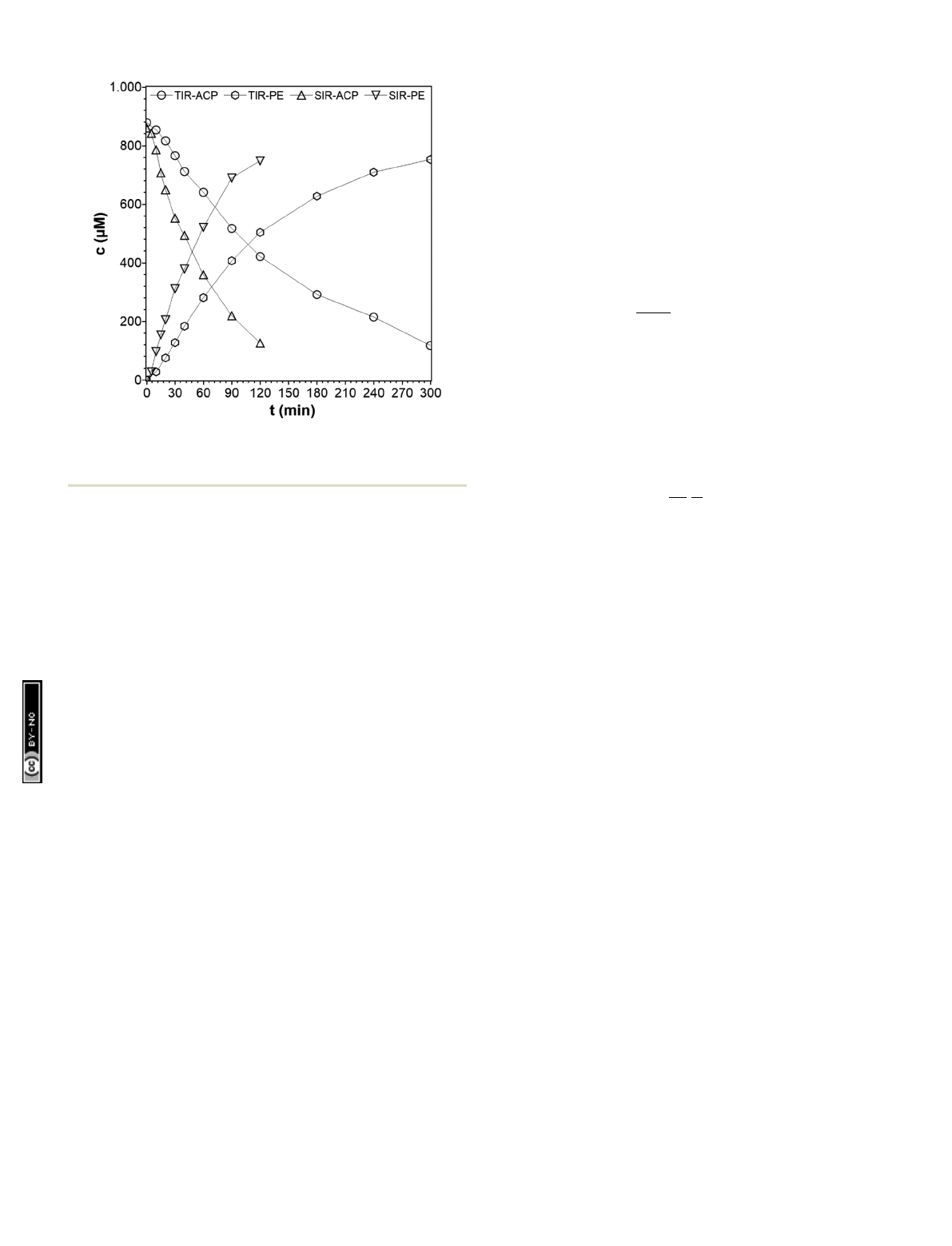
Fig. 4 Concentration profiles of ACP and PE using different photo-
reactors (reaction conditions: purge gas ¼Ar, T¼19 C, l$360 nm,
V
L
¼20 mL, c
ACP,0
¼860 mM, catalyst ¼TiO
2
(PC500)).
© 2022 The Author(s). Published by the Royal Society of Chemistry RSC Adv., 2022, 12,7055–7065 | 7057
Paper RSC Advances
Open Access Article. Published on 01 March 2022. Downloaded on 5/4/2022 10:20:38 AM.
This article is licensed under a
Creative Commons Attribution-NonCommercial 3.0 Unported Licence.
View Article Online
purge gas. The aerated suspension shows no PE production and
a small decay of ACP, probably by side reaction on the photo-
catalytic reduction sites with the remaining oxygen in the
solution. The GC measurement of nitrogen from the household
line shows a residual oxygen concentration of 0.10–0.12 vol%.
Because argon is the heavier gas, it can displace the oxygen
better than nitrogen and prevents it from re-entering. Higher
oxygen content in the reactor will slowdown the reaction. In
presence of dissolved air, almost no reaction takes place
because oxygen acts as an inhibitor. An oxygen molecule O
2
can
scavenge an electron from the conduction band to form the
superoxide O
2
c
. The superoxide can react with surface adsor-
bed protons to form hydroxyl radicals HOc
and hydroxyl
anions HO
, which are the key reactants in photocatalytic
degradation of pollutants.
22,23
In the radical-mechanism for the
photocatalytic ACP hydrogenation on TiO
2
postulated by Koh-
tani et al.,
20
these species interrupt the radical chain reaction.
The concentration of atmospheric oxygen in ethanol was esti-
mated to be 2 mM and the concentration in the headspace of
the reactor is 23 M (calculations are shown in the ESI†) which is
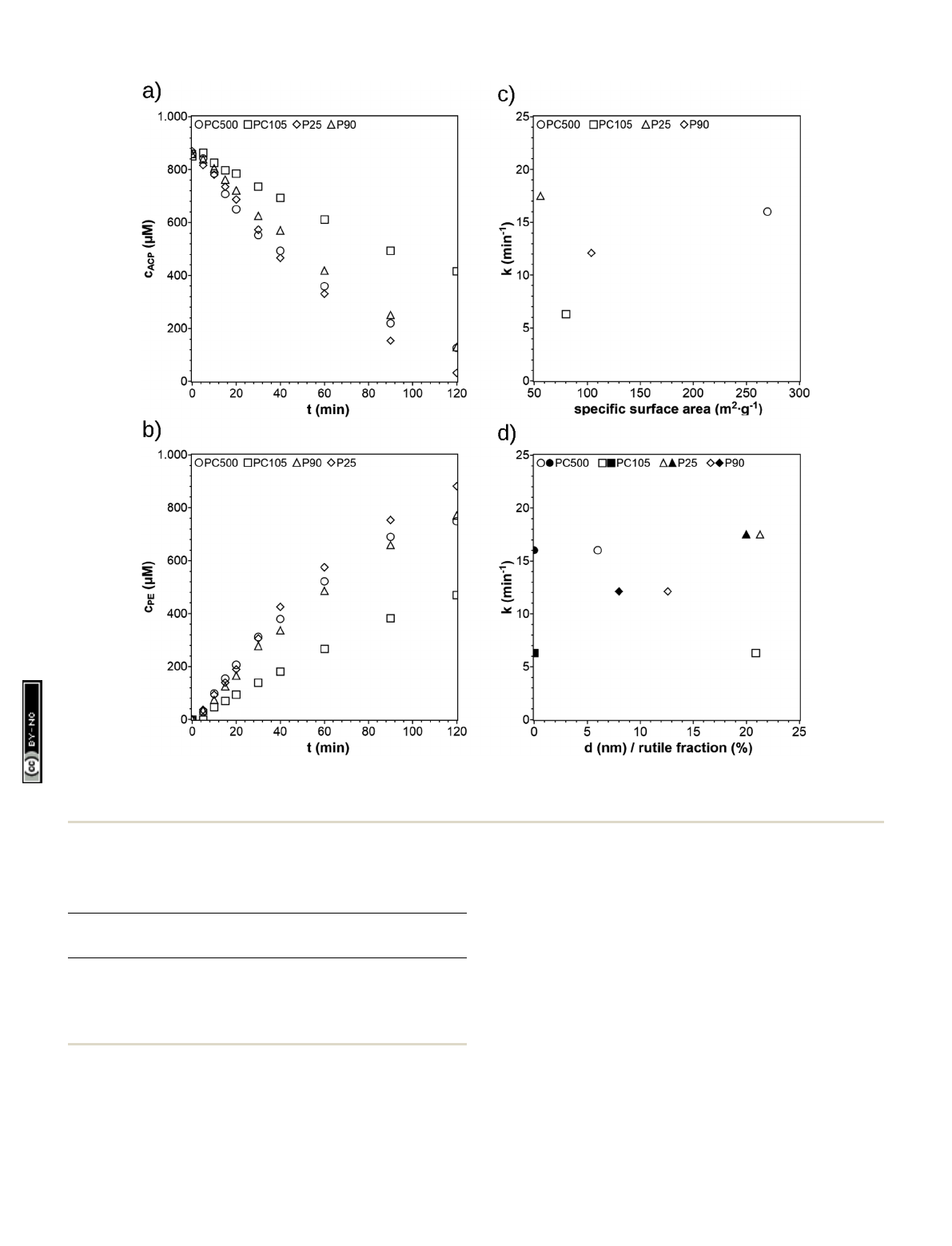
Fig. 5 Concentration profiles of ACP (a) and PE (b) using different commercially available TiO
2
photocatalysts (reaction conditions: purge gas ¼
Ar, T¼19 C, l$360 nm, V
L
¼20 mL, reactor ¼SIR, c
ACP,0
¼860 mM). 1st order reaction rate constants k plotted against the specific surface area
(c) and the crystallite size d(empty symbols) and rutile fraction (filled symbols) (d).
Table 1 Characteristic values of four commercially available TiO
2
photocatalysts (SA: surface area, CS: crystallite size, A/R: anatase/
rutile)
Photo-catalyst SA
29
(m
2
g
1
)CS
29
(nm) A/R-ratio
30
k
(10
3
min
1
)
P25 56 21.3 80 : 20 17.5
P90 104 12.6 92 : 8 12.1
PC105 80 20.9 100 : 0 6.3
PC500 270 6.0 100 : 0 16.0
7058 |RSC Adv., 2022, 12,7055–7065 © 2022 The Author(s). Published by the Royal Society of Chemistry
RSC Advances Paper
Open Access Article. Published on 01 March 2022. Downloaded on 5/4/2022 10:20:38 AM.
This article is licensed under a
Creative Commons Attribution-NonCommercial 3.0 Unported Licence.
View Article Online
higher than the ACP concentration. Presumably, the photo-
catalytic hydrogenation of ACP should start if the oxygen in the
reaction system is consumed. To validate the consumption of
O
2
in the reaction, another experiment with a non-inertised ACP
solution was performed. The sealed reactor was irradiated for
six hours and the ratio of N
2
/O
2
for air of 3.71 changed to 128
showing the consumption of O
2
.Aer six hours, the residual O
2
concentration in the headspace was about 0.5 vol% indicating
that the consumption of oxygen needs a long time. For this
reason, it was decided to use argon in all subsequent
experiments.
The selectivity and yield of PE in photocatalytic ACP hydro-
genation were investigated using the SIR in combination with
various cut-off-lters (cutting wavelengths below 300 nm,
360 nm, and 395 nm) and for one experiment no lter was used
(Fig. 3). This experiment is focused on the optimal wavelength
range. With a 300 nm lter, a maximum yield of 82% aer
60 min was achieved but the selectivity was only 97%, whereas
100% selectivity with smaller yields of 69% and 9% were ob-
tained for 395 nm and 360 nm lters, respectively. The
conversion of ACP was complete aer 60 min when no lter was
used but the resulting yield and selectivity were only at 61%.
With increasing threshold wavelength the available lamp
spectrum is limited and leads to lower yields which were also
reported in other publications.
24
In the HPLC chromatograms
of the experiments with the 300 nm lter and no lter, an
additional signal (Fig. S1†) was visible which originates from
a side-product but remains unknown since its concentration in
the reaction solution was too low for purication and to conduct
a structural analysis by NMR spectroscopy. For a cut-offlter of
300 nm or higher, the yield was almost quantitative. To ensure
optimal selectivity while retaining a high activity, all further
experiments were conducted with the 360 nm lter.
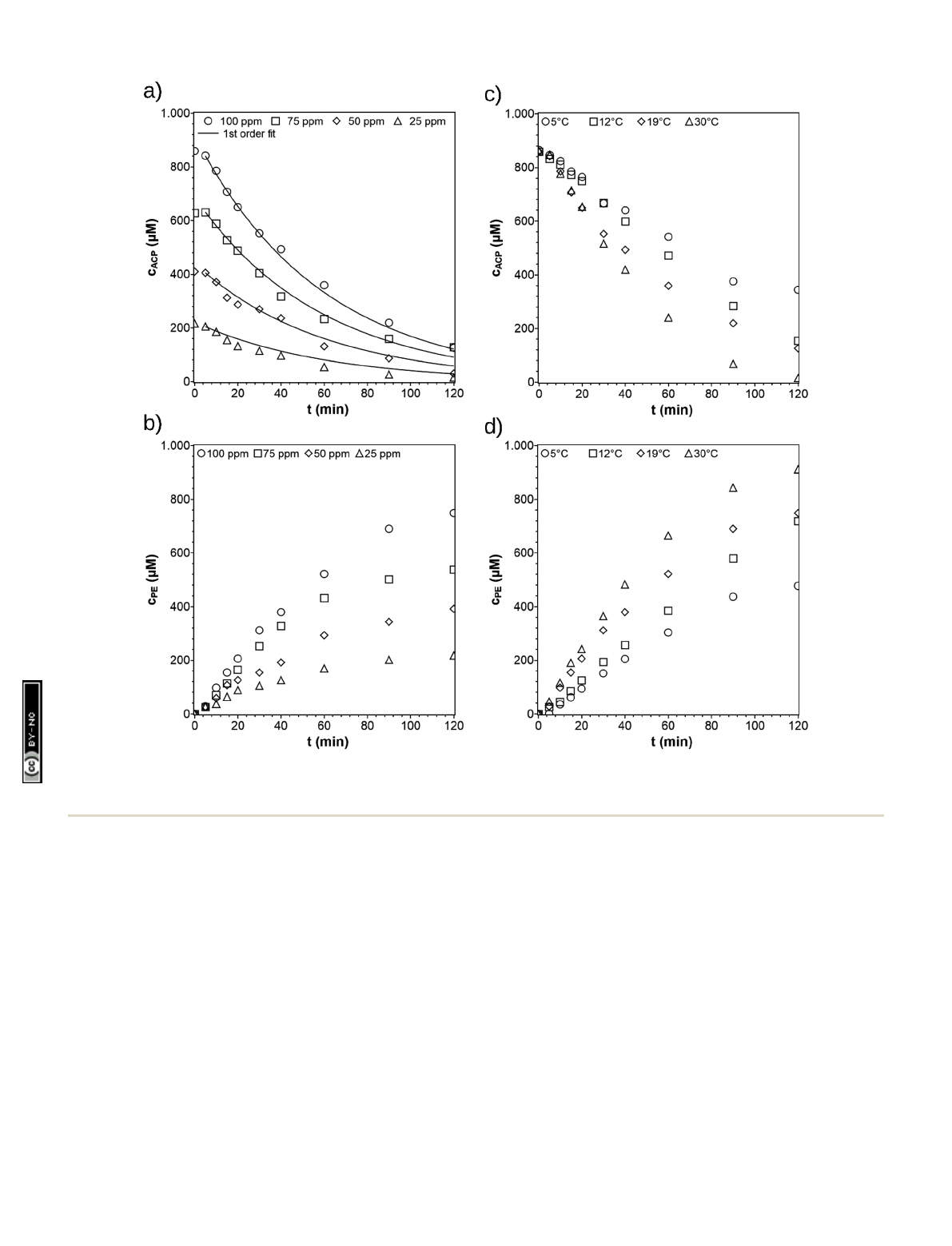
Fig. 6 Concentration profiles of ACP and PE for different initial ACP concentrations (a) and (b) and different reaction temperatures (c) and (d).
The standard reaction conditions were: purge gas ¼Ar, l$360 nm, V
L
¼20 mL, reactor ¼SIR, catalyst ¼TiO
2
(PC500), T¼19 C, and c
ACP,0
¼
860 mM.
© 2022 The Author(s). Published by the Royal Society of Chemistry RSC Adv., 2022, 12,7055–7065 | 7059
Paper RSC Advances
Open Access Article. Published on 01 March 2022. Downloaded on 5/4/2022 10:20:38 AM.
This article is licensed under a
Creative Commons Attribution-NonCommercial 3.0 Unported Licence.
View Article Online
Loading more pages...