
Vol. 10(43), pp. 4039-4052, 22 October, 2015
DOI: 10.5897/AJAR2015.10102
Article Number: EBC13E356011
ISSN 1991-637X
Copyright ©2015
Author(s) retain the copyright of this article
http://www.academicjournals.org/AJAR
African Journal of Agricultural
Research
Full Length Research Paper
Nutrient recycling from sanitation and energy systems
to the agroecosystem- Ecological research on case
studies in Karagwe, Tanzania
A. Krause1,3*, M. Kaupenjohann2, E. George3 and J. Koeppel4
1Microenergy Systems―, Center for Technology and Society, Technische Universität (TU) Berlin, Germany.
2Department of Ecology, Department of Soil Science, TU Berlin, Germany.
3Leibniz Institute of Vegetable and Ornamental Crops (IGZ), Großbeeren, Germany.
4Environmental Assessment and Planning Research Group, TU Berlin, Germany.
Received 3 July, 2015; Accepted 25 September, 2015
Open cycles of organic carbon and nutrients cause soil degradation. Procedures such as ecological
sanitation (EcoSan), bioenergy and Terra Preta practice (TPP) can contribute to closing nutrient cycles
and may, in addition, sequester carbon. This paper introduces three projects in Karagwe, Tanzania, and
their applied approach of integrated resource management to capture carbon and nutrients from
different waste flows. Substrates derived from these case studies, biogas slurry, compost and CaSa-
compost (containing biochar and sanitized human excreta), were assessed for their nutrient content by
analysis of the total element composition. Evaluation focused on potential impacts of the tested
amendments on the nutrient availability in the soil as well as on the local soil nutrient balance. Results
revealed that all substrates show appropriate fertilizing potential compared to literature, especially for
phosphorus (P). CaSa-compost was outstanding, with a total P concentration of 1.7 g dm-3 compared to
0.5 and 0.3 g dm-3 in compost and biogas slurry respectively. Furthermore, these soil amendments may
reduce acidity of the soil, with a calculated liming effect of 3.4, 2.6 and 7.8 kg CaO for each kg of
nitrogen added for biogas slurry, compost and CaSa-compost respectively. To offset negative P
balances in Karagwe, about 8100, 6000 and 1600 dm3 ha-1 are required for biogas slurry, compost and
CaSa-compost respectively. We conclude that especially CaSa-compost might offer immediate positive
effects to crop production and nutrient availability in the soil.
Key words: Ecological sanitation, bioenergy, Terra Preta practice, biochar, biogas slurry, compost, soil
amendments, soil improvement, waste as resource.
INTRODUCTION
Open cycles cause agronomic problems
Since more nutrients are taken out of the agroecosystem
than are put back, anthropogenic activities create open
cycles of mineral nutrients and carbon (C) (Lal, 2006).
Such activities comprise among others: Excessive
*Corresponding author. E-mail: [email protected].
Author(s) agree that this article remain permanently open access under the terms of the Creative Commons Attribution
License 4.0 International License

4040 Afr. J. Agric. Res.
deforestation for firewood, exploitation of phosphate
rocks for fertilizer production, and energy consumption for
production of synthetic fertilizers. Furthermore, most
current sanitation systems waste nutrients from human
excreta (especially nitrogen (N), phosphorus (P) and
potassium (K) as well as micronutrients) since they are
either disposed in the ground (pit latrine, ashes of
incinerated sewage sludge) or enter the aquatic system
(pit latrine, flush toilet), where they cause eutrophication
and lead to contamination of the groundwater with fecal
microorganisms(Esrey et al., 2001;Graham and Polizzott
o, 2012; Meinzinger, 2010). In general, open cycles can
cause soil degradation and loss of soil fertility since
cultivated soils become increasingly deficient in essential
plant nutrients when long term cropping takes place
without replacement of nutrients (Hartemink and
Bridges, 1995). In addition, soil organic matter (SOM),
which is the major building block of a fertile soil, might be
depleted by continuous cropping if the plant residues are
not put back into the soil after harvesting
(Batjes and Sombroek, 1997). Consequently, the soil
might show declining water and nutrient retention
capacity and an increasing tendency to soil erosion
(Horn et al., 2010). Tropical climate conditions aggravate
such soil degradation; with year-round elevated
temperature, SOM is lost due to fast microbial
decomposition of organic matter; heavy rains during the
rainy season in turn cause leaching of mineral nutrients
(Lal, 2009). It is widely agreed that in order to secure
sustainable food supply for everyone, soil degradation
must be reversed and soil productivity enhanced.
Problems of using synthetic fertilizers in Sub-
Saharan Africa
Agricultural practices using synthetic fertilizers often add
too much N to the soil and sometimes neglect input of P,
K and micronutrients, which can result in imbalanced
plant nutrition (Lal, 2009). Furthermore, nutrients added
by synthetic fertilizers often are immediately available
and thus can be subject to high losses via leaching and
volatilization (Finck, 2007; Savci, 2012). Moreover, the
International Assessment of Agricultural Knowledge,
Science and Technology for Development (IAASTD)
showed that in some parts of Sub-Saharan Africa (SSA),
especially poor farmers do not have access to synthetic
fertilizers (Markwei et al., 2008). Those who have access
often lack adequate information on their appropriate use
(ibid.). Inappropriate use of synthetic fertilizers, however,
may result in soil acidification, pollution of water bodies,
and emissions with global warming potential to the
atmosphere (Markwei et al., 2008; Savci, 2012).
Furthermore, the production of synthetic fertilizers
requires energy; for example about one third of the total
energy input to crop production of the United States of
America is required to produce, to package, to transport
and to apply synthetic fertilizers (Gellings and Parmenter,
2004).
Solutions based on using locally available organic
fertilizers
Kiers et al. (2008) concluded that in African countries
reversing soil infertility might be achieved ―through the
use of locally available resources‖, because the use of
synthetic fertilizers is not a feasible option for many
subsistence farmers. In ―Agriculture at a crossroads―
McIntyre et al. (2009) called for a focus on efficient,
small-scale agroecosystems with almost closed nutrient
cycles. In addition, the IAASTD demanded that research
in a SSA context should reorient ―towards integrated
nutrient management approaches‖ (Markwei et al., 2008).
Kimetu et al. (2004) demonstrated in Western Kenya that
―inorganic N additions can be fully substituted by organic
N additions if the appropriate source of organic matter is
applied‖. Furthermore, the intensified use of organic
fertilizer can reduce the cost of fertilization in crop
production in SSA (Markwei et al., 2008).
In order to create positive C and nutrient budgets, SOM
can be enhanced through addition of organic
amendments, as Lal (2009) pointed out. He further
suggested that both organic residues, such as compost
and animal manures, and biological N-fixation should be
included in the nutrient management (ibid.).
Stoorvogel (1993) particularly emphasized the efficient
use of organic household waste as a means to supply
nutrients. Beardsley (2011) pointed out that human
excreta ―is an abundant but often ignored source of P
available for recycling worldwide‖. Another important soil
management practice to strengthen the nutrient cycling
process in SSA is acidity management through liming, as
described, for example, by Batjes and Sombroek (1997).
Approaches towards closing the loop
In our research, we focus on the following practices for
local nutrient and C recycling: (1) Composting in general,
as well as co-composting of human excreta and
ecological sanitation (EcoSan); (2) Provision of bioenergy
combined with agricultural use of residues; (3) Terra
Preta practices (TPP) – using biochar as a soil
amendment.
Composting and ecological sanitation
Composting is a globally common method in agriculture
whereby organic residues are mixed with mineral
components and subsequently aerobically decomposed
by macro- and microorganisms (for East-Africa see work
of e.g. Amoding et al. (2005), Karungi et al. (2010) and
Krause et al. 4041
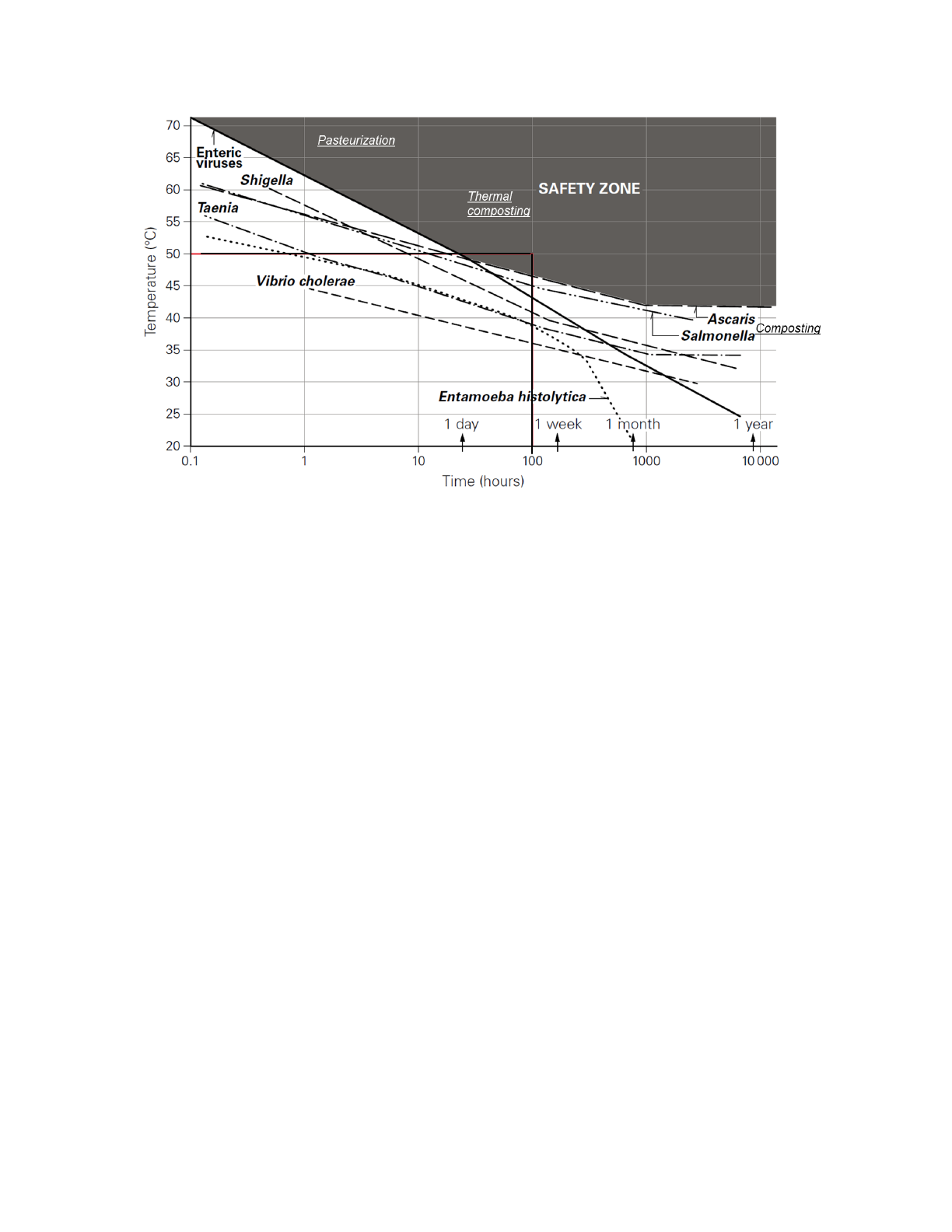
Figure 1. Relationship between temperature and time required to inactivate certain pathogens (according to
Feachem et al., 1983, graphic adopted from Vögeli et al., 2014; corresponding combinations of time and
temperature for the described possible treatments are indicated)
Tumuhairwe et al. (2009). EcoSan facilitates co-
composting of human excreta as an alternative to
conventional sanitation systems. EcoSan aims at (i)
―closing the loop‖ by recycling nutrients from
humanexcreta in order to improve soil fertility; (ii)
avoiding potential human health risks by sanitizing urine
and feces; (iii) preventing the pollution of freshwater and
marine environments by avoiding waste water discharge
into natural water bodies (Winblad et al., 2004). Further
benefits of EcoSan, according to Esrey et al. (2001), are
that it is: (i) A decentralized system based on household
and community management and, thus, omits investment
in large-scale infrastructure; (ii) Particularly appropriate in
areas with water shortages or irregular water supply
since no or very little water is required; (iii) Feasible in
both rural and urban areas as well as for rich and poor
people alike. Usually, urine and feces are stored and
processed on-site. A number of different types of
composting toilets are in use in EcoSan, e.g. the urine
diverting dry toilet (UDDT), which collects human excreta
separately (see Morgan, 2007, for further description and
discussion of ―Toilets That Make Compost - Low-cost,
sanitary toilets that produce valuable compost for crops in
an African context‖). According to the World Health
Organization (WHO, 2006) urine is safe for use as a
fertilizer, untreated or after short storage. However, feces
mostly contain pathogens (such as viruses, bacteria and
worm eggs) and require treatment (ibid.). Techniques for
sanitation include: dehydration or drying, e.g. through
UDDT with a separation of the solid parts and the liquid
fraction of the excreta and improved ventilation system
(Winblad et al., 2004); disinfection by using additives, e.g.
urea (Vinnerås, 2002) or lactic acid bacteria
(Factura et al., 2010); disinfection through exposure to
elevated temperatures over time, e.g. mesophilic or
thermophilic composting (Niwagaba et al., 2009;
Ogwang et al., 2012) or pasteurization (RKI, 2013;
Schönning and Stenström, 2004). In general, thermal
sanitation relies on a temperature/time relationship to
inactivate certain pathogens, as described by
Feachem et al. (1983) (Figure 1).
Currently, there are no national regulations for the
treatment of human excreta, in neither Tanzania nor
Germany, but different guidelines for thermophilic
composting exist. The WHO (2006) recommended a
treatment at 55 to 60°C over several days up to one
month depending on the conditions (e.g. constant control
of the temperature). In Germany, the following thermal
treatments are required for organic waste in general:
55°C for two weeks, 60°C for six days or 65°C for three
days (German BO, 2013).
Bioenergy and the agricultural use of its residues
Bioenergy technologies focus on energy recovery from
biomass. Also, by-products and residues from bioenergy
provision can be recycled back into the agroecosystem.
The main principle is the conversion of biomass to heat
for either the consecutive production of electricity or

4042 Afr. J. Agric. Res.
direct provision for productive processes (e.g. for a
bakery, green-house heating) and consumption in
households or institutions (e.g. for cooking and heating)
(Kaltschmitt et al., 2009). In this study, our focus is
onprovision of cooking energy at household level and the
applied technologies include: three stone fire, charcoal
burner, microgasifier and a system using a biogas
digester and biogas burner. The use of firewood, three
stone fires and charcoal burners is currently most
common in many countries of SSA. Ash is the main
residue from these bioenergy applications and contains
mineral nutrients such as P and K as well as calcium (Ca)
and magnesium (Mg), but hardly any C, N or sulphur (S)
since these elements volatilize during the oxidation
process. Ash is therefore often used as a soil amendment
or addition to compost. Another small-scale technology is
the biogas digester, which is used for cooking both in
households and institutions, such as schools or hospitals
(Vögeli et al., 2014). Organic wastes are anaerobically
digested via microbiological activity in a closed fermenter,
resulting in a methane-rich combustible gas as the main
product and biogas slurry as a liquid residue (ibid.).
Small-scale and low-tech biogas digesters usually
operate in a mesophilic range of about 30 to 40°C and a
retention time of around 40 days
(Kossmann et al., undated). Biogas is accumulated inside
the digester or in a separate storage tank and is usually
combusted in a biogas burner. Biogas slurry can be used
as a fertilizer since it contains most of the mineral
nutrients from the digested organic waste in an already
plant-available form (Vögeli et al., 2014). Caution and
additional treatment of the biogas slurry is required,
however, in case human excreta is also digested since
pathogens are not inactivated under the mesophilic
conditions mentioned above (Figure 1). In Nepal, for
example, Lohri et al. (2010) showed that the biogas slurry
from mixed fermentation of human excreta and kitchen
waste contained pathogens such as helminth eggs.
Moreover, inappropriate use of the liquid biogas slurry
can cause eutrophication if it is applied in excess or
discharged directly to a receiving body of water
(Kossmann et al., undated). Finally, households can meet
their energy demand by using microgasifiers, which are
improved cooking stoves that use dry biomass and
spatially separate the transformation of biomass into
combustible wood-gas from the subsequent oxidation of
the gas (Mukunda et al., 2010; Roth, 2013). One
particularly prominent stove design is called the TLUD
(―Top-Lit Up Draft‖), which is licensed as an open source
technology (Anderson and Reed, 2007). Apart from heat,
the stove provides charcoal of about 10 to 30% of the fuel
fresh weight as a by-product (Roth, 2013). As for ash,
charcoal preserves mineral nutrients. It also contains C in
a concentration of about 60 to 75% of its dry matter (DM)
(McLaughlin et al., 2009). The charcoal can be used for
further provision of energy by directly pouring the hot
charcoal onto a conventional charcoal burner, to continue
cooking immediately, or by making charcoal briquettes in
a separate process with an accumulated amount of
charcoal. Charcoal can also be used as a soil
amendment, which is then termed biochar (Taylor,
2010). Altogether, residues from bioenergy processes
have a potential for use as soil amendments; however,
their quality depends on the composition of the feedstock
used and the application practice. There is a need for
field experiments to evaluate the impact of biogas slurry
on the local carbon balance as well as on soil
characteristics and productivity (Bogdanski and di
Caracalla, 2011). The positive effects of pyrolitic charcoal
as a soil amendment are historically evident in findings of
Terra Preta soils, which we will introduce in the following
section. However, there is still a lack of scientifically
rigorous field experiments using biochar derived from
microgasifiers on tropical soils.
Terra Preta practices (TPP) - using biochar as a soil
amendment
One particularly interesting and promising holistic
approach for improving or remediating degraded soils is
the principle of ―Terra Preta‖ (Portuguese for ―Black Soil‖
= ‖Udongo Meusi‖ in Swahili), as practiced by people in
the Amazon basin in Brazil, South America, centuries ago
(Sombroek, 1966; Glaser et al., 2002). Lehmann et
al. (2003b) classified Terra Preta as Anthrosol, a human-
made, fertile, black soil. Glaser and Birk (2012) found that
it mainly contains charcoal, animal and human excreta as
well as other organic and inorganic wastes. Compared to
surrounding soils, including Ferralsol, Acrisol or Arenosol,
the Terra Preta soils show significantly higher availability
of P, Ca, manganese (Mn), and zinc (Zn)
(Lehmann et al., 2003a). For example,
Falcão et al. (2009) found up to 40 times larger
concentrations of plant-available P in Terra Preta than in
surrounding natural soils. Other characteristics include
high water and nutrient retention capacity as well as a pH
of around 5.7, adequate for plant growth
(Lehmann et al., 2003a; Horn et al., 2010). Biochar plays
a major role for the specific properties of Terra Preta
because it builds up a stable stock of SOM. Biochar
shows an aromatic C structure with many micro pores,
large surface, high adsorption capacity and a C-
concentration of about 70 to 80% of DM
(Lehmann and Joseph, 2009). In some soils, biochar can
significantly improve the availability of both nutrients and
water by effecting chemical and hydraulic characteristics
of the soil. It can also positively affect the activities of soil
microbial communities (Lehmann and Joseph, 2009;
Glaser and Birk, 2012). According to Taylor (2010),
biochar works as a catalyst in the soil, because it
―facilitates reaction beneficial to soil dynamics without
being consumed in the process‖. This means that much
of the biochar persists in the soil and is not decomposed

in the way many other organic materials are (ibid.).
Therefore, biochar amendments may enhance plant
growth in some cases, although nutrient inputs from
biochar are low (Lehmann and Joseph, 2009).
Consequently, its application was tested in
combination with mineral fertilizers (Kimetu et al., 2004;
Jeffery et al., 2011), in combination with compost that
releases nutrients over time (Liu et al., 2012;
Schulz et al., 2013), and as compost-additive to be
enriched and loaded with nutrients during the composting
process (Kammann et al., 2015).
Recently, Frausin et al. (2014) revealed the presence
of so-called African Dark Earth at more than 134
locations in several West-African countries including
Liberia, Sierra Leone, Guinea and Ghana. This Terra
Preta-like African Anthrosol is preferably located in the
vicinity of towns and mainly is the product of women
doing appropriate management of wastes from housing
and farming (ibid.). Altogether, TPP - using biochar as
compost-additive and soil amendment - is seen as a
―suitable technique helping to refine farm-scale nutrient
cycles‖ (Schulz et al., 2013).
Research objectives
Based on the context described in the introduction, we
hypothesize that new approaches which combine
EcoSan, bioenergy and TPP can contribute to soil
improvement and resource protection by recycling of
nutrients and C, if sanitation is taken into account and
integrated appropriately. Especially the use of biogas
slurry from fermentation of organic waste as a fertilizer
and the combined composting of residues from
microgasification and sanitized human excreta are
promising methods. However, there is need for practice-
oriented experiments and assessment of the local
ecological impacts under the specific conditions of
tropical regions. Hence, the objectives of this paper were
(i) to introduce three case studies from Karagwe,
Tanzania, and their applied approach of integrated
resource management; (ii) to assess the substrates
derived from these projects with respect to their nutrient
concentrations; and (iii) to evaluate potential impacts of
the tested amendments on the nutrient availability in the
soil as well as on the local soil nutrient balance.
MATERIALS AND METHODS
Farming activities in Karagwe, Tanzania
Karagwe district is located in Kagera region in northwest Tanzania,
a hilly area situated at an altitude of about 1200 m up to
1800 m.a.s.l., semi-arid with equatorial-tropical climate
(Baijuka and de Steenhuijsen Piters, 1998). The average daily
temperature is about 21°C, with a range from 10°C at night to
> 40°C during the daytime (Blösch, 2008). Rainfall is bimodal with
rainy seasons from March to May (long rainy season) and October
to November (short rainy season), with crop cultivation taking place
Krause et al. 4043
during both seasons (Tanzania, 2012). Precipitation ranges
between 1000 and 2100 mm a-1, with annual and regional
differences (Blösch, 2008).
According to the national sample census of agriculture
2007/2008 for Kagera region, most families in Karagwe
districtsubsist on farming activities (Tanzania, 2012): about 45% of
the population work full-time on their farms and more than 86% of
the households sell agricultural products grown on their farms. On
average, around 0.75 ha usable land is available per household out
of which around 83% is planted. The most important permanent
crops are banana and coffee, while beans, sorghum and maize
dominate annual cropping. Most of the planted land is used multiply
in mixed cropping systems and only some 16% of the land is used
for temporary mono-cultural cultivation. A majority of approximately
78% of the farmers in Kagera region who apply fertilizers on their
land, use organic fertilizers which are according to
Baijukya and de Steenhuijsen Piters (1998) mainly grasses (mulch)
and farmyard manure. However, the supplied amount only suffices
for roughly 5% of the planted land (distributed to 0.7 and 4.3 %. of
the planted land in the long and short rainy season respectively).
Synthetic fertilizers are used on less than 1% of the planted land in
Kagera region. In 2010 we conducted a preliminary study in
Karagwe district including a survey on 10 households and soil
sampling at three different farms. We found that small-scale farmers
in Karagwe live on an average with six people in one hous
e
ho
l
d. In
addition, we found that some major problems of local agriculture
are a very low soil pH of 3.8 to 4.2, low nutrient availability
(especially P) and soil erosion due to a hilly landscape. Concerning
sanitation services, a majority of more than 90% of the rural
population of Karagwe district use pit latrines, around 6% do not
have any toilet so use bushes and only 1% uses flush toilets in
combination with septic tanks (Tanzania, 2012). Hence, for 91% of
rural households in Karagwe district, excreta are disposed in a pit
or tank after dropping without any treatment or use. Concerning
energy supply, the most common source of energy for cooking is
biomass, with about 96% of the rural households using firewood
and 3% using charcoal (Tanzania, 2012). It is common in Karagwe
to add ashes from three stone fires to the compost.
Grassroots projects in Karagwe realizing integrated resource
management
Since 2008, two local non-governmental organizations, namely
MAVUNO Project Improvement for Community Relief and Services
(MAVUNO; meaning ―harvest‖ in Swahili) and CHEMA Programme
for Community Habitat Environmental Management (CHEMA), have
initiated projects in cooperation with the German association
Ingenieure ohne Grenzen e.V. (Engineers Without Borders, EWB)
and Technische Universität (TU) Berlin. These projects follow a
community-participatory approach to appropriate development of
technologies and aim at resource protection, autonomous energy
supply and safe sanitation services. Together, these projects
present an integrated approach to resource management as well as
recycling of nutrients and C (Figure 2). Their process combines
three systems: The energy system, whereby cooking energy is
provided as heat by either burning biogas from a small-scale biogas
digester or by microgasifiers; the sanitation system based on
EcoSan; finally, the recycling of by-products from both systems,
namely biogas slurry, biochar and sanitized human excreta, back
into the agroecosystem. In the latter, composting and the principles
of TPP are applied to capture nutrients and C from different waste
flows.
One of the expected results is soil improvement, to ensure long-
term food security and income generation for the rural population.
The respective technologies were developed and tested in Karagwe
within three pilot projects:
Loading more pages...