
TYPE Opinion
PUBLISHED 07 December 2022
DOI 10.3389/feduc.2022.1096111
OPEN ACCESS
EDITED BY
Kostas Nizamis,
University of Twente, Netherlands
REVIEWED BY
Pinaki Chakraborty,
Netaji Subhas University of
Technology, India
*CORRESPONDENCE
Philipp Beckerle
SPECIALTY SECTION
This article was submitted to
Higher Education,
a section of the journal
Frontiers in Education
RECEIVED 11 November 2022
ACCEPTED 25 November 2022
PUBLISHED 07 December 2022
CITATION
Beckerle P, Hao C, Haeufle DFB and
Russwinkel N (2022) Four
considerations on interdisciplinary
learning at the boundaries of human
and engineering sciences.
Front. Educ. 7:1096111.
doi: 10.3389/feduc.2022.1096111
COPYRIGHT
©2022 Beckerle, Hao, Haeufle and
Russwinkel. This is an open-access
article distributed under the terms of
the Creative Commons Attribution
License (CC BY). The use, distribution
or reproduction in other forums is
permitted, provided the original
author(s) and the copyright owner(s)
are credited and that the original
publication in this journal is cited, in
accordance with accepted academic
practice. No use, distribution or
reproduction is permitted which does
not comply with these terms.
Four considerations on
interdisciplinary learning at the
boundaries of human and
engineering sciences
Philipp Beckerle1,2*, Chenxu Hao1, Daniel F. B. Haeufle3,4 and
Nele Russwinkel5
1Chair of Autonomous Systems and Mechatronics, Department of Electrical Engineering,
Friedrich-Alexander-Universität Erlangen-Nürnberg, Erlangen, Germany, 2Department of Artificial
Intelligence in Biomedical Engineering, Friedrich-Alexander-Universität Erlangen-Nürnberg,
Erlangen, Germany, 3Hertie Institute for Clinical Brain Research and Center for Integrative
Neuroscience, University of Tübingen, Tubingen, Germany, 4Institute for Modelling and Simulation
of Biomechanical Systems, Computational Biophysics and Biorobotics, University of Stuttgart,
Stuttgart, Germany, 5Cognitive Modeling in Dynamic Human-Machine Systems, Technical University
of Berlin, Berlin, Germany
KEYWORDS
interdisciplinary learning, teaching evaluation, human-robot interaction, human
sciences, engineering sciences
1. Introduction
Learning interdisciplinary matters requires to adapt (previous) knowledge and to
align one’s own capacities to the current educational task (Ivanitskaya et al., 2002). This
becomes particularly challenging in fields of study that are strongly interdisciplinary,
e.g., at the boundary of human and engineering sciences. In this position paper, we
put forward four considerations based on our teaching experiences in the context of
human-robot interaction (Siciliano et al., 2008;Bartneck et al., 2020) and stimulated
by university didactic training. We root our position on teaching experience from six
German universities.
Namely, we recommend putting emphasis on communication, interaction, blending
teaching methods, and providing students with orientation. Results from student
evaluations of interdisciplinary courses with participants from different study programs
are provided to give a practical perspective on these four considerations.
2. Four considerations
To develop common ground for interdisciplinary learning, it is important to specify
and comprehend different learning objectives, i.e., what engineering students should
know about human-related considerations and what human science students should
know about technology. While we develop our four considerations from our overall
experience, we substantiate our opinions with results from curricular evaluations of the
students attending our courses. Particularly, we analyzed the open item responses of the
following evaluations:
Frontiers in Education 01 frontiersin.org

Beckerle et al. 10.3389/feduc.2022.1096111
•Computational Motor Control (Summer term 2019 and
2020, N=27. M.Sc. in neuroscience and computer science.
University of Tübingen, Germany).
•Biorobotics (Summer term 2020 and 2021, N=40.
M.Sc. in biomedical engineering, computer science, and
related programs. University of Tübingen and University
of Stuttgart, Germany).
•Human-centered Robotics (Winter term 2021, N=
13. M.Sc. in electrical and robotic engineering. TU
Dortmund, Germany).
•Human-Mechatronics Systems (Winter term 2021, N=
23. M.Sc. in mechancial and eletrical engineering. TU
Darmstadt, Germany).
•Human-centered Mechatronics and Robotics (Summer
term 2021, N=15, M.Sc. in electrical, mechatronic, and
medical engineering, FAU Erlangen-Nürnberg, Germany).
•Introduction to Cognitive Modeling (Summer term 2022,
N=14. M.Sc. in Human Factors. TU Berlin, Germany).
•Applied Cognitive Modeling (Winter term 2021, N=10.
M.Sc. in Human Factors. TU Berlin, Germany).
Considering human-robot interaction, engineering students
need to learn biomechanical and psychological topics beyond
technical aspects, e.g., biomechanical signals and models (Burdet
et al., 2013) or empirical study designs (Gravetter and Forzano,
2018). In contrast to that, students of the human sciences
require a certain level of technical knowledge, e.g., how to
mechanically design a prosthesis and how to implement a
controller to best match neuro-muscular properties (Eilenberg
et al., 2010) or which signals can be used to interface between
the human and the robot (Soekadar et al., 2015;Sharbafi et al.,
2020). Furthermore, students need to understand why the other
disciplines are important to the field, e.g., potentials or issues
arising if one perspective would or would not be taken into
account, and how they approach challenges, e.g., social robotics
considering humans’ expectations toward a robot. Through that,
students can become aware of what would be missing when
limiting research to a single discipline and how interdisciplinary
approaches provided added value by extending perspectives, e.g.,
matching users’ needs in technical design. Discipline-specific
learning objectives provide a frame for our four considerations
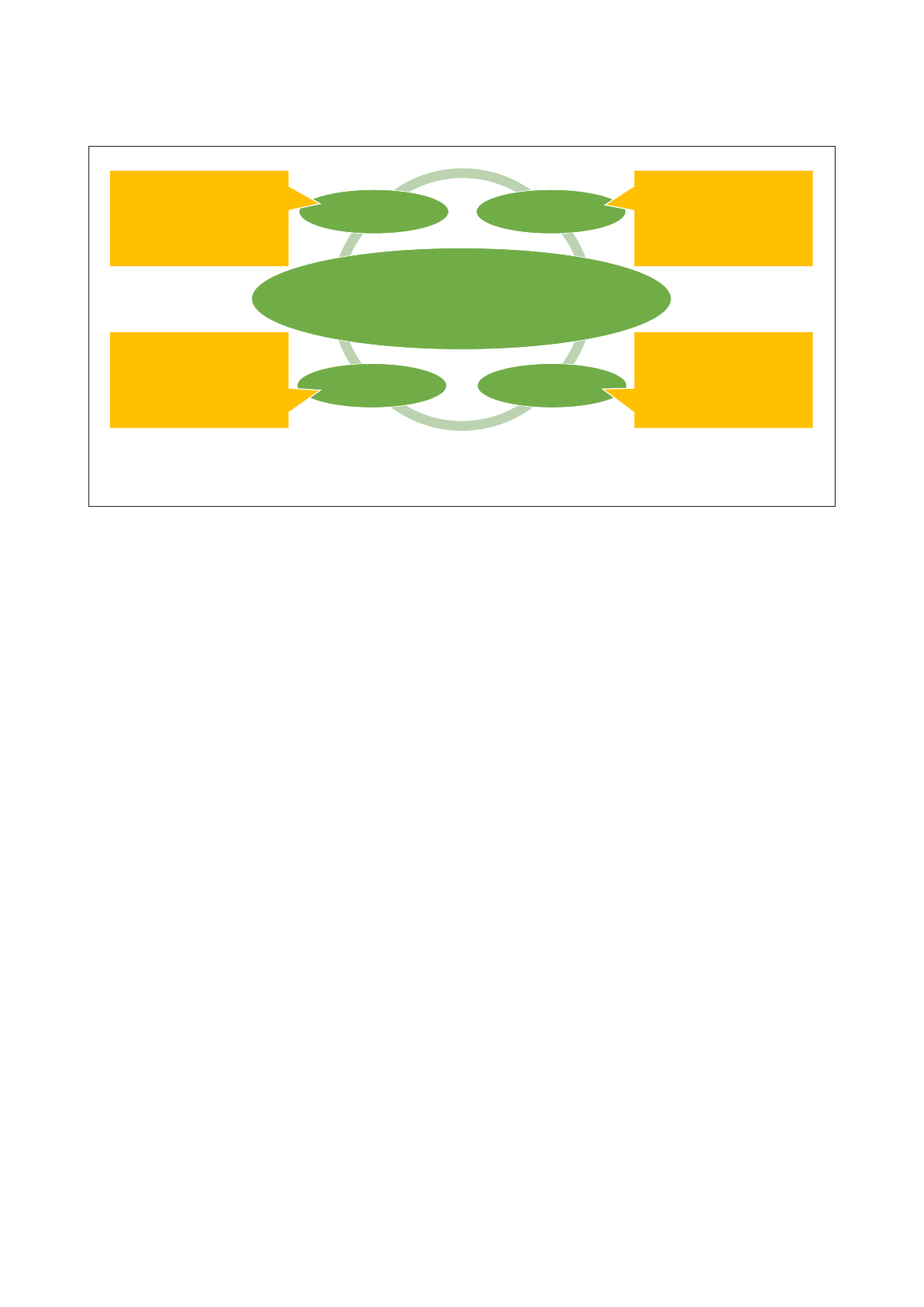
that outlined in Figure 1 and particularized below.
2.1. Communication
Practical insights from the authors’ teaching and research
show that Communication is a key aspect: simple questions
like "What is a model?" may have very different answers
in different branches of science. Therefore, collecting those
definitions and determining a clear terminology for a given topic
is a crucial step at the beginning of a course. A continuous
discussion of terminology helps the students to understand
perspectives of the other disciplines and thereby developing a
better understanding of the interdisciplinary field as a whole.
This is supported by a student’s evaluation comment: "I learned
a lot preparing the papers. They helped tremendously putting
everything into context." Integrating students from different
backgrounds while considering knowledge uncertainties can
further be fostered by using tangible examples, e.g., social
robots in elderly care, collaborative robots supporting workers,
or science-fiction companion robots, as is supported by the
students liking “examples from instructors own experiences.”
2.2. Interaction
If both, students and lecturers are aware of the different
learning goals, they can Interactively develop guiding questions
for the course, e.g., “How can we predict the users’ intentions?”
or “When is the system/study considered successful?.” Interactive
project tasks and discussions in small groups help students not
only to comprehend the topic holistically but also to develop a
joint understanding. Evaluating our courses, students fed back
that “It’s very great to make as much effort to make the course
interactive, even if there are a few answers from the student.”
Besides their self-critical view, they also suggest: “Maybe having
more links between the seminars and the course could help
to be more interactive in the class.” Therefore, we recommend
jointly creating concept maps (Novak, 1990;Ivanitskaya et al.,
2002) to structure the content of the interdisciplinary matter by
linking concepts. Applying this promising interactive measure,
we asked students to watch a recorded video by the lecturer
and actively analyze the topic (reading related publications,
searching important terms on the internet). Subsequently, the
students were discussing the information and jointly condensed
it into a 1-page concept map, which enabled them report their
findings very accurately and concisely. In evaluation, students
acknowledged that “the exam [...] in the form of an essay
and a concept map, [allows to] explain your knowledge much
better.” Furthermore, students stated to enjoy discussions about
differing perspectives even if there is no definite answer.
Generally, flip-the-classroom methods seem promising as
students report them to “get us involved more in the lecture.”
These methods can further be extended by asking students
to assume different roles to broaden their perspectives on
requirements and challenges to be considered, e.g., view point
of elderly users or a nurse using an assistive robotic system.
2.3. Blending
Accordingly, interaction can further be promoted by
Blending teaching approaches to integrate interdisciplinary
knowledge, e.g., we use seminar-style discussions for human-
centered research while we apply calculation/practical tutorials
Frontiers in Education 02 frontiersin.org
Beckerle et al. 10.3389/feduc.2022.1096111
Interdisciplinary
Learning
Interac on
Orienta onBlending
Communica on
Course: jointly develop guiding
ques ons and create concept
maps
Students: comprehend the topic
holis!cally and develop a joint
understanding
Course: develop topics from an
overall view towards details
before wrapping up globally
Students: understand
interconnec!ons and might
iden!fy further subjects to study
Course: combine seminar-style
discussions and
calcula on/prac cal tutorials
Students: improve their
theore!cal and prac!cal
understanding by own ac!ons
Course: defining and discussing a
clear terminology
Students: understand
perspec!ves of other disciplines
and the interdisciplinary field
FIGURE 1
We propose emphasis on developing joint communication, promoting interaction, blending teaching elements, and proving students with
orientation to improve their interdisciplinary learning. The yellow boxes suggest concrete actions that could be taken for implementation, which
are describe in more detail in the text.
for engineering aspects. Both approaches can even be integrated
in small-scale projects where students are asked to analyze and
solve a human-centered design task as a team. The usefulness
of such projects is substantiated by students reporting that
“having small projects is way more “natural” than a lecture
where we would be asked about theoretical aspects. Receiving
sources and learning on our own is a very cool approach to
conveying knowledge,” particularly topics that involve hand-on
projects. Yet, theoretical aspects can also benefit from blending
as becomes obvious in responses like “The idea of offering
a seminar in addition to the lecture that puts the contents
of the lecture into practice [was good].” or “The course is a
good mix of knowledge transfer and discussion.” Moreover,
students verbally mentioned that only through the project they
“gained real understanding” about the theoretical knowledge
obtained earlier.
2.4. Orientation
To convey how those methods synergistically connect
in the considered interdisciplinary matter, we postulate to
provide Orientation to the students by outlining and elaborating
interconnections through the structure of the course: a human-
robot interaction course for instance might develop topics from
an overall view toward the human and then the robot perspective
before wrapping up globally again. However, interdisciplinary
courses will always face a compromise of broadness and depth.
Students accordingly state “it is always more helpful to get a
broad overview and just dive into one or two topics deeply”
or, oppositely, that “new content would need to be elaborated a
bit more in order to understand it in the long run.” However,
they might also identify further subjects to study from such
experiences. In advanced courses, providing a few striking
research articles could contribute to strengthen the orientation
in addition to the previously mentioned concept maps.
3. Discussion
Remarkably, our four considerations can reinforce each
other. Seminar elements increase interactions compared to
frontal lectures and can further help the students to gain
orientation. Similarly, promoting interaction and providing
orientation can push developing a joint communication
basis. One straightforward approach for implementation
that we applied successfully is flipping the classroom in the
end of frontal lecture sessions to interactively summarize
the key take home messages. By that students are not only
triggered to recapture the content but also to verbalize
and discuss the main topics. Some students seem to doubt
their interdisciplinary capabilities expecting that they
need to know everything. Hence, making them aware that
knowing how to methodically connect approaches from
different fields as well as comprehending and considering
knowledge of an expert from the other field are main
learning objectives.
Besides the four considerations, we see a high potential
in not only applying those in existing seminars or lectures,
but molding them into teaching projects, which convey
the interdisciplinary challenges when working on a practical
issue. Past studies have already shown that engineering
students benefit from course projects that connect theoretical
knowledge with real-world problems, as such projects can help
Frontiers in Education 03 frontiersin.org

Beckerle et al. 10.3389/feduc.2022.1096111
prepare them for working in the industry as well (Chang
et al., 2022;Fan et al., 2022). In addition to designing and
working on projects aiming at solving real-world problems,
students also need to be prepared for teamwork and technical
communication (Mihret Dessie et al., 2022). Similar to the
considerations themselves, this is underlined by student
evaluations, e.g., “the idea of doing [a project] is great”),
which also show the challenges of such approaches. e.g.,
temporal constraints: “short time frame of the project.” To
this end, classical exercise slots can be re-used to implement
team projects, as we for instance did to make students
explore how to succeed (and fail) as a team working on an
engineering task.
Although focusing on human-robot interaction and
the boundary of human and engineering sciences, we
believe that other interdisciplinary fields will benefit from
our considerations.
Author contributions
PB conceptualized the article and coordinated its
development as well as the integration of individual
contributions. All authors contributed the content,
opinions, and references as well as discussed and revised
the manuscript.
Funding
This research was supported by the Volkswagen
Foundation (Az. 9B 007).
Acknowledgments
The authors thank their students for feeding back their
opinions in the teaching evaluations.
Conflict of interest
The authors declare that the research was conducted in the
absence of any commercial or financial relationships that could
be construed as a potential conflict of interest.
Publisher’s note
All claims expressed in this article are solely those of the
authors and do not necessarily represent those of their affiliated
organizations, or those of the publisher, the editors and the
reviewers. Any product that may be evaluated in this article, or
claim that may be made by its manufacturer, is not guaranteed
or endorsed by the publisher.
References
Bartneck, C., Belpaeme, T., Eyssel, F., Kanda, T., Keijsers, M., and Šabanovi´
c,
S. (2020). Human-Robot Interaction: An Introduction. Cambridge: Cambridge
University Press.
Burdet, E., Franklin, D. W., and Milner, T. E. (2013). Human Robotics:
Neuromechanics and Motor Control. Cambridge, MA: MIT Press.
Chang, T.-S., Wang, H.-C., Haynes, A. M., Song, M.-M., Lai, S.-Y., and Hsieh,
S.-H. (2022). Enhancing student creativity through an interdisciplinary, project-
oriented problem-based learning undergraduate curriculum. Thinking Skills Creat.
46, 101173. doi: 10.1016/j.tsc.2022.101173
Eilenberg, M., Geyer, H., and Hugh, H. (2010). Control of a powered ankle-foot
prosthesis based on a neuromuscular model. IEEE Trans. Neural Syst. Rehabil. Eng.
18, 164-173. doi: 10.1109/TNSRE.2009.2039620
Fan, H., Xie, H., Feng, Q., Bonizzoni, E., Heidari, H., McEwan, M. P., and
Ghannam, R. (2022). Interdisciplinary project-based learning: experiences and
reflections from teaching electronic engineering in china. IEEE Trans. Educ. 1–10.
doi: 10.1109/TE.2022.3186184
Gravetter, F. J. and Forzano, L. A. B. (2018). Research Methods for the Behavioral
Sciences. Cengage Learning.
Ivanitskaya, L., Clark, D., Montgomery, G., and Primeau, R. (2002).
Interdisciplinary learning: process and outcomes. Innovat. Higher Educ. 27,
95–111. doi: 10.1023/A:1021105309984
Mihret Dessie, W., Kassahun Bewuket, H., and Esubalew Tariku,
M. (2022). Technical communication for civil engineering: academia-
industry interdisciplinary needs. Eur. J. Eng. Educ. 47, 774–792.
doi: 10.1080/03043797.2022.2081532
Novak, J. D. (1990). Concept mapping: a useful tool for science education. J. Res.
Sci. Teach. 27, 937-949. doi: 10.1002/tea.3660271003
Sharbafi, M., Naseri, A., Seyfarth, A., and Grimmer, M. (2020). “Neural
control in prostheses and exoskeletons,” in Powered Prostheses (Academic Press),
153–178.
Siciliano, B., Khatib, O., and Kröger, T. (2008). Springer Handbook of Robotics,
Vol. 200. Berlin: Springer.
Soekadar, S. R., Birbaumer, N., Slutzky, M. W., and Leonardo,
G. C. (2015). Brain-machine interfaces in neurorehabilitation
of stroke. Neurobiol. Dis. 83, 172-179. doi: 10.1016/j.nbd.201
4.11.025
Frontiers in Education 04 frontiersin.org
Loading more pages...